
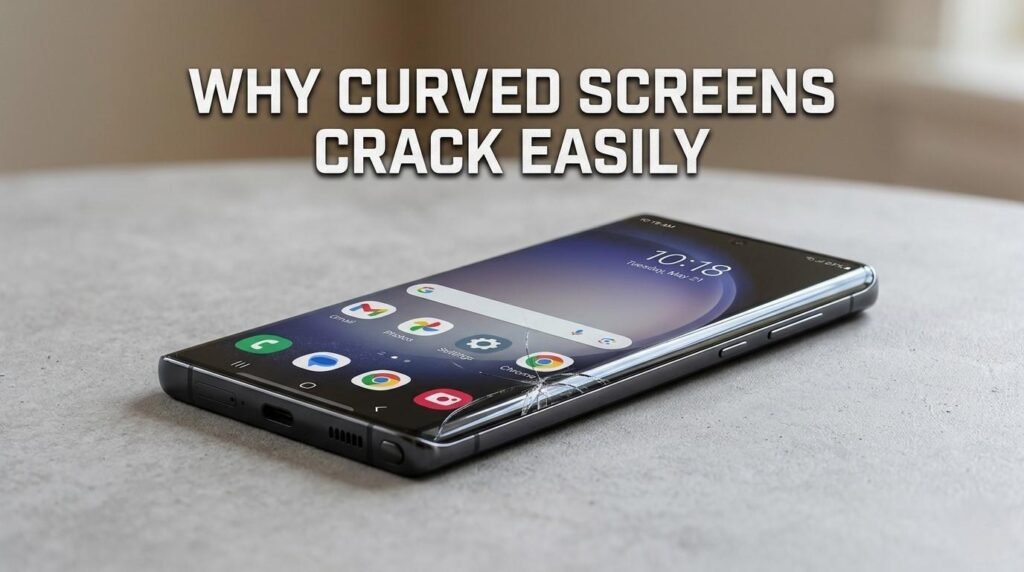
Why Curved Screens Crack Easily is a question many Android smartphone users ask after experiencing unexpected display damage. Curved screens have become a premium design feature in modern smartphones, offering edge-to-edge displays, immersive visuals, and sleek aesthetics. However, these displays also come with certain structural vulnerabilities that make them more prone to cracks compared to flat screens.
Several major smartphone manufacturers, including Samsung Electronics and Oppo, have adopted curved display technology in their flagship devices. While these displays enhance the visual experience when browsing apps, streaming videos, or downloading content from the Google Play Store, they also introduce engineering challenges related to glass durability.
Understanding Why Curved Screens Crack Easily helps Android users make informed decisions when choosing devices and protecting their smartphones. In this in-depth guide, we will explore the science behind curved display fragility, structural stress points, manufacturing limitations, and the practical steps users can take to reduce the risk of screen damage.
What Are Curved Smartphone Displays?
Curved displays are smartphone screens where the edges of the glass bend toward the sides of the device. Instead of stopping at a flat border, the display continues into a curved edge.
These displays are commonly used in high-end Android devices.
Key characteristics of curved screens
- edge-to-edge display appearance
- minimal side bezels
- premium design aesthetics
- immersive viewing experience
Although visually appealing, curved displays contribute to the issue behind Why Curved Screens Crack Easily.
This YouTube video below explains curved display smartphones and how the technology works. Marques Brownlee discusses the design, advantages, and potential drawbacks of curved screens in modern smartphones. 📱✨
Evolution of Curved Displays in Smartphones
Curved displays first gained popularity with flagship Android devices designed to differentiate premium smartphones.
Companies like Samsung Electronics pioneered curved screens with their Galaxy Edge series.
Reasons manufacturers introduced curved displays
- futuristic design appeal
- larger screen appearance
- improved gesture navigation
- competitive differentiation in flagship devices
However, engineering curved glass introduces several structural challenges.
Main Reasons Why Curved Screens Crack Easily
Understanding Why Curved Screens Crack Easily requires analyzing several physical and engineering factors.
Key reasons
- reduced structural support
- thinner glass edges
- higher stress concentration
- increased drop exposure
- weaker corner protection
- limited case coverage
- complex manufacturing process
Each factor contributes to the fragility of curved smartphone displays.
Reduced Frame Protection
One of the biggest reasons Why Curved Screens Crack Easily is the lack of protective frame support along the edges.
Flat screens typically have a metal or plastic frame surrounding the display. Curved screens extend beyond this frame.
Effects of reduced frame protection
- edges directly absorb impacts
- less structural reinforcement
- greater risk of edge cracks
When a phone drops on its side, curved edges take the majority of the impact.
Thinner Glass at Curved Edges
To achieve the curved shape, smartphone glass must be molded and thinned along the edges.
This contributes to the issue behind Why Curved Screens Crack Easily.
Impact of thinner edges
| Area | Thickness |
|---|---|
| Flat screen center | thicker |
| Curved edge | thinner |
Thinner glass means less resistance to pressure and impact.
Stress Concentration in Curved Areas
Curved shapes naturally create mechanical stress concentration.
This phenomenon is a major factor in Why Curved Screens Crack Easily.
How stress concentration works
When a force impacts curved glass, the energy concentrates along the curve rather than distributing evenly.
Consequences
- cracks start faster
- fractures spread quickly
- glass fails under lower impact forces
Higher Drop Exposure
Another major reason Why Curved Screens Crack Easily is that curved edges are more exposed during drops.
Flat displays are usually recessed slightly within the frame. Curved displays extend outward.
Drop scenarios
| Drop Type | Damage Risk |
|---|---|
| flat drop | moderate |
| corner drop | high |
| side drop | very high |
Because the curved edge is often the first point of contact, cracks occur more frequently.
Weak Corner Protection
Corners are already vulnerable areas in smartphone displays. Curved designs increase this vulnerability.
Why corners matter
- high impact concentration
- less internal reinforcement
- curved edges amplify stress
These factors contribute significantly to Why Curved Screens Crack Easily.
Limited Case Compatibility
Phone cases are one of the most effective ways to protect displays. However, curved screens limit case coverage.
Case design challenges
- cases cannot fully cover curved edges
- reduced screen protector compatibility
- limited impact absorption
Because of this, the issue of Why Curved Screens Crack Easily becomes more pronounced.
Manufacturing Complexity of Curved Glass
Producing curved smartphone glass is more complex than manufacturing flat glass.
Advanced glass technologies developed by Corning help improve durability, but curved shapes still present engineering challenges.
Manufacturing challenges
- precise glass bending processes
- maintaining uniform thickness
- avoiding internal stress defects
Even small imperfections can increase crack risk.
Curved Screens vs Flat Screens
To better understand Why Curved Screens Crack Easily, it helps to compare curved and flat displays.
| Feature | Curved Screen | Flat Screen |
|---|---|---|
| aesthetics | premium | standard |
| durability | lower | higher |
| repair cost | higher | lower |
| case compatibility | limited | excellent |
| impact resistance | moderate | strong |
This comparison explains why many manufacturers are returning to flatter display designs.
Impact on Android User Experience
Cracked displays caused by the issues behind Why Curved Screens Crack Easily can significantly impact the Android experience.
Problems caused by cracked screens
- reduced touch sensitivity
- ghost touch issues
- display discoloration
- dead pixels
These issues can interfere with everyday activities like installing apps from the Google Play Store or adjusting Android settings.
Repair Costs for Curved Displays
Curved displays are also more expensive to repair.
Reasons for higher repair costs
- complex display structure
- expensive curved glass panels
- difficult replacement process
Repairing curved OLED displays can be significantly more costly than flat screens.
Tips to Protect Curved Smartphone Screens
Even though Why Curved Screens Crack Easily is rooted in design limitations, users can reduce the risk of damage.
Protection strategies
- use shock-resistant cases
- install flexible screen protectors
- avoid placing phones face-down
- keep devices away from hard surfaces
- avoid sitting with phones in pockets
These precautions can significantly extend the lifespan of curved displays.
Future of Smartphone Display Design
Many smartphone manufacturers are reconsidering curved displays due to durability concerns.
Recent flagship devices from Samsung Electronics and other brands are shifting toward flatter screens.
Future display trends
- flat OLED displays
- stronger ultra-thin glass
- reinforced display frames
- improved flexible screen materials
These innovations may reduce the problems related to Why Curved Screens Crack Easily.
FAQ: Why Curved Screens Crack Easily
Why do curved screens break faster than flat screens?
Curved screens have thinner edges, less frame protection, and higher stress concentration, making them more prone to cracking.
Are curved displays less durable?
Generally, yes. Curved displays are more vulnerable to side impacts compared to flat screens.
Do curved screens cost more to repair?
Yes. Curved OLED displays are more complex and expensive to replace.
Can screen protectors help protect curved screens?
Flexible screen protectors and shock-resistant cases can reduce the risk of damage.
Are smartphone manufacturers moving away from curved screens?
Some manufacturers are shifting back to flatter designs because of durability and usability concerns.
Conclusion
The question of Why Curved Screens Crack Easily highlights the trade-offs between design aesthetics and structural durability. While curved displays offer a premium look and immersive viewing experience, their thinner edges, reduced frame protection, and higher stress concentration make them more vulnerable to damage.
For Android users, understanding these limitations is essential when choosing a device or protecting an existing smartphone. By using protective cases, installing screen protectors, and handling devices carefully, users can reduce the risk of display damage.
As smartphone design continues evolving, manufacturers may develop stronger materials and improved engineering solutions to balance aesthetics with durability in future devices.