
In today’s world, screens, windows, and safety panels demand durability, clarity, and performance. Chemically strengthened glass has emerged as a leading solution, offering enhanced strength, scratch resistance, and safety compared to traditional glass. Whether in smartphones, automotive windshields, or architectural applications, understanding this material is crucial for both consumers and industry professionals.
This comprehensive guide will explore what chemically strengthened glass is, how it works, its benefits, applications, and considerations for choosing the right type. By the end, you’ll have an authoritative understanding of this advanced material.
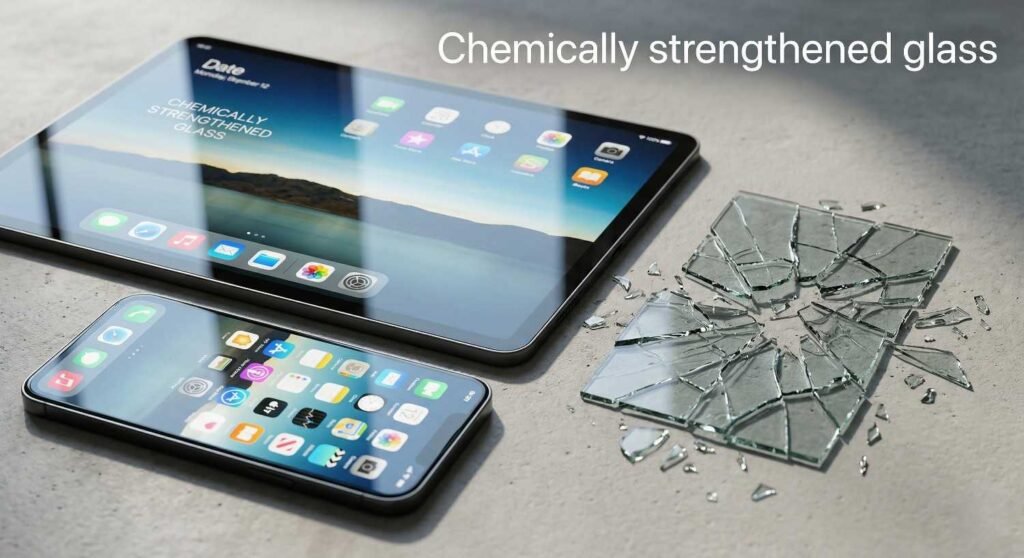
What is Chemically Strengthened Glass?
This is a type of glass that undergoes a special chemical treatment to enhance its mechanical strength and surface durability. Unlike tempered glass, which relies on rapid heating and cooling, chemically strengthened glass strengthens at a molecular level.
The process usually involves ion exchange, where smaller sodium ions in the glass are replaced with larger potassium ions from a molten salt bath. This creates a compressive stress layer on the surface, making the glass more resistant to cracks, scratches, and impacts.
This YouTube video below explains how to chemically strengthen glass, such as Gorilla Glass, highlighting the ion-exchange process that increases surface compressive stress. It also shows why this makes glass more scratch-resistant and durable for devices and other applications. 🔬✨
Key Differences Between Chemically Strengthened and Tempered Glass
| Feature | Chemically Strengthened Glass | Tempered Glass |
|---|---|---|
| Strengthening Method | Ion exchange at molecular level | Thermal heating and rapid cooling |
| Surface Stress | Compressive layer ~50–200 μm deep | Uniform stress throughout |
| Breakage Behavior | Shatters into large cracks | Shatters into small granules |
| Typical Applications | Smartphones, tablets, eyeglasses, optical lenses | Windows, doors, automotive panels |
How Chemically Strengthened Glass is Made
The manufacturing process of chemically strengthened glass is precise and controlled. Understanding this process helps explain why it is stronger and more durable than conventional glass.
Step 1: Glass Selection
The base glass is usually aluminosilicate glass due to its excellent chemical durability and thermal stability.
Step 2: Surface Preparation
The glass surface is cleaned thoroughly to remove impurities, dust, and oils that could interfere with the strengthening process.
Step 3: Ion Exchange Process
The glass is submerged in a molten salt bath (commonly potassium nitrate) at a temperature of 400–500°C. Sodium ions in the glass surface are replaced by larger potassium ions from the bath.
Step 4: Cooling and Quality Check
After ion exchange, the glass is cooled gradually to avoid thermal shock. Each sheet undergoes rigorous inspection for defects, uniformity, and surface stress measurement.
Benefits of Chemically Strengthened Glass
This offers multiple advantages, making it a preferred choice for high-performance applications.
1. Superior Scratch Resistance
The compressive stress layer on the surface makes it highly resistant to everyday scratches, which is especially critical for mobile devices and wearable technology.
2. Enhanced Impact Resistance
While not indestructible, chemically strengthened glass can withstand higher impacts than standard glass, reducing the likelihood of shattering from minor drops or accidents.
3. Thin and Lightweight
Because of its strength, thinner sheets of chemically strengthened glass can be used without compromising durability. This makes it ideal for sleek smartphones, tablets, and laptop screens.
4. Optical Clarity
This maintains excellent transparency and color accuracy, making it suitable for displays, optical lenses, and architectural panels.
5. Heat and Thermal Shock Resistance
The ion exchange process also enhances thermal stability, allowing the glass to handle temperature fluctuations better than ordinary glass.
6. Safer Breakage
Unlike regular glass, this may crack under extreme force but is less likely to shatter into dangerous shards, making it safer for consumer products.
7. Longevity and Durability
Its resistance to scratches, impacts, and thermal stress ensures a longer lifespan, reducing the need for frequent replacements and maintenance.
Common Applications of Chemically Strengthened Glass
The unique properties of chemically strengthened glass have made it a vital component in various industries:
Consumer Electronics
- Smartphones and tablets: Protects high-resolution displays from scratches and minor drops.
- Smartwatches: Thin yet strong screens for wearable devices.
- Laptops and monitors: Provides optical clarity and surface durability.
Automotive Industry
- Side and rear windows: Enhanced safety and scratch resistance.
- Display panels: Infotainment and navigation screens.
Architectural and Interior Design
- Windows and glass partitions: Offers strength and safety in buildings.
- Shower enclosures: Resistant to scratches, cracks, and thermal stress.
Optical Applications
- Eyeglasses and lenses: Maintains clarity and scratch resistance.
- Camera lenses: Protects delicate surfaces while ensuring optical precision.
Chemically Strengthened Glass vs Gorilla Glass
Many popular consumer devices use Gorilla Glass, a proprietary chemically strengthened glass developed by Corning. While all chemically strengthened glass uses the ion exchange process, Gorilla Glass is engineered for higher scratch and impact resistance, optimized for touchscreen sensitivity, and manufactured at scale for consumer electronics.
Key Considerations
- Cost: Gorilla Glass may carry a premium due to branding and proprietary technology.
- Performance: Gorilla Glass often undergoes additional coatings for oleophobic (fingerprint-resistant) properties.
- Availability: Standard chemically strengthened glass is used widely in non-brand-specific applications.
Maintenance Tips for Chemically Strengthened Glass
Even though chemically strengthened glass is strong and durable, proper care ensures it lasts longer.
- Clean Regularly: Use microfiber cloths and gentle cleaners to remove fingerprints and dust.
- Avoid Sharp Impacts: While stronger than regular glass, extreme force can still cause cracks.
- Use Screen Protectors: For mobile devices, a thin protective layer adds additional protection without compromising clarity.
- Handle With Care: Avoid dropping or bending the glass beyond its mechanical limits.
Common Misconceptions About Chemically Strengthened Glass
- It’s unbreakable: This is highly durable but not indestructible.
- It resists all scratches: It’s resistant to most everyday scratches but may still be scratched by harder materials like diamonds or metals.
- It’s the same as tempered glass: While both are stronger than ordinary glass, the manufacturing processes and stress profiles differ significantly.
Frequently Asked Questions (FAQ)
What is the lifespan of chemically strengthened glass?
With proper care, this can last the lifetime of the device or application, often outperforming standard glass in durability and scratch resistance.
Can chemically strengthened glass be recycled?
Yes, it can be recycled like other silicate glasses, though specialized recycling processes may be required due to the ion-exchange treatment.
Is chemically strengthened glass expensive?
It is typically more expensive than regular glass due to the specialized ion-exchange process, but its durability and long-term benefits often justify the cost.
Can I use chemically strengthened glass in extreme temperatures?
Yes, it is designed to withstand moderate temperature fluctuations, making it suitable for most indoor and outdoor applications.
Does chemically strengthened glass prevent cracks completely?
No material can fully prevent cracking, but the compressive stress layer significantly reduces the risk of breakage from everyday impacts.
Conclusion
Chemically strengthened glass represents a major advancement in material science, combining strength, optical clarity, and safety. From smartphones and tablets to automotive and architectural applications, its benefits are clear: durability, scratch resistance, and reliability.
For consumers and professionals alike, understanding the properties and advantages of chemically strengthened glass is essential when choosing the right glass for any application. Proper care, combined with its inherent strength, ensures that chemically strengthened glass remains a long-lasting, safe, and high-performance solution.
Investing in chemically strengthened glass, whether for personal devices or industrial projects, offers unmatched durability and peace of mind—making it a cornerstone of modern glass technology.