
Smartphone display impact distribution is a crucial concept in understanding why some screens survive drops while others shatter instantly. Every time a smartphone falls, the force of impact spreads across the display in specific patterns, determining whether the glass cracks or remains intact.
Modern smartphones are engineered with advanced materials and layered structures to control how impact energy is distributed. The goal is not to make devices unbreakable, but to reduce stress concentration and improve durability. However, factors such as drop angle, surface type, and internal design still play a major role in how effectively this energy is absorbed.
In this comprehensive guide, we will explore how smartphone display impact distribution works, the science behind it, and practical ways to minimize damage.
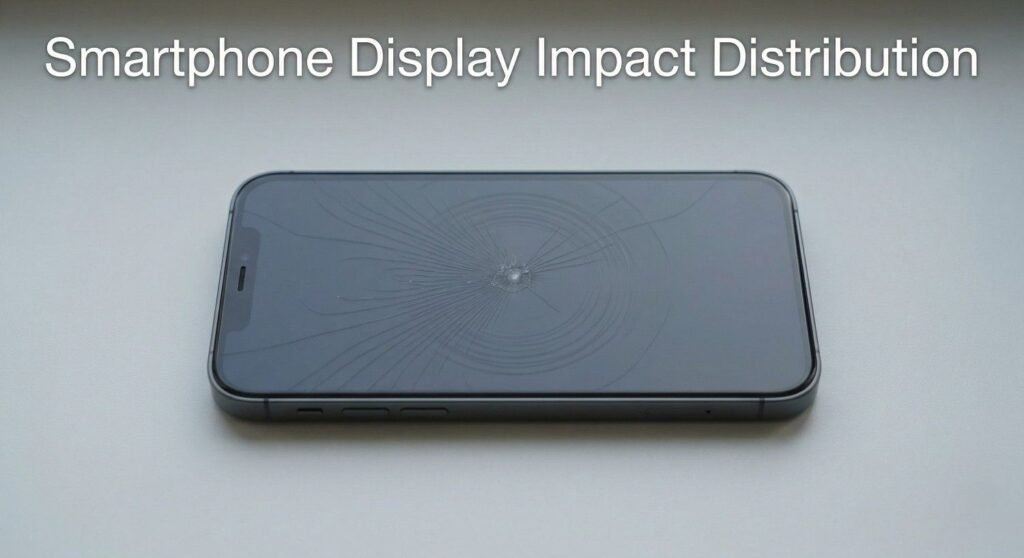
What Is Smartphone Display Impact Distribution?
Smartphone display impact distribution refers to how force is transferred, absorbed, and spread across the screen and internal layers when a device experiences an impact.
Instead of concentrating force at a single point, well-designed displays distribute energy across a wider area to reduce stress and prevent cracks.
Key Characteristics
- Energy dispersion across multiple layers
- Reduction of stress concentration points
- Dependence on material strength and structural design
- Influence of external conditions such as impact angle and surface type
The Science Behind Impact Distribution
Smartphone display impact distribution is governed by fundamental principles of physics, including force transfer, stress distribution, and energy absorption.
Force and Stress Distribution
When a phone hits a surface, the force is initially concentrated at the point of contact. This force then spreads outward through the glass and internal layers. The highest stress occurs at the impact location, and if it exceeds the material’s strength, cracks begin to form.
Energy Absorption
Not all impact energy reaches the glass. Materials such as adhesives, internal components, and the device frame absorb part of the energy, reducing the stress applied to the display.
Crack Propagation
Once a crack forms, it tends to spread along weak points within the material. Advanced glass technologies like Ceramic Shield are designed to slow or disrupt this crack propagation process.
How Smartphone Displays Are Structured for Impact Distribution
Modern smartphone displays are built using multiple layers, each designed to improve impact resistance and energy distribution.
Layer Composition
- Outer glass layer – protects against direct impact and scratches
- Touch sensor layer – detects input and adds slight flexibility
- Display panel (OLED or LCD) – produces visuals and is highly sensitive
- Adhesive bonding layers – absorb shock and distribute energy
- Supporting frame structure – reinforces the device and redirects force
Each layer contributes to managing impact energy, reducing the likelihood of structural failure.
Key Factors Affecting Smartphone Display Impact Distribution
Several variables influence how effectively impact energy is distributed.
Impact Angle
A flat drop allows force to spread more evenly, reducing stress concentration. In contrast, angled or corner impacts concentrate force into a smaller area, increasing the risk of damage.
Surface Hardness
Soft surfaces absorb some impact energy, while hard surfaces like concrete reflect energy back into the device, increasing stress on the display.
Device Design
The strength of the frame, internal reinforcement, and overall construction affect how energy is redistributed throughout the device.
Glass Type
Different types of glass offer varying levels of durability. Chemically strengthened and ceramic-infused glass improve resistance to stress and cracking.
Impact Zones in Smartphone Displays
Different areas of a smartphone display respond differently to impact.
Center Impact Zone
The center allows force to spread evenly in all directions, reducing stress concentration and lowering the risk of immediate cracking.
Edge Impact Zone
Edges experience higher stress because energy cannot distribute as evenly, making them more vulnerable to cracks.
Corner Impact Zone
Corners are the most fragile areas because force is concentrated into a very small space, significantly increasing the likelihood of shattering.
Smartphone Display Impact Distribution vs Damage Outcomes
| Impact Location | Force Distribution | Damage Risk | Typical Outcome |
|---|---|---|---|
| Center | Even distribution | Low | Minor or no damage |
| Edge | Partial distribution | Medium | Cracks may form |
| Corner | Concentrated force | High | Severe damage or shattering |
Key Insight
Corner impacts are the most dangerous because they combine high stress concentration with limited energy distribution.
Role of Materials in Impact Distribution
Materials play a critical role in determining how well a smartphone handles impact forces.
Strengthened Glass
Modern strengthened glass improves resistance to stress and delays crack formation.
Adhesive Layers
Adhesive materials act as internal shock absorbers, reducing the direct transfer of energy between layers.
Metal or Polymer Frames
Frames provide structural support and help redistribute impact forces away from the display.
How Cases and Accessories Influence Impact Distribution
Protective accessories significantly improve impact performance.
Shock-Absorbing Cases
These cases reduce impact force by cushioning the fall and spreading energy across the device.
Raised Edges
Raised bezels prevent direct contact between the screen and flat surfaces during drops.
Screen Protectors
Screen protectors add an extra layer that absorbs minor impacts and prevents surface damage.
Common Failure Patterns in Smartphone Displays
Understanding failure patterns helps explain how impact energy behaves.
Spiderweb Cracks
Cracks radiate outward from a central impact point, indicating high stress at the contact area.
Edge Cracks
These begin at weak points along the edges and spread inward.
Shatter Patterns
Shattering occurs when impact force exceeds the material’s limits, resulting in multiple fracture lines.
Practical Tips to Improve Smartphone Display Impact Distribution
To reduce damage risk and improve durability:
- Use a high-quality shockproof case
- Install a tempered glass screen protector
- Avoid placing your phone near edges or unstable surfaces
- Handle your device carefully during daily use
- Choose devices with reinforced glass technology
Advanced Technologies Improving Impact Distribution
Innovation continues to enhance smartphone durability.
Ceramic-Infused Glass
This technology improves resistance to crack propagation and enhances overall strength.
Flexible Display Layers
Flexible materials allow slight bending, which helps absorb impact energy instead of resisting it rigidly.
Enhanced Adhesive Systems
Advanced bonding materials improve shock absorption and energy distribution between layers.
Future Trends in Smartphone Display Impact Distribution
AI-Optimized Design
Manufacturers are using simulations to improve structural resilience and predict weak points.
Next-Generation Materials
Future displays may use stronger, lighter, and more flexible materials for better durability.
Integrated Shock Systems
Built-in mechanisms may help absorb and dissipate impact energy more effectively.
FAQs About Smartphone Display Impact Distribution
What is smartphone display impact distribution?
It is the process by which impact force spreads across a smartphone’s screen and internal layers during a drop.
Why do phone corners break more easily?
Corners concentrate stress into a small area, making them more vulnerable to damage.
Can a case improve impact distribution?
Yes, shock-absorbing cases help reduce and distribute impact forces.
Does stronger glass prevent all damage?
No, it reduces risk but cannot completely eliminate damage.
What is the safest way a phone can fall?
A flat drop on the front or back is generally safer because it distributes force more evenly.
Conclusion
Smartphone display impact distribution is a fundamental factor that determines whether a device survives a drop or suffers damage. It is not just about strong glass, but about how effectively impact energy is managed across the entire structure of the device.
From advanced materials to protective accessories, multiple elements work together to improve durability. However, no solution is completely foolproof, making careful handling and preventive measures essential.
As smartphone technology continues to evolve, improvements in materials and structural design will further enhance impact distribution, helping devices become more durable and reliable over time.