
The carrier phone updates explained guide helps Android users understand why smartphones purchased through mobile carriers often receive Android OS updates later than unlocked devices. Many users notice that their phones receive system updates weeks or even months after other devices running the same Android version.
This delay occurs because carrier-branded devices must go through additional testing and certification processes before updates reach users. Android updates travel through several stages including manufacturer development, carrier validation, and staged OTA rollout.
Companies such as Samsung, OnePlus, and Xiaomi release firmware updates for their devices, but carrier networks must approve those updates before deployment.
Understanding the carrier phone updates explained process reveals why Android update timelines vary between unlocked phones and carrier-locked smartphones.
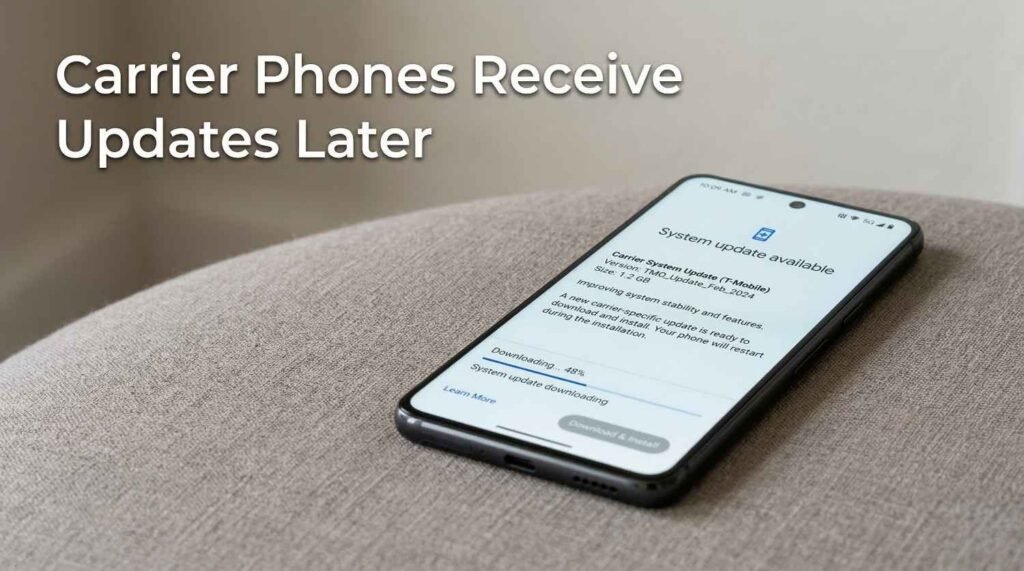
Carrier validation ensures network compatibility, device stability, and regulatory compliance before updates reach millions of devices.
What Are Carrier Phones
Definition of Carrier-Branded Devices
Carrier phones are smartphones sold directly by mobile network providers. These devices often include carrier-specific software, network configurations, and preinstalled applications.
Mobile carriers such as Verizon, AT&T, and T-Mobile distribute Android devices optimized for their networks.
Carrier phones may include:
- carrier apps and services
- network configuration profiles
- customized firmware settings
These modifications require additional testing whenever Android updates become available.
Difference Between Carrier Phones and Unlocked Phones
This YouTube video below from Reviews for Nerds explains the difference between factory unlocked and carrier locked phones. It highlights how each option affects network compatibility and flexibility. The video serves as a quick reference for choosing the right type of smartphone.
| Feature | Carrier Phones | Unlocked Phones |
|---|---|---|
| Network lock | Often locked | Unlocked |
| Update approval | Carrier approval required | Manufacturer controlled |
| Preinstalled apps | Carrier apps included | Minimal preinstalled apps |
| Update speed | Slower | Faster |
The carrier phone updates explained difference mainly relates to the additional approval process required for carrier devices.
Android Update Delivery Process
Role of Google in Android Updates
The Android operating system begins with Google, which develops the base Android platform.
Google releases the source code through the Android Open Source Project.
After Google releases the base software, device manufacturers begin customizing Android for their devices.
Manufacturer Firmware Development
Manufacturers integrate Android with device hardware.
This process includes:
- driver integration
- hardware compatibility testing
- user interface customization
Many manufacturers also build their own Android interfaces such as One UI or OxygenOS.
Once development finishes, manufacturers begin preparing updates for distribution.
Why Carrier Phones Receive Updates Later
Carrier Certification Requirements
Carrier-branded devices must pass additional certification tests before updates can release.
These tests verify compatibility with the carrier’s network infrastructure.
Certification checks include:
- mobile network compatibility
- emergency call functionality
- VoLTE support
- 5G connectivity performance
The carrier phone updates explained certification phase can add several weeks to the update timeline.
Network Compatibility Testing
Android updates can affect cellular connectivity features.
Carriers must ensure updates work correctly with:
- cellular towers
- SIM authentication systems
- mobile data protocols
Testing prevents update-related network failures.
Carrier Software Integration
Carrier devices include additional software packages.
Examples include:
- carrier account apps
- visual voicemail services
- network configuration tools
These apps must remain compatible with new Android versions.
Carrier developers test their software alongside the firmware update.
Additional Security and Compliance Testing
Regulatory Compliance
Carrier devices must comply with regional telecommunications regulations.
Updates may affect radio firmware or network protocols.
Regulatory agencies require compliance testing to ensure devices operate within approved standards.
Security Validation
Carriers also verify security features within updates.
Security testing includes:
- encryption validation
- secure network communication
- protection against unauthorized network access
This step helps maintain network security across millions of devices.
Staged Rollout for Carrier Devices
Limited Initial Release
After certification, carriers often release updates gradually.
The staged rollout process sends updates to a small percentage of users first.
If no major issues appear, the rollout expands to more devices.
Benefits of Staged Updates
The carrier phone updates explained staged rollout process provides several benefits.
These include:
- early bug detection
- network stability monitoring
- performance evaluation
Staged deployment protects users from large-scale software problems.
Impact on Android Security Updates
This YouTube video below from All About Operating Systems explains how an Android phone’s update policy affects its lifespan. It highlights the role of security patches and software support in device longevity. The video serves as a quick reference for understanding long-term smartphone usability.
Security Patch Delays
Carrier testing sometimes delays security updates.
However, Android devices still receive critical patches through modular update systems such as Google Play Protect and Google Play system updates.
These updates improve security even when full system updates take longer.
Role of Google Play System Updates
Google Play system updates deliver modular security patches directly through the Google Play Store.
This system helps reduce update delays for certain Android components.
How Users Can Receive Updates Faster
Choosing Unlocked Devices
Unlocked smartphones often receive updates earlier than carrier versions.
Manufacturers control updates directly without requiring carrier approval.
Users who prioritize fast Android updates often prefer unlocked devices.
Checking Android Update Settings
Users can manually check for updates through Android settings.
Steps include:
- Open Settings
- Select System
- Tap Software Update
- Check for available updates
Manual checks may detect updates earlier during staged rollout phases.
Carrier Update Timeline Example
Below is a simplified comparison of update timelines.
| Update Stage | Unlocked Phone | Carrier Phone |
|---|---|---|
| Manufacturer release | Immediate | Immediate |
| Carrier certification | Not required | Required |
| Staged rollout | Yes | Yes |
| Total delay | Short | Longer |
The carrier phone updates explained timeline highlights why carrier phones often receive updates later.
Advantages of Carrier Testing
Although carrier delays can be frustrating, the process provides certain advantages.
Carrier testing helps ensure:
- stable network connectivity
- reliable emergency services
- improved system stability
These benefits protect users from network-related issues.
FAQ
Why do carrier phones receive updates later?
Carrier phones require additional certification and network testing before updates can be released.
Do unlocked phones get updates faster?
Yes. Unlocked devices usually receive updates directly from manufacturers without carrier approval delays.
What is carrier certification testing?
Carrier certification testing verifies that firmware updates work correctly with cellular networks.
Can users bypass carrier update delays?
Users cannot bypass carrier certification, but unlocked devices often receive updates faster.
Are carrier updates more stable?
Carrier testing may improve stability because updates undergo additional network validation.
Final Thoughts
The carrier phone updates explained process highlights the complex ecosystem behind Android software updates. Carrier certification, network compatibility testing, and staged rollout procedures all contribute to longer update timelines for carrier-branded devices.
Although these delays may frustrate some users, they help ensure network reliability, regulatory compliance, and system stability across millions of Android smartphones worldwide.