
For years, seamless file sharing has been one of the biggest advantages of Apple ecosystem. Now, that gap is finally closing. The Android AirDrop alternative is officially expanding beyond limited devices, bringing a unified, fast, and cross-brand sharing experience to millions of users worldwide.
With Google confirming a broader rollout of its upgraded Quick Share system, Android is preparing to deliver something it has long lacked—a truly universal file-sharing standard that works across brands, devices, and even ecosystems.
This isn’t just another feature update. The arrival of a proper Android AirDrop alternative could fundamentally change how users interact with their devices and how easily they move between platforms.
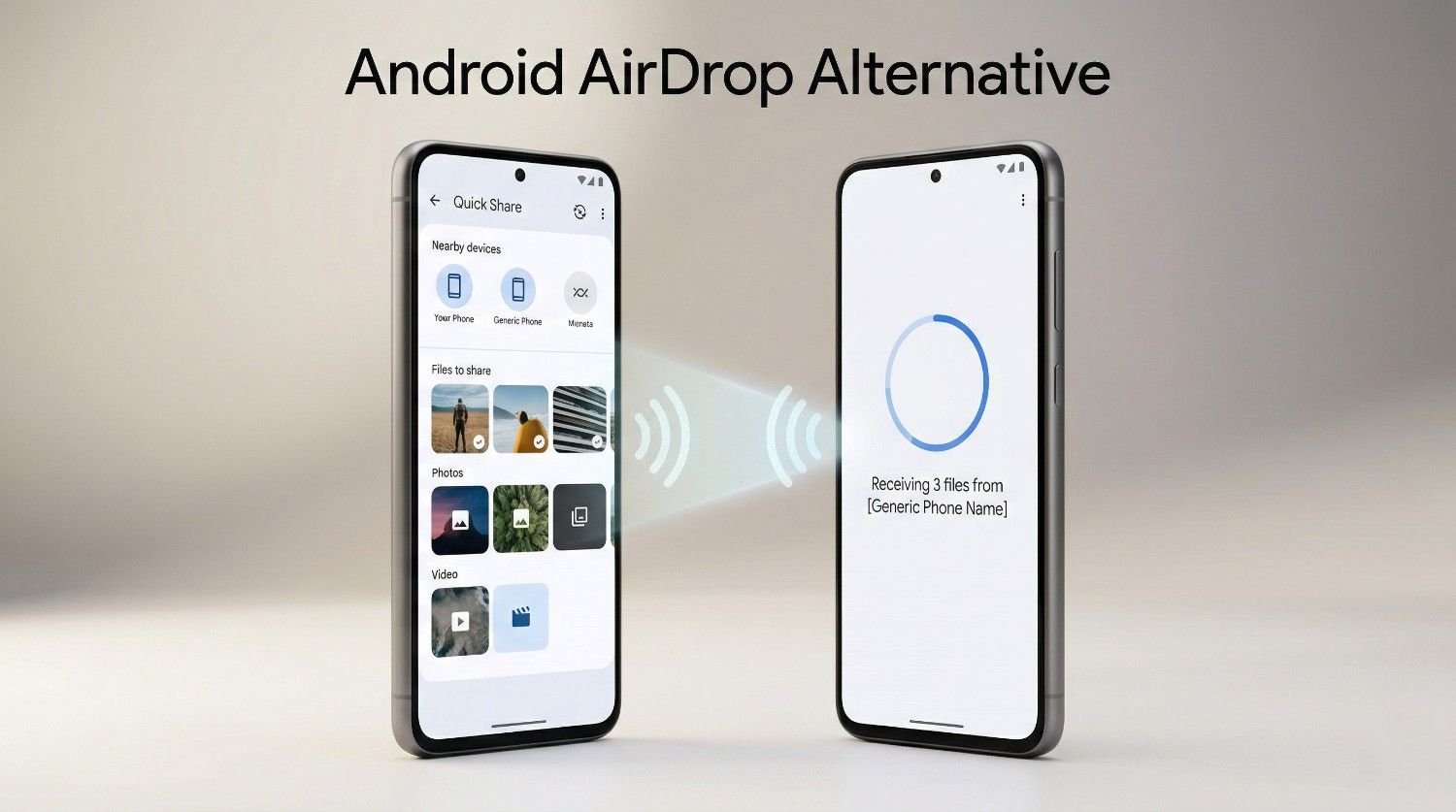
Android AirDrop Alternative: Why This Matters Now
The lack of a unified sharing system has been a long-standing weakness in the Android ecosystem. While individual brands like Samsung offered their own solutions, compatibility across devices was often inconsistent.
That’s exactly what the new Android AirDrop alternative aims to fix.
Instead of fragmented tools, Google’s approach focuses on a standardized experience powered by modern connectivity protocols. The result is a system that promises fast, secure, and simple file transfers between Android devices—and potentially even with Apple hardware.
Quick Share Evolves Into a Universal Standard
At the center of this transformation is Quick Share, which is being reworked into a universal Android AirDrop alternative.
Originally introduced on select devices, Quick Share is now being redesigned as a standalone application available through the Play Store. This shift is critical because it removes hardware limitations and allows broader adoption across the Android ecosystem.
The updated system is expected to:
- Work across different Android brands seamlessly
- Support high-speed transfers using Wi-Fi-based protocols
- Offer a simple, AirDrop-like interface
By decoupling Quick Share from specific devices, Google is ensuring that the Android AirDrop alternative can reach a much larger audience.
The Role of Global Regulations
Interestingly, the rise of the Android AirDrop alternative is not happening in isolation. Regulatory pressure—particularly from the European Union—has played a significant role.
New interoperability requirements have pushed companies like Apple to open up previously closed systems. This includes changes to the underlying technology used for AirDrop, shifting toward more open standards.
These developments have created an opportunity for Google to align its own sharing technology with broader industry standards, accelerating the development of a true Android AirDrop alternative.
Cross-Platform Sharing Could Change Everything
One of the most exciting aspects of the new Android AirDrop alternative is the potential for cross-platform compatibility.
Historically, sharing files between Android and iPhone devices has been cumbersome, often requiring third-party apps or cloud services. The new system aims to simplify this process significantly.
If fully implemented, users could:
- Share files directly between Android and iPhone
- Transfer data between phones, tablets, and laptops
- Avoid relying on external apps or internet connections
This level of interoperability would mark a major shift in the mobile industry, breaking down barriers that have existed for over a decade.
Hardware Partners Are Getting Involved
The success of the Android AirDrop alternative depends heavily on hardware support—and early signs are promising.
Major chipmakers like Qualcomm are already working on integrating compatibility into their platforms. Since many flagship Android devices rely on Qualcomm processors, this could accelerate adoption significantly.
At the same time, emerging brands are also preparing to support the feature, ensuring that it’s not limited to a handful of devices.
However, questions remain about mid-range and budget smartphones, particularly those using alternative chipsets. Full ecosystem adoption will depend on how widely these devices embrace the new standard.
More Than Just File Sharing
The Android AirDrop alternative is about more than just transferring files—it’s part of a broader strategy to improve ecosystem flexibility.
For Google, making it easier to share data is closely tied to reducing friction when switching platforms. The company has already been working on improving data migration tools, allowing users to move content more easily between devices.
This aligns with a larger trend in the industry, where:
- Interoperability is becoming a priority
- Proprietary systems are being challenged
- Users are demanding more freedom
In this context, the Android AirDrop alternative becomes a key piece of a much larger puzzle.
Competing With Apple’s AirDrop
Despite these advancements, Apple’s AirDrop remains the benchmark.
AirDrop’s strengths include:
- Deep integration within the Apple ecosystem
- Consistent performance across devices
- Extremely simple user experience
The challenge for the Android AirDrop alternative is not just matching these capabilities, but doing so across a far more diverse hardware landscape.
If Google succeeds, it could level the playing field between Android and iOS in one of the most practical aspects of daily smartphone use.
What This Means for Android Users
For everyday users, the arrival of a true Android AirDrop alternative could dramatically improve convenience.
Sharing photos, videos, and documents would become:
- Faster
- Easier
- More reliable
It would also reduce dependence on messaging apps and cloud storage for simple transfers, saving both time and data.
The Bigger Picture: A More Open Ecosystem
The emergence of the Android AirDrop alternative reflects a broader shift toward openness in the tech industry.
As companies adapt to regulatory changes and user expectations, the focus is moving toward:
- Standardized technologies
- Cross-platform compatibility
- Improved user control
This trend benefits consumers by breaking down barriers and creating a more seamless digital experience.
Final Thoughts
The Android AirDrop alternative is one of the most important updates to the Android ecosystem in recent years. By addressing a long-standing weakness, Google is not only improving usability but also challenging the dominance of closed ecosystems.
While there are still questions about full compatibility and adoption, the direction is clear: file sharing on Android is about to become faster, simpler, and far more universal.
And for users who have long envied AirDrop, that change couldn’t come soon enough.