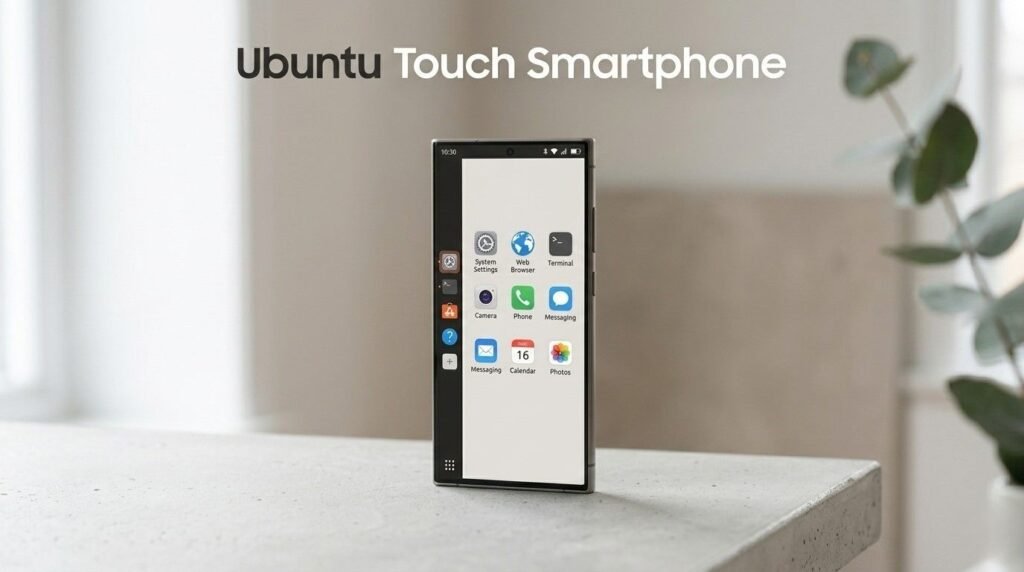
The idea of ditching mainstream platforms is no longer limited to tech forums and developer communities. The Ubuntu Touch smartphone is now re-entering the conversation as a serious alternative to Android and iOS, thanks to devices like the Volla Phone Quintus and continued development from the open-source community.
At a time when concerns around data privacy, ecosystem lock-in, and platform control are growing, the Ubuntu Touch smartphone offers something fundamentally different—a mobile experience built on Linux, free from the deep integration of Google services that define most Android devices today.
But how viable is this alternative in real-world usage, and can it genuinely challenge the dominance of Google and Apple?
Ubuntu Touch Smartphone: A Different Philosophy
Unlike traditional Android smartphones, the Ubuntu Touch smartphone is built around open-source principles. Developed by the UBports foundation, Ubuntu Touch is designed to prioritize user control, privacy, and transparency.
This means:
- No mandatory Google services
- Minimal data tracking
- Greater control over system-level operations
For users seeking a “de-Googled” experience, this approach is particularly appealing. Instead of relying on centralized ecosystems, the Ubuntu Touch smartphone puts control back in the hands of the user.
The Volla Phone Quintus Brings Linux to Modern Hardware
One of the biggest barriers for Linux-based smartphones has historically been outdated or underpowered hardware. The Volla Phone Quintus changes that narrative.
This device features a modern hardware setup that includes:
- A 6.78-inch AMOLED display with 120Hz refresh rate
- MediaTek Dimensity 7050 chipset
- 8GB RAM and 256GB storage
- 5G connectivity and Wi-Fi 6 support
These specifications place it firmly in the upper mid-range category, making the Ubuntu Touch smartphone concept far more practical for everyday use than earlier attempts.
Multi-Boot Makes the Transition Easier
A key innovation with the Volla Phone Quintus is its multi-boot capability. Users can run Ubuntu Touch alongside Volla OS, allowing them to switch between systems as needed.
This significantly lowers the barrier to entry. Instead of committing fully to a new platform, users can experiment with the Ubuntu Touch smartphone experience while retaining a fallback option.
In practical terms, this means:
- Testing Linux without losing familiar functionality
- Switching back for app-heavy tasks
- Gradually adapting to a new ecosystem
This flexibility is critical for wider adoption.
Software Improvements Make Ubuntu Touch More Viable
The latest version of Ubuntu Touch is based on Ubuntu 24.04 LTS, marking a significant upgrade in its technical foundation.
With updates from UBports, the platform now includes:
- Modernized system components
- Improved performance and stability
- Updated frameworks like Qt 5.15
These changes bring the Ubuntu Touch smartphone closer to mainstream usability, addressing one of the biggest criticisms of earlier versions.
The App Ecosystem Challenge Remains
Despite its progress, the Ubuntu Touch smartphone still faces a major limitation: app availability.
Unlike Android and iOS, which offer millions of apps, Ubuntu Touch relies on:
- OpenStore for native applications
- Waydroid for running Android apps
While Waydroid provides a workaround, it requires additional setup and technical knowledge. This makes it less accessible for average users.
In real-world terms, this means:
- Some popular apps may not be available
- Workarounds may be required
- User experience can vary depending on use case
This remains the biggest obstacle to mainstream adoption.
Privacy and Security: A Key Advantage
Where the Ubuntu Touch smartphone truly stands out is privacy.
Without Google services embedded into the system, users benefit from:
- Reduced data collection
- Greater transparency in system operations
- Enhanced control over permissions
In an era of increasing data surveillance concerns, this privacy-first approach is a major selling point.
For developers, journalists, and privacy-conscious users, the Ubuntu Touch smartphone offers a level of control that mainstream platforms simply don’t provide.
Can It Compete With Android and iOS?
Realistically, the Ubuntu Touch smartphone is not positioned as a direct competitor to flagship devices from Samsung or Apple.
Instead, it occupies a niche space:
- Users who prioritize privacy over convenience
- Developers and tech enthusiasts
- Individuals seeking alternatives to mainstream ecosystems
While it may not replace Android or iOS for the average consumer, it provides a meaningful alternative for a specific audience.
A Growing Movement Beyond the Duopoly
The rise of the Ubuntu Touch smartphone reflects a broader shift in the tech landscape.
More users are questioning:
- Data privacy practices
- Platform lock-in
- Dependence on big tech ecosystems
As a result, interest in alternative operating systems is growing—even if slowly.
Devices like the Volla Phone Quintus demonstrate that there is still room for innovation outside the dominant platforms.
Everyday Usability: The Real Test
The biggest question for any Ubuntu Touch smartphone is whether it can handle everyday tasks reliably.
Basic functions like:
- Calling and messaging
- Web browsing
- Media consumption
are generally well-supported.
However, challenges remain in areas such as:
- Banking apps
- Social media integration
- Advanced productivity tools
For many users, these limitations will be a deciding factor.
The Future of Linux Smartphones
The Ubuntu Touch smartphone is unlikely to disrupt the market overnight, but it represents an important step toward greater diversity in mobile platforms.
Future developments could include:
- Improved app compatibility
- Better hardware partnerships
- Enhanced user interfaces
If these areas continue to evolve, Linux-based smartphones could become more viable for a broader audience.
Final Thoughts
The Ubuntu Touch smartphone is not trying to replace Android or iOS—it’s offering something fundamentally different.
With modern hardware, improved software, and a strong focus on privacy, it stands as a credible alternative for users willing to embrace a different kind of mobile experience.
For now, it remains a niche product. But in a market dominated by two major players, even a niche alternative can have a significant impact.