
Google Android Show I/O Edition is officially back, and it’s once again acting as Google’s “Android-first” warm-up before the main Google I/O keynote. Google has confirmed it will livestream The Android Show: I/O Edition on May 12 at 1 p.m. ET, giving Android fans an earlier look at what the company calls one of the biggest years for Android yet.
The format is familiar: get the Android-specific announcements out of the way in a focused event, then use the main I/O stage to go deep on Gemini, AI, and developer tooling. Last year, this pre-event approach helped Google spotlight Android design updates and new AI features without cramming everything into one keynote. This time, the timing is even more interesting because Android 17 has already gone through multiple public betas, and we’ve seen hints of meaningful changes to notifications, multitasking, and cross-device experiences.
If you care about Android 17, Wear OS, Android Auto, Android TV, or Android XR, the Google Android Show I/O Edition is shaping up to be the best “what to expect next” checkpoint before Google’s bigger AI announcements at I/O.
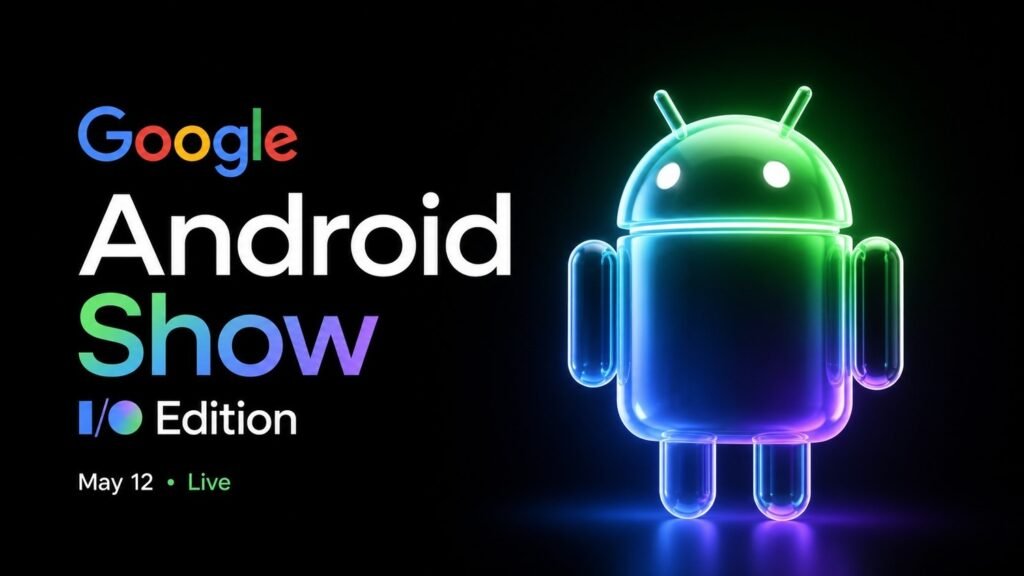
When and where to watch Google Android Show I/O Edition
Google says the Google Android Show I/O Edition will stream live on YouTube and through Google’s Android channels.
- Date: May 12
- Time: 1 p.m. ET / 10 a.m. PT
- Where: YouTube (official Google/Android stream) and Android landing pages
If you want to catch announcements in real time, set a calendar reminder now. Google’s Android updates tend to trigger fast rollouts of beta features, developer documentation, and UI changes shortly after the event.
Why Google is doing a separate Android Show again
The Google Android Show I/O Edition exists for a simple reason: I/O has become an AI conference. Gemini, AI agents, and model updates dominate headlines, and Android announcements can get lost in the noise.
By separating Android news into its own show, Google can:
- give Android 17 and platform changes more focused attention
- keep the main I/O keynote cleaner and more AI-centric
- deliver clearer messaging to consumers and developers
- build hype without revealing everything at once
For Android fans, this is a win. It means Android isn’t competing with 90 minutes of AI slides for airtime.
What to expect from Google Android Show I/O Edition: Android 17, notifications, and multitasking
Google hasn’t published a detailed agenda, but multiple outlets point to notifications as a major theme. That fits what we’ve already seen in Android 17 betas: Google is tuning system behavior rather than doing a dramatic visual reboot.
Here are the most likely topics for the Google Android Show I/O Edition based on public betas and credible rumors.
1) Android 17 notification rules and smarter alerts
One of the most plausible Android 17 additions is a “notification rules” system that lets users customize alert behavior more precisely for certain apps or contacts. Expect mention of:
- more granular controls (who can interrupt you and when)
- better quick settings behavior and grouping
- fewer noisy, repetitive alerts
- improved permission and notification management
Notifications are where Android can feel both powerful and chaotic. If Google wants to make Android feel more polished, notifications are the right battlefield.
2) Better multitasking: universal app bubbles and floating windows
Android has flirted with bubbles and floating UI for years, but Android 17 appears to push the idea further. The Google Android Show I/O Edition could showcase multitasking features like:
- universal app bubbles (apps as interactive floating windows)
- smoother split-screen workflows on large screens
- improved UI consistency for multitasking gestures
This is especially relevant for foldables and tablets, where Android’s flexibility is a strength—but app behavior can still be inconsistent.
3) Large-screen and orientation behavior changes
Android 17 is continuing Google’s push for better large-screen app behavior. If Google highlights it during the Google Android Show I/O Edition, expect discussion around:
- better adaptive layouts
- improved orientation handling
- fewer “phone-only” app limitations on foldables/tablets
- multi-window performance improvements
This is a developer-facing topic, but it affects real users every day—especially anyone who owns a Pixel Fold, Galaxy Fold, or a modern Android tablet.
4) Cross-device and ecosystem improvements
Android is increasingly about more than phones. Google could use the Google Android Show I/O Edition to connect dots across:
- phone-to-tablet continuity
- sharing improvements
- widget hub or “home” surfaces
- better cross-device compatibility
There are also ongoing rumors about Android and ChromeOS convergence. Even a small mention would be headline-worthy, because it suggests Google is serious about a unified platform story.
Wear OS, Android Auto, Android TV, and Android XR: why this event matters beyond phones
Google has described this year as one of the biggest for Android, and that usually means multiple Android-based platforms get attention.
Wear OS
Expect updates around:
- performance and battery efficiency
- health tracking improvements
- tighter Gemini integration (at least as a direction)
Android Auto
Potential focus areas:
- UI polish and stability
- smarter voice controls
- deeper assistant integration for navigation and messages
Android TV
Possible highlights:
- discovery improvements
- performance tuning
- AI-powered recommendations (carefully framed)
Android XR and smart glasses
Android XR is the most “future” platform Google has right now. Partnerships with eyewear brands and continued XR development make it likely Google will at least tease what’s next. The Google Android Show I/O Edition could set the stage for bigger XR announcements during I/O.
The Gemini question: how much AI will Google reveal here?
Even if Google saves most AI headlines for I/O, Android is now inseparable from Gemini. Expect at least a preview of:
- more on-device Gemini features
- AI across system UI (summaries, suggestions, actions)
- privacy and control framing to reduce backlash
Google will likely use the Google Android Show I/O Edition to show how AI improves Android without turning the show into a model update keynote.
What Android users should do now (so you’re ready)
If you want to get the most from the Google Android Show I/O Edition:
- bookmark your existing Android 17 coverage and compare what Google confirms
- if you’re on a Pixel, consider whether you want to enroll in Android 17 betas (only if you can tolerate bugs)
- watch for immediate feature drops after the show—Google sometimes flips server-side changes quickly
Bottom line
Google Android Show I/O Edition is the clearest sign that Google wants Android to have its own spotlight again—even in an era where AI dominates everything. With Android 17 already deep into beta testing, Google is positioned to talk about real features: better notifications, smarter multitasking, and improved large-screen behavior. And because this event happens before I/O, it’s likely to set the narrative for what Android will look like over the next year.
If you only watch one Android-focused event this month, make it the Google Android Show I/O Edition. It’s where Google’s platform priorities usually become obvious—before the Gemini headlines take over.