
Smartphone display technology has advanced further in the past few years than in the entire decade before it. The screen you are looking at right now is a product of years of engineering — designed to be bright, responsive, durable, and efficient all at the same time.
But most people know very little about what their screen is actually made of, how it works, or how to protect it properly. That gap leads to poor buying decisions, inadequate screen protection, and expensive repairs that could have been avoided.
This guide covers everything you need to understand about smartphone display technology — from the types of screens used in modern phones to the glass that protects them, the screen protectors that add an extra layer of defence, and the practical steps you can take to keep your display in the best possible condition.
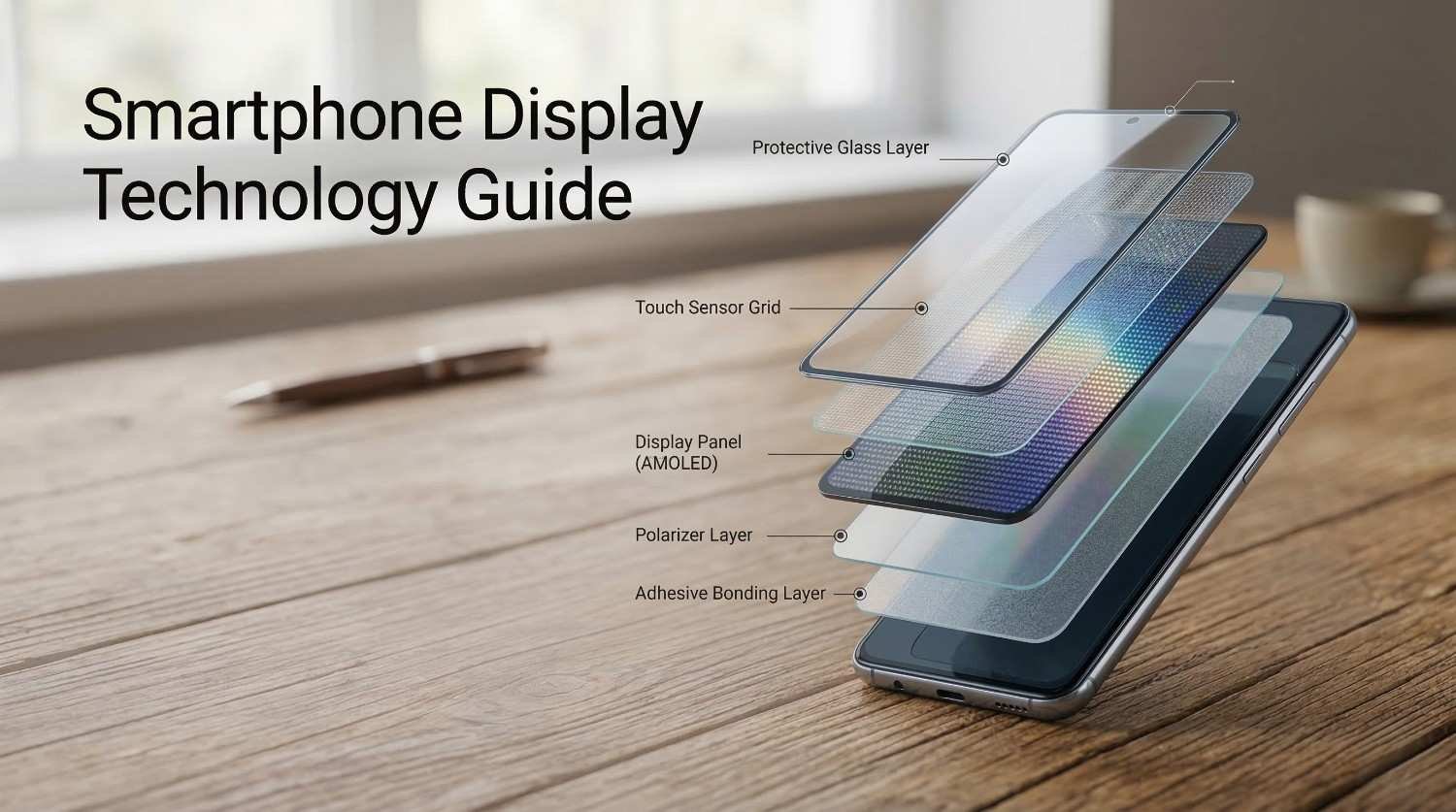
Understanding the Basics of Smartphone Display Technology
Before comparing specific screen types and protection options, it helps to understand what a smartphone display actually consists of.
A modern smartphone screen is not a single layer. It is a stack of components working together:
- The display panel — produces the actual light and image you see
- The touch layer — detects your finger input
- The cover glass — protects the panel beneath from physical damage
- The oleophobic coating — repels fingerprints and oils from your skin
- The screen protector (optional) — adds an additional protective layer on top
Each of these components plays a distinct role. Smartphone display technology improvements happen across all of these layers simultaneously, which is why modern screens feel so different from those of even a few years ago.
Types of Smartphone Display Panel

The display panel is the heart of smartphone display technology. It determines brightness, color accuracy, power consumption, and how the screen behaves in different lighting conditions.
AMOLED and OLED Displays
AMOLED stands for Active Matrix Organic Light Emitting Diode. OLED stands for Organic Light Emitting Diode. Both terms refer to the same fundamental technology with slight structural variations.
In an AMOLED or OLED display, each individual pixel produces its own light. This means the screen does not need a separate backlight behind the panel. When a pixel needs to display black, it simply turns off completely.
The practical benefits of this smartphone display technology are significant:
- True black levels — Black areas of the screen are completely dark, not dark grey
- Higher contrast — Colors appear more vivid because bright areas are surrounded by genuinely dark areas
- Better battery efficiency — Dark themes use less power because fewer pixels are illuminated
- Thinner displays — No backlight layer means the panel can be made thinner
Most flagship Android phones use AMOLED displays. Samsung, Google Pixel, OnePlus, and Nothing all use AMOLED panels in their premium devices.
LCD Displays
LCD stands for Liquid Crystal Display. This is an older smartphone display technology that still appears in many midrange and budget devices.
LCD panels use a backlight behind the entire screen. Liquid crystals filter that light to create different colors and brightness levels. Because the backlight is always on, LCD screens cannot produce true black — black areas appear as very dark grey rather than the complete absence of light.
Despite this limitation, LCD displays offer advantages in some situations:
- Color accuracy — Some LCD panels reproduce natural colors with less saturation than AMOLED
- Outdoor visibility — LCD screens can be easier to read in direct sunlight on some devices
- Lower cost — LCD technology is less expensive to produce, which keeps device prices lower
LCD panels are less common in new flagship devices but remain widely used in budget smartphones and entry-level tablets.
Comparing AMOLED and LCD
| Feature | AMOLED | LCD |
|---|---|---|
| Black levels | True black | Dark grey |
| Contrast ratio | Very high | Moderate |
| Color vibrancy | High | More natural |
| Battery (dark theme) | Better | Standard |
| Sunlight visibility | Good | Good to very good |
| Cost | Higher | Lower |
| Used in | Flagships, premium mid-range | Budget, entry-level |
Refresh Rate and Its Role in Smartphone Display Technology
Refresh rate describes how many times per second the display updates the image on screen. It is measured in hertz (Hz).
A standard refresh rate is 60Hz, meaning the screen refreshes sixty times every second. Higher refresh rates — 90Hz, 120Hz, and 144Hz — make scrolling, gaming, and animations appear significantly smoother.
This aspect of smartphone display technology has a direct impact on daily experience:
- 60Hz — Standard, smooth enough for everyday use
- 90Hz — Noticeably smoother scrolling and transitions
- 120Hz — The current standard for flagship devices, very smooth
- 144Hz — Primarily beneficial for mobile gaming
Most modern flagship phones use variable refresh rate technology, which automatically adjusts the refresh rate based on what is happening on screen. Static content like reading an article uses a lower refresh rate to save battery. Fast-moving content like gaming uses the maximum refresh rate for the smoothest experience.
Cover Glass in Smartphone Display Technology
The cover glass sits on top of the display panel and protects it from scratches, drops, and everyday wear. The quality of the cover glass is one of the most important factors in how durable a smartphone display feels in real use.
Gorilla Glass
Gorilla Glass is manufactured by Corning and is the most widely used cover glass in smartphone display technology.
It comes in several generations, each stronger than the last:
| Version | Key Improvement |
|---|---|
| Gorilla Glass 5 | Strong drop resistance on rough surfaces |
| Gorilla Glass 6 | Improved multi-drop survival |
| Gorilla Glass Victus | Significantly better scratch resistance |
| Gorilla Glass Victus 2 | Better drop performance on rough surfaces |
Gorilla Glass Victus and Victus 2 represent the current standard for premium Android devices. They offer meaningful improvements in both scratch resistance and drop survival compared to earlier generations.
Sapphire Glass
Sapphire glass is an alternative cover glass material used in some premium smartwatches and a small number of smartphones.
It is significantly harder than Gorilla Glass on the Mohs hardness scale, making it highly resistant to scratches. However, sapphire glass is more brittle than Gorilla Glass, meaning it can crack more easily when dropped.
The high cost of manufacturing sapphire glass limits its use to premium products where scratch resistance is the primary concern.
Dragon Tail Glass
Dragon Tail is produced by AGC and appears on many midrange Android devices as an alternative to Gorilla Glass.
It offers reasonable protection at a lower manufacturing cost, making it a common choice for devices in the middle of the price range.
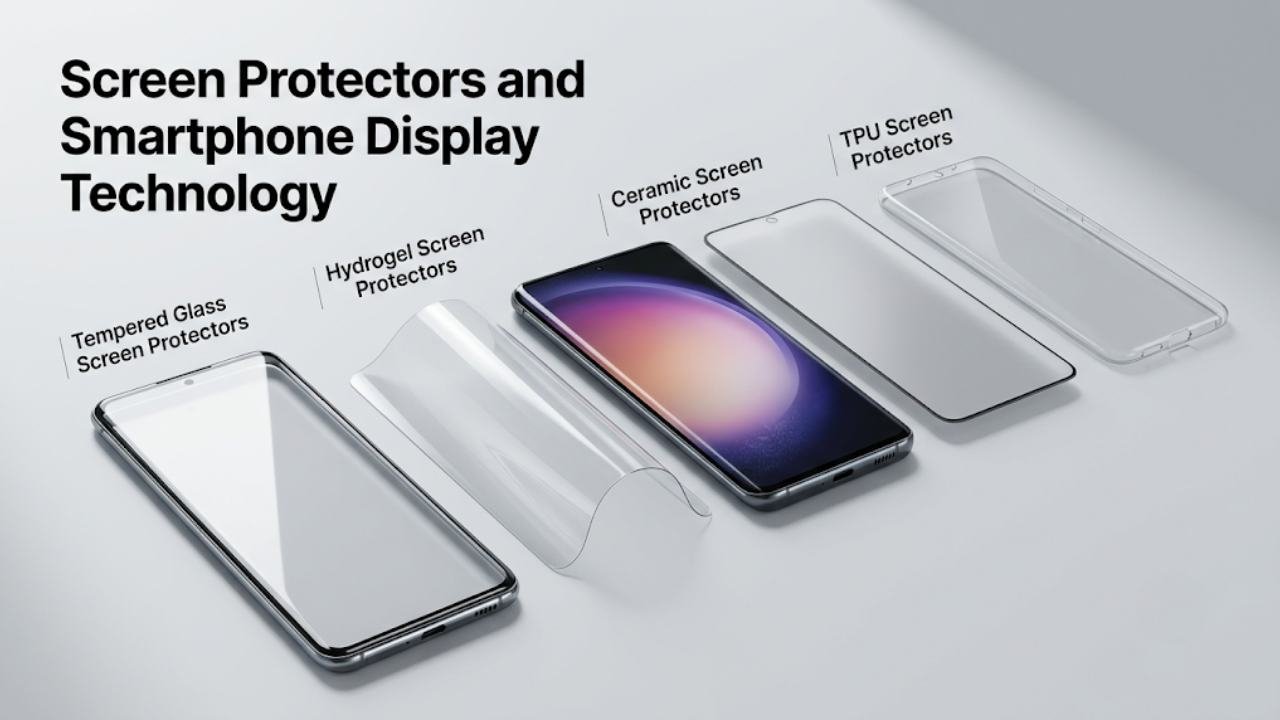
Screen Protectors and Smartphone Display Technology
Even the most advanced cover glass benefits from an additional protective layer. Screen protectors sit on top of the cover glass to absorb impact, prevent scratches, and extend the life of the display.
Tempered Glass Screen Protectors
Tempered glass is the most popular screen protector type for good reason. It provides strong scratch resistance, clear optical quality, and a natural glass-like feel under your fingers.
Hardness ratings like 9H refer to the pencil hardness scale — a measure of scratch resistance. Most quality tempered glass protectors rate at 9H, meaning they resist scratching from most everyday materials including keys and coins.
The terms 9D and 11D that appear on packaging refer to edge coverage and installation method rather than actual hardness. The core material remains the same.
Hydrogel Screen Protectors
Hydrogel protectors are made from a flexible, self-healing plastic material.
They conform perfectly to curved screens without the lifting edges that sometimes occur with rigid tempered glass on curved displays. Minor surface scratches can heal themselves over time as the material returns to its original shape.
Hydrogel offers good protection against scratches but provides less impact resistance than tempered glass in a direct drop scenario.
Ceramic Screen Protectors
Ceramic protectors combine flexibility with scratch resistance, sitting between tempered glass and hydrogel in terms of feel and protection.
They are more shatter-resistant than standard tempered glass, which makes them useful for users who frequently drop their phones but want stronger scratch protection than hydrogel provides.
TPU Screen Protectors
TPU (thermoplastic polyurethane) protectors are thin, flexible films that offer basic scratch protection with minimal effect on display clarity.
They are the least protective option against drops and heavy scratching but provide good coverage for curved screens at a low cost.
Choosing the Right Screen Protector
| Type | Scratch Protection | Impact Protection | Curved Screen Fit | Feel |
|---|---|---|---|---|
| Tempered Glass | Excellent | Good | Moderate | Natural glass |
| Hydrogel | Good | Moderate | Excellent | Soft, flexible |
| Ceramic | Very good | Very good | Good | Slightly different |
| TPU | Basic | Low | Excellent | Plastic film |
Oleophobic Coating — The Invisible Layer
Every modern smartphone display includes an oleophobic coating applied to the outermost surface.
This invisible layer repels the natural oils from your skin, reducing fingerprint smudges and making the screen easier to clean. It also makes your finger glide more smoothly across the surface during touch interactions.
Oleophobic coatings wear down over time with regular use. This is why screens that felt perfectly smooth when new gradually start to feel slightly different after a year or more of daily use.
When you apply a screen protector, the oleophobic coating on the protector itself replaces the function of the one on your cover glass. Quality screen protectors include their own oleophobic layer. Lower quality options may feel noticeably sticky or rough by comparison.

How to Protect Your Smartphone Display
Understanding smartphone display technology is most useful when it leads to practical protective habits.
Use a quality screen protector from day one
Cover glass alone handles most everyday scratches, but a screen protector adds meaningful protection against sharp objects and drop impacts without affecting display quality.
Use a case with raised edges
A case that raises the edge around the screen protects the display when the phone lands face-down. Even a small lip of a millimetre or two keeps the glass from making direct contact with hard surfaces.
Avoid rough surfaces
Placing your phone face-down on concrete, gravel, or rough stone exposes the cover glass to materials hard enough to scratch even the strongest Gorilla Glass.
Keep the screen clean correctly
Use a soft microfibre cloth to clean your screen. Avoid paper towels, rough fabrics, and household cleaning sprays, which can damage the oleophobic coating and scratch softer screen protector materials.
Replace cracked screen protectors promptly
A cracked screen protector no longer provides effective protection. Replace it as soon as it cracks rather than continuing to use it and leaving your cover glass exposed.
FAQs
What is the best smartphone display technology available today?
AMOLED panels with high refresh rates and Gorilla Glass Victus 2 cover glass represent the current standard for premium smartphone display technology. They offer the best combination of color quality, brightness, battery efficiency, and physical protection.
Does a screen protector reduce display quality?
A good quality tempered glass or hydrogel screen protector has a negligible effect on display clarity. Lower quality protectors can slightly reduce brightness or touch sensitivity. Always choose a reputable brand for the best experience.
What does 9H mean on a screen protector?
9H refers to the pencil hardness scale rating for scratch resistance. A 9H-rated screen protector resists scratching from most everyday materials including metal keys and coins. It does not indicate impact resistance.
Is AMOLED better than LCD for everyday use?
For most users, yes. AMOLED displays offer better contrast, more vivid colors, better battery life with dark themes, and thinner panel construction. LCD displays can offer more natural color reproduction and sometimes better direct sunlight visibility at lower price points.
How long does oleophobic coating last on a smartphone screen?
The oleophobic coating on a smartphone display typically lasts one to two years with regular daily use before it noticeably degrades. Using a screen protector preserves the original coating beneath and replaces its function with the protector’s own oleophobic layer.
Final Thoughts
Smartphone display technology touches every interaction you have with your device. Understanding what your screen is made of, how it works, and what protects it helps you make better decisions — from choosing a phone with the right display type to selecting a screen protector that genuinely matches your needs.
AMOLED delivers the best visual experience for most users. Gorilla Glass Victus and Victus 2 provide the strongest cover glass protection currently available. Tempered glass screen protectors add meaningful additional protection without compromising the display experience.
The combination of quality cover glass, a good screen protector, and a case with raised edges gives your smartphone display the best chance of surviving daily life without expensive damage.
Take a few minutes to check what display technology your current phone uses, assess whether your screen protection is adequate, and make any adjustments needed. Your screen is the part of your phone you interact with every single moment you use it — it deserves proper care.