
Introduction
Charging Cable Copper Gauge Explained is a crucial topic for anyone looking to understand why some charging cables deliver fast, efficient power while others struggle with slow speeds and overheating. Although most users focus on brand or connector type, the internal copper gauge of a cable plays a far more significant role in performance.
Copper gauge directly impacts electrical resistance, current flow, and heat generation. A poorly designed cable with thin wires can limit charging speed, even if paired with a high-power charger. In this guide, we break down the science, practical implications, and buying considerations related to copper gauge in charging cables.
What Is Copper Gauge in Charging Cables?
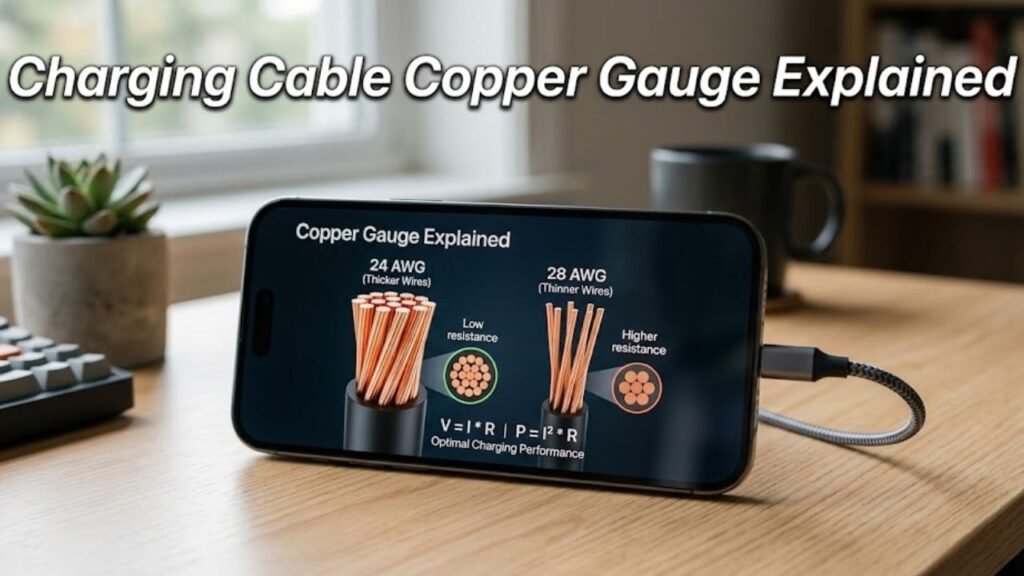
Copper gauge refers to the thickness of the copper wires inside a charging cable. It is typically measured using the American Wire Gauge (AWG) standard.
Understanding AWG (American Wire Gauge)
- Lower AWG number = thicker wire
- Higher AWG number = thinner wire
For example:
- 20 AWG is thicker than 28 AWG
- Thicker wires carry more current efficiently
Why Copper Is Used
Copper is widely used due to:
- High electrical conductivity
- Low resistance
- Durability and flexibility
How Copper Gauge Affects Charging Performance
Charging Cable Copper Gauge Explained revolves around how wire thickness influences electrical flow.
1. Electrical Resistance
Thinner wires (higher AWG) have higher resistance, which reduces current flow.
2. Power Delivery Efficiency
Thicker wires allow more power to pass through with minimal loss.
3. Voltage Drop
Thin cables experience voltage drop, leading to slower charging.
4. Heat Generation
Higher resistance results in more heat, which can damage devices and cables.
Copper Gauge Comparison Table
| AWG Size | Wire Thickness | Current Capacity | Charging Speed | Heat Generation |
|---|---|---|---|---|
| 28 AWG | Very Thin | Low | Slow | High |
| 26 AWG | Thin | Moderate | Moderate | Moderate |
| 24 AWG | Medium | Good | Fast | Low |
| 22 AWG | Thick | High | Very Fast | Very Low |
| 20 AWG | Very Thick | Very High | Maximum | Minimal |
The Science Behind Copper Gauge and Resistance
Ohm’s Law and Resistance
Resistance increases as wire thickness decreases. This affects how much current flows through the cable.
Impact on Voltage Stability
Thicker wires maintain stable voltage levels, ensuring consistent charging performance.
Energy Loss in Thin Wires
Energy lost due to resistance is converted into heat, reducing efficiency.
Copper Gauge in Fast Charging Technologies
USB Power Delivery (USB PD)
High-power charging (up to 100W or more) requires low-resistance cables with thicker copper wires.
Quick Charge (QC)
Efficient current delivery depends on cable quality, including copper gauge.
PPS Charging
Dynamic voltage systems like PPS benefit significantly from low-resistance cables.
Cable Length vs Copper Gauge
Longer Cables Increase Resistance
As cable length increases, resistance also increases—even with the same gauge.
Best Practice
- Short cables (1 meter): Can use moderate gauge
- Long cables (2 meters+): Require thicker wires
Types of Charging Cables Based on Copper Gauge
Budget Cables
- Typically 28–26 AWG
- Lower cost
- Limited charging performance
Mid-Range Cables
- Usually 24 AWG
- Balanced performance and cost
Premium Cables
- 22 AWG or thicker
- Designed for fast charging and durability
Advantages of Thicker Copper Gauge
1. Faster Charging Speeds
Thicker wires allow higher current flow.
2. Reduced Heat Generation
Lower resistance minimizes heat buildup.
3. Improved Safety
Less overheating reduces risk of damage.
4. Better Durability
High-quality cables last longer under stress.
Disadvantages of Thicker Copper Gauge
1. Increased Cost
Thicker copper wires are more expensive.
2. Reduced Flexibility
Thicker cables may be less flexible.
3. Slightly Heavier
Additional material increases weight.
How to Identify Cable Quality
Check Specifications
Look for AWG ratings or current capacity (e.g., 3A, 5A).
Look for Certifications
- USB-IF certification
- Brand reputation
Inspect Build Quality
Premium cables often include:
- Braided exteriors
- Reinforced connectors
Practical Tips for Choosing the Right Cable
1. Match Cable with Charger Output
High-watt chargers require thick cables.
2. Avoid Extremely Cheap Cables
Low-cost cables often use thin wires.
3. Consider Cable Length
Choose thicker gauge for longer cables.
4. Check Fast Charging Support
Ensure compatibility with PD or QC standards.
5. Prioritize Safety Features
Look for cables with built-in protection.
Common Mistakes When Buying Charging Cables
Ignoring Copper Gauge
Many users overlook internal wire quality.
Focusing Only on Brand
Even branded cables can vary in quality.
Using Long Thin Cables
This combination significantly reduces performance.
Copper Gauge and Data Transfer
Charging Cable Copper Gauge Explained is primarily about power, but wire thickness can also impact data transmission stability.
Signal Integrity
Thicker wires help maintain stable signals.
Reduced Interference
Better shielding and copper quality improve performance.
Future Trends in Charging Cable Design
Higher Power Requirements
With 240W USB PD, cables will require thicker copper wires.
Improved Materials
Manufacturers are exploring better conductive materials.
Smart Cables
E-marker chips ensure proper power delivery.
Common Myths About Copper Gauge
Myth 1: All Cables Charge the Same
Reality: Copper gauge significantly affects performance.
Myth 2: Thicker Always Means Better
Reality: Balance between flexibility and performance is important.
Myth 3: Cable Brand Guarantees Quality
Reality: Internal specifications matter more.
FAQs
1. What is copper gauge in charging cables?
It refers to the thickness of copper wires inside the cable, affecting current flow and efficiency.
2. Which AWG is best for fast charging?
22 AWG or lower is ideal for high-speed charging.
3. Does cable length affect charging speed?
Yes, longer cables increase resistance and reduce efficiency.
4. Can a thin cable damage my device?
It may not damage immediately but can cause overheating and slow charging.
5. How do I check cable quality?
Look for AWG rating, certifications, and build quality.
Conclusion
Charging Cable Copper Gauge Explained provides essential insight into one of the most overlooked aspects of charging performance. While chargers and devices often receive the most attention, the cable itself plays a critical role in determining efficiency, speed, and safety.
Thicker copper wires reduce resistance, improve power delivery, and minimize heat, making them ideal for modern fast charging technologies. On the other hand, thin, low-quality cables can significantly limit performance and even pose safety risks.
By understanding copper gauge and applying practical buying strategies, users can ensure optimal charging performance and long-term device protection. Investing in a high-quality cable is not just a convenience—it is a necessity in today’s high-power charging environment.