


A dedicated smartwatch for running does more than track your pace — it maps your route with precision GPS, monitors heart rate zones during intervals, measures your training load, predicts race times, and tells you when to rest. The difference between a basic fitness watch and a proper running smartwatch shows up most clearly mid-run: when you need live pace data, split alerts, and real-time heart rate zones without fumbling with your phone.
This guide covers the full running smartwatch spectrum — from Garmin’s purpose-built Forerunner series to budget-friendly options for casual joggers taking their first step into GPS running. Whether you’re preparing for a marathon or just trying to hit a consistent 5K pace, the best smartwatch for running depends on which features you’ll actually use every day on the road or trail.

AT A GLANCE — Best Smartwatch for Running
Best Overall Running Watch: Garmin Forerunner 165 — AMOLED, 19-hour GPS, personalized workouts, HRV, recovery insights
Best Budget Running GPS Watch: Garmin Forerunner 55 — 20-hour GPS, PacePro, Finish Time, marathon training plans
Best Garmin All-Rounder for Running: Garmin Vivoactive 4 — Music storage, Body Energy monitoring, 20+ GPS sports, animated workouts
Best Mid-Range Running Smartwatch: CMF by Nothing Watch 3 Pro — L1+L5 dual-band GPS, AMOLED, 13-day battery, GOMORE analysis
Best Amazfit Running Watch: Amazfit Active 2 Sport — 5-satellite GPS, offline maps, 160+ modes, 10-day battery, HYROX mode
Best Premium Running Watch: Polar Vantage V3 — 140 hours training battery, dual-frequency GPS, 150+ sports, offline maps
Best Budget Running Watch Under $50: Yoever IDW20 — Alexa, 105+ sport modes, IP68, rotating crown, 7-day battery
Best Ultra-Budget Running Watch: LIVIKEY 41mm — 5ATM waterproof, connected GPS, heart rate, SpO2, multiple sport modes
Best Running Watch with Alexa: AEAC Smart Watch — Alexa built-in, Bluetooth calling, 100 sports modes, IP68
Most Affordable Running Fitness Watch: iTech Active 3 — 123 sport modes, SpO2, LCD display, basic running tracking
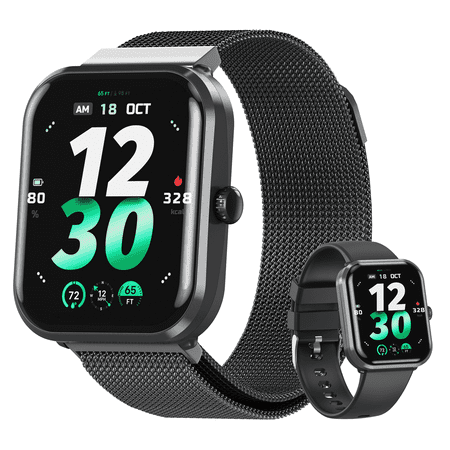
Best Budget Dual-Strap Running Watch: OWNTECH Smart Watch — 100+ sport modes, Bluetooth calling, silicone + Milanese straps, IP68
How We Evaluated Smartwatch for Running
Finding the best smartwatch for running requires going deeper than comparing GPS specs. Our framework assessed the complete running experience — from pre-run planning to post-run recovery analysis.
- GPS accuracy and satellite systems — Number of satellite systems, dual-frequency capability, signal lock speed, accuracy in challenging terrain
- Real-time running metrics — Pace accuracy, distance tracking, split alerts, lap timing, route guidance
- Heart rate zone tracking during exercise — Optical sensor quality during running motion, zone detection accuracy
- Training guidance depth — Personalized workout suggestions, race time predictions, training load analysis, recovery time recommendations
- Battery in GPS mode — Actual GPS-active endurance vs smartwatch mode claims
- Post-run data analysis — App quality, training effect scoring, VO2 Max estimation, historical trend depth
- Comfort during running — Case weight, strap security during movement, wrist fit stability at pace
- Display readability while running — Brightness, AMOLED vs LCD in sunlight, font size for glancing mid-stride
- Durability — Water resistance for rain and sweat, scratch resistance, overall build quality
Best Smartwatch for Running — Full Reviews

1. CMF by Nothing Watch 3 Pro
Best For: Runners wanting dual-band GPS accuracy, AI energy coaching, 13-day battery, GOMORE performance analysis
Key Considerations:
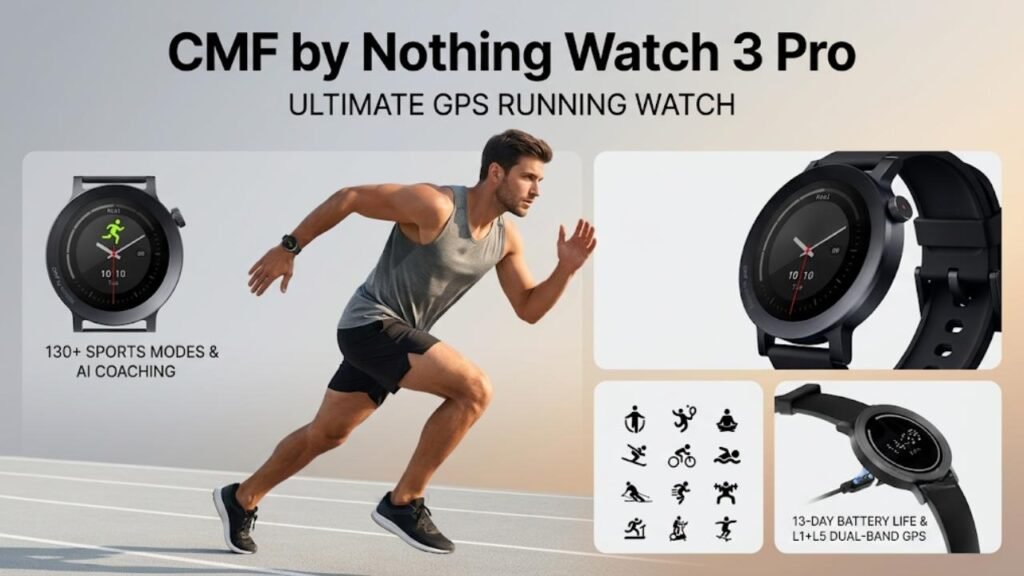
The CMF Watch 3 Pro is the most technically sophisticated mid-range smartwatch for running in this guide. L1+L5 dual-band GPS delivers the accuracy of premium GPS watches at a significantly more accessible price, GOMORE-powered performance analysis provides aerobic/anaerobic training load breakdown, and the Active Score MET-based fitness tracking quantifies daily physical output meaningfully. The 1.43-inch AMOLED with Always-On Display and 150 AOD faces makes glancing at pace data mid-run effortless.
Specifications:
- Display: 1.43 inches AMOLED, Always-On Display, 150 AOD faces
- Battery: 350mAh / 13 days smartwatch mode
- OS: ROTS (Nothing X App 3.0)
- Health Tracking: Heart rate (4-channel, 10%+ accuracy boost), SpO2, sleep, stress, training load, recovery time
- GPS: Built-in L1+L5 Dual-Band GPS
- Water Resistance: IP68
- Sports Modes: 130+ with GOMORE analysis
- Special Features: Gesture control, AI noise reduction calling, GOMORE aerobic/anaerobic analysis, Strava/Apple Health/Google Fit sync, 3D warm-up guide, personalized heart rate zones
Real-World Performance:
L1+L5 dual-band GPS is the headline feature for runners — it reduces the positional drift that makes standard GPS watches report inaccurate pace data in urban canyons, tree canopy, and hilly terrain. GOMORE performance analysis goes beyond simple calorie counting to categorize training sessions by aerobic and anaerobic contribution, which is valuable information for runners following structured periodization plans.
The 4-channel heart rate sensor with 10%+ accuracy improvement delivers more reliable heart rate zone data during high-intensity interval sessions. The 13-day battery provides substantial smartwatch endurance, though GPS-active running sessions will reduce this significantly. The AI Energy Score synthesizes sleep quality, training load, and recovery data into a daily readiness number — the kind of pre-run guidance that used to require expensive platforms. Strava integration completes a genuinely capable running platform.
Pros:
- L1+L5 dual-band GPS — premium positioning accuracy
- GOMORE aerobic/anaerobic performance analysis
- 4-channel heart rate sensor — 10%+ accuracy boost
- AI Energy Score — daily training readiness
- 130+ sport modes
- AMOLED Always-On Display
- Gesture control — hands-free call management during runs
- 13-day battery
- Strava, Apple Health, Google Fit sync
Cons:
- ROTS proprietary OS — not Wear OS
- GPS mode battery endurance not specified for ultra use
- IP68 — not 5ATM swim depth rated
- Newer brand — long-term software support to be confirmed
2. Amazfit Active 2 Sport
Best For: Runners wanting 5-satellite GPS, offline maps, HYROX mode, 10-day battery, budget GPS running

Key Considerations:
The Amazfit Active 2 Sport is the strongest mid-range smartwatch for running from Amazfit — five-satellite GPS positioning system, free downloadable offline maps with turn-by-turn directions, 160+ workout modes including HYROX Race mode, BioTracker heart rate technology, a 1.32-inch AMOLED display, and 50-meter water resistance for rain and swim training in one package.
Specifications:
- Display: 1.32 inches AMOLED (round), 44mm
- Battery: 270mAh / Up to 10 days typical
- OS: Zepp OS
- Health Tracking: Heart rate (BioTracker), sleep, SpO2
- GPS: Built-in (5 satellite systems: GPS, GLONASS, Galileo, BeiDou, QZSS)
- Water Resistance: 50 meters
- Sports Modes: 160+ including HYROX Race, Strength Training, running, padel, yoga
- Special Features: Free downloadable offline maps, turn-by-turn directions, ski maps, barometer, breathable silicone strap, speech-to-text via Zepp Flow
Real-World Performance:
Five-satellite positioning provides fast GPS lock and accurate route tracking across varied terrain — the offline map capability means runners can navigate unfamiliar trails and road courses without relying on cell signal. Free maps without subscription costs is a meaningful practical advantage over platforms that charge for map downloads. The HYROX Race mode is a relevant addition for the growing functional fitness racing community, and 160+ sport modes ensure virtually every training scenario is covered.
Real-world GPS battery life will land between 5-7 days with daily GPS-active running sessions rather than the 10-day typical use figure. The Zepp app provides adequate running data visualization, though it lacks the coaching depth of Garmin Connect. The Sport version comes in an eye-catching red silicone strap with a breathable texture designed specifically for workout comfort.
Pros:
- 5-satellite GPS — fast lock, accurate routing
- Free offline maps with turn-by-turn directions
- 160+ sport modes including HYROX Race
- 1.32″ AMOLED — readable mid-run
- 10-day typical battery
- 50-meter water resistance
- No mandatory subscription — Zepp app is free
- Zepp Flow speech-to-text message replies
Cons:
- Zepp OS — proprietary, not Wear OS
- 10-day battery reduces with regular GPS use
- Occasional Bluetooth disconnection reported
- Less coaching depth than Garmin Connect
3. Yoever IDW20 Running Smart Watch
Best For: Budget runners, Alexa users, casual jogging with connected GPS, 105+ sport modes, rotating crown navigation
Key Considerations:
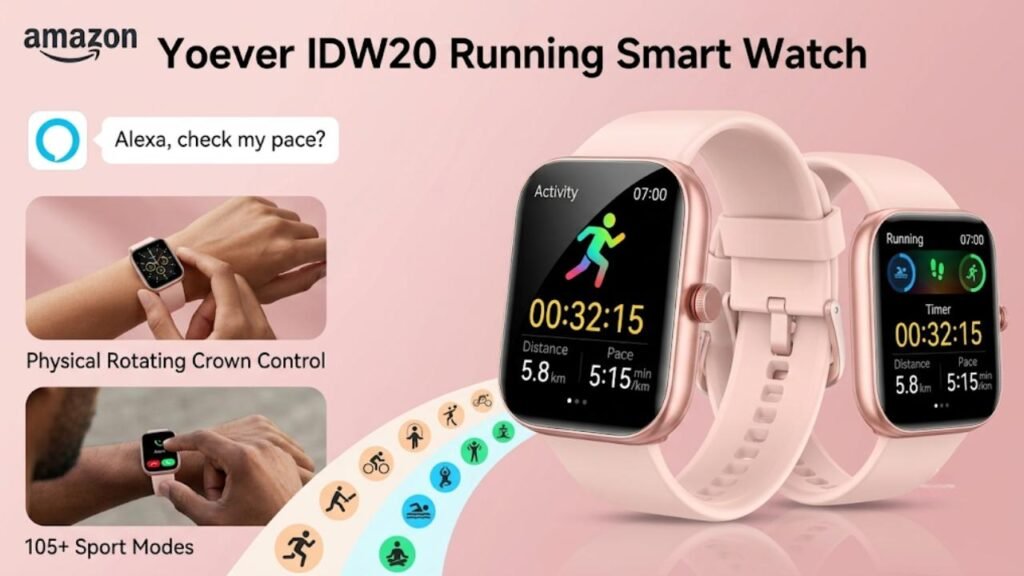
The Yoever IDW20 is the best-featured budget smartwatch for running in the casual jogging category — Alexa built-in, 105+ sport modes covering running, cycling, swimming, and more, IP68 waterproofing, a 1.91-inch HD display with rotating crown navigation, and a 350mAh battery rated for 7-30 days depending on use intensity. Connected GPS means outdoor route tracking requires a phone during runs.
Specifications:
- Display: 1.91 inches HD LCD, rotating crown navigation
- Battery: 350mAh / 7 days typical use / 30 days standby / 2-hour fast charge
- OS Compatibility: Android 6.0+ / iOS 9.0+
- Health Tracking: Heart rate, SpO2, stress, sleep, menstrual cycle
- GPS: Via smartphone (connected GPS)
- Water Resistance: IP68
- Sports Modes: 105+
- Special Features: Alexa built-in, Bluetooth calling, rotating crown, active vibration health alerts, 100+ watch faces, 5-year guarantee
Real-World Performance:
The rotating crown is a practical running feature — changing screens, adjusting settings, and navigating between pace, heart rate, and distance views is easier with a physical crown during a run than with a pure touchscreen that may not respond reliably with sweaty hands. Alexa handles pre-run timer setting, music control, and weather checks hands-free without breaking stride.
For casual runners who always carry their phone during runs, the connected GPS provides adequate route tracking. The 7-day battery under typical daily use with health monitoring active is sufficient for a full week of running sessions between charges. Not suitable for competitive runners or races where phone-independence is required.
Pros:
- Rotating crown — practical navigation mid-run
- Alexa built-in for hands-free control
- 105+ sport modes
- IP68 waterproof — rain and sweat safe
- 7-day battery
- 2-hour fast charging
- Active vibration health alerts
- 5-year guarantee
Cons:
- Connected GPS only — phone required for route tracking
- LCD display — washes out in direct sun vs AMOLED
- Not suitable for phone-free race running
- 30-day battery is standby mode only
4. LIVIKEY 41mm Smart Watch
Best For: Entry-level runners, ultra-budget buyers, 5ATM waterproofing, connected GPS running tracking, SpO2 monitoring

Key Considerations:
The LIVIKEY 41mm is the most affordable smartwatch for running on this list — delivering 5ATM waterproofing, connected smartphone GPS for route tracking, heart rate monitoring, SpO2, multiple sport modes including running and cycling, and a 7-day battery. For first-time runners who want basic tracking without financial commitment, it covers the essential function.
Specifications:
- Display: Square color display, 41mm
- Battery: 210mAh / Up to 7 days / 30 days standby
- OS Compatibility: Android 5.0+ / iOS 10.0+ / Bluetooth 4.0+
- Health Tracking: Heart rate, SpO2, sleep (light/deep/awake), step counter, calories
- GPS: Via smartphone (connected GPS)
- Water Resistance: 5ATM
- Sports Modes: Multiple including running, cycling, walking, swimming
- Special Features: Music control, calendar, reject call function, sedentary alert, breathing training
Real-World Performance:
The 5ATM water resistance is the standout feature at this price — it handles rain running, post-run showers, and swimming without concern. Connected GPS via smartphone provides adequate route tracking for casual runners who consistently carry a phone during workouts. Heart rate monitoring provides basic zone awareness during runs, and SpO2 adds post-run recovery context. The 7-day battery covers a full week of daily running sessions comfortably.
The inability to make or receive calls directly is an honest limitation to note — it’s a health and fitness tracking device rather than a full smartwatch. For entry-level runners who want basic running metrics and body awareness without spending significantly, the LIVIKEY delivers functional core tracking.
Pros:
- 5ATM waterproof — proper swim-safe rating
- Heart rate and SpO2 monitoring
- Connected GPS for route tracking
- 7-day battery
- Multiple sport modes including swimming
- Calendar and music control
Cons:
- Cannot make or receive calls
- Connected GPS only — phone required for all outdoor tracking
- Basic sport mode data depth
- No smart assistant integration
- Android 5.0+ / iOS 10.0+ minimum OS required
5. Garmin Forerunner 165
Best For: Dedicated runners, AMOLED display, personalized workout suggestions, HRV monitoring, race preparation
Key Considerations:
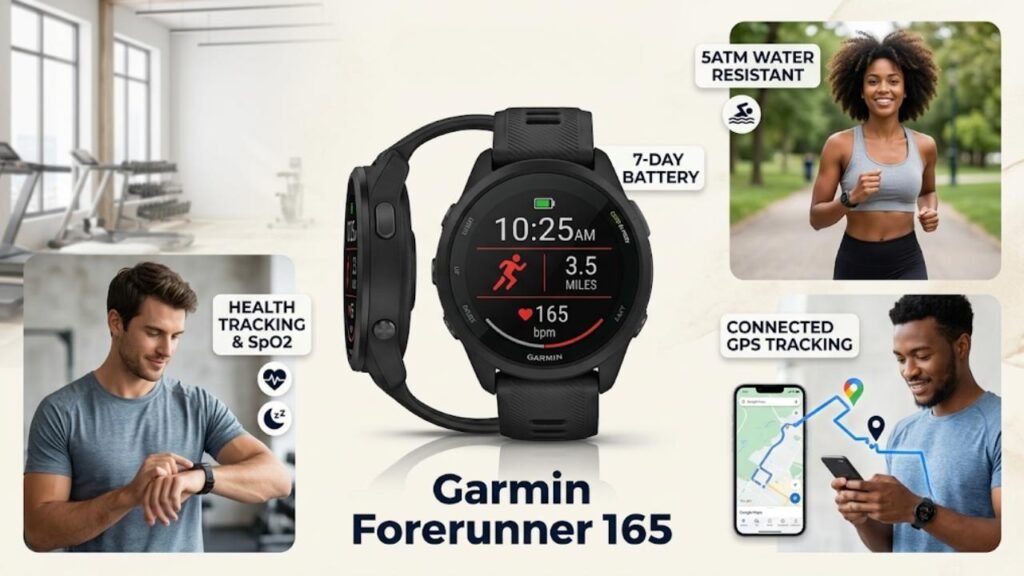
The Garmin Forerunner 165 is purpose-built for runners at every level — an AMOLED touchscreen, 11-day smartwatch battery with 19-hour GPS mode, personalized daily suggested workouts that adapt to your performance and recovery, Garmin Coach training plans for 5K through marathon, HRV status, morning report, training effect scoring, and incident detection make it the most complete entry-to-intermediate running smartwatch on this list.
Specifications:
- Display: AMOLED touchscreen, 43mm, traditional button controls alongside touchscreen
- Battery: 200mAh / 11 days smartwatch mode / 19 hours GPS mode
- OS: Garmin OS
- Health Tracking: Heart rate, HRV status, sleep, stress, morning report, training effect
- GPS: Built-in GPS
- Water Resistance: Water resistant
- Storage: 4GB (Music model adds music storage)
- Sports Modes: 25+ activity profiles
- Special Features: Personalized daily suggested workouts, Garmin Coach plans, race adaptive training plans, incident detection + Assistance safety features, training effect labels, recovery time recommendations
Real-World Performance:
Personalized daily suggested workouts are the Forerunner 165’s most meaningful running feature — the system analyzes your recent training load, current fitness level, and recovery status to recommend a specific workout for that day, adjusting intensity and duration dynamically as your fitness changes.
This is the kind of adaptive coaching that previously required paid subscription platforms or a personal coach. The 19-hour GPS endurance covers ultramarathon distances on a single charge. The AMOLED display delivers crisp, readable running metrics — pace, distance, heart rate zone, elapsed time — all glanceable mid-stride without slowing down.
The morning report provides a concise pre-run summary of sleep quality, HRV status, and training readiness before you head out the door. Training effect labels explain whether each completed run built base fitness, improved VO2 Max, or developed anaerobic capacity — making post-run data actionable rather than just informational.
Pros:
- Personalized adaptive daily suggested workouts
- 19-hour GPS mode — marathon and ultra capable
- AMOLED display — excellent mid-run readability
- HRV status and morning report
- Garmin Coach training plans (5K to marathon)
- Training effect scoring — understand each run’s fitness impact
- Recovery time recommendations
- Incident detection safety feature
- 11-day smartwatch battery
Cons:
- Some iPhone pairing inconsistencies reported
- Standard model has no music storage (Music model available)
- Garmin Connect learning curve for new users
- Built-in GPS only (L1) — not dual-frequency

6. Garmin Forerunner 55
Best For: New runners, budget-conscious runners, marathon training plan beginners, PacePro and Finish Time features

Key Considerations:
The Garmin Forerunner 55 is Garmin’s most accessible purpose-built smartwatch for running — built-in GPS (GPS/GLONASS/Galileo tri-system), PacePro pacing strategy guidance, Finish Time estimator, free 5K/10K/half marathon training plans via Garmin Coach, 17 activity profiles, suggested daily training, and a 20-hour GPS mode battery. It represents the cleanest entry into serious GPS running tracking on this list.
Specifications:
- Display: 1.04 inches (round)
- Battery: 450mAh / Up to 2 weeks smartwatch mode / 20 hours GPS mode
- OS: Standard Garmin OS
- Health Tracking: Heart rate, sleep, stress
- GPS: Built-in (GPS, GLONASS, Galileo)
- Water Resistance: Water resistant
- Storage: 32MB
- Sports Modes: 17 built-in including running, cycling, pool swimming, virtual running, HIIT
- Special Features: PacePro, Finish Time estimator, Recovery Time, Garmin Coach free training plans, suggested daily training
Real-World Performance:
PacePro is the Forerunner 55’s most practical running feature — it calculates a dynamic pacing strategy for your target race or training run based on elevation data and your target finish time, then alerts you when you’re running faster or slower than the recommended pace for each segment. For runners who struggle with pacing discipline in early miles, this is genuinely useful real-time guidance.
Finish Time estimator provides course-specific race finish predictions based on your current performance metrics. The 20-hour GPS mode is exceptional for an entry-level running smartwatch — it covers marathon running at any realistic pace with substantial buffer. The tri-satellite system (GPS, GLONASS, Galileo) delivers reliable positioning across most running environments.
The 1.04-inch display is compact but readable for running metrics. Garmin Coach’s free marathon training plans integrate directly into the watch as scheduled daily workouts without needing to manually input sessions.
Pros:
- PacePro — dynamic per-segment pacing strategy
- Finish Time estimator
- 20-hour GPS mode — exceptional endurance
- Garmin Coach free 5K/10K/half marathon plans
- Suggested daily training based on fitness level
- GPS/GLONASS/Galileo tri-system
- 2-week smartwatch battery
- Recovery Time recommendations
Cons:
- 1.04-inch display — smaller than AMOLED competitors
- No AMOLED — LCD display
- Limited health analytics vs Forerunner 165
- No HRV status or training effect scoring
- 32MB storage — limited
- No music storage
7. Garmin Vivoactive 4
Best For: Runners wanting onboard music, GPS running tracking, animated workouts, body energy monitoring, daily lifestyle use
Key Considerations:
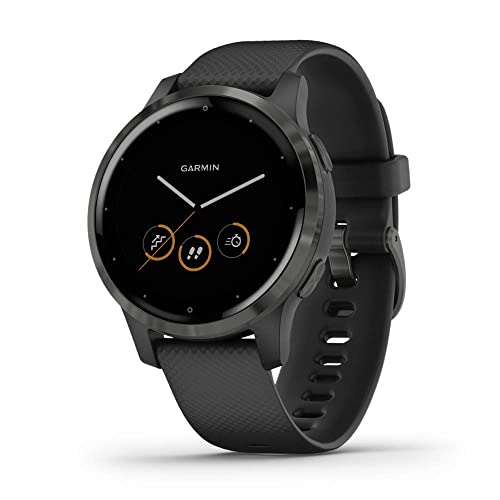
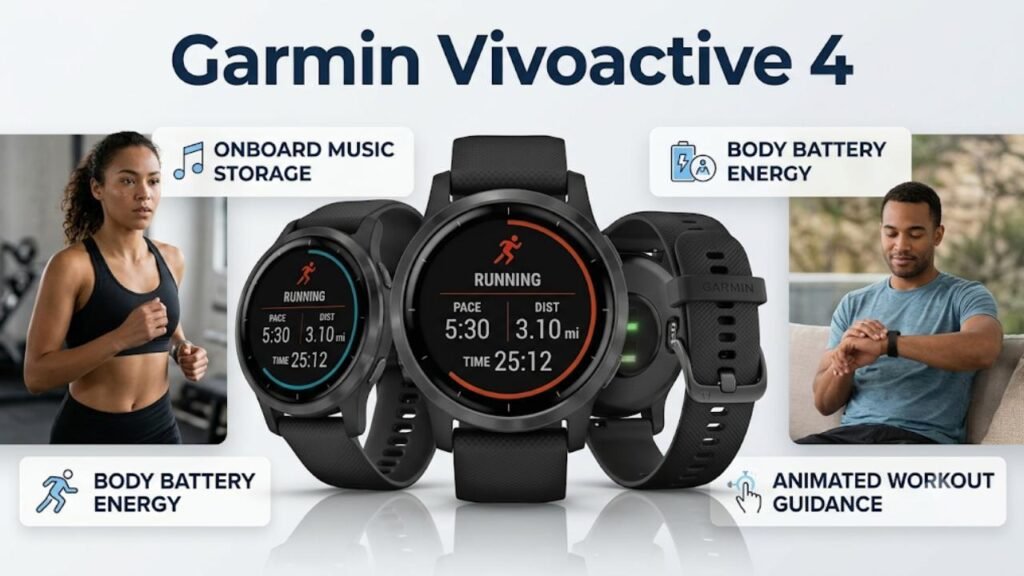
The Garmin Vivoactive 4 bridges the gap between a dedicated running smartwatch and a lifestyle GPS watch — built-in GPS, music storage (Spotify, Amazon Music, Deezer via Bluetooth headphones), Pulse Ox monitoring, Body Battery energy monitoring, animated workout guidance, 20+ preloaded GPS and indoor sports apps, and Garmin Coach integration in a 45mm design with a 1.3-inch display.
Specifications:
- Display: 1.3 inches round
- Battery: 8 days smartwatch mode / 6 hours GPS + music mode
- OS: Garmin OS
- Health Tracking: Heart rate, Pulse Ox (SpO2), Body Battery, stress, sleep, respiration, menstrual cycle
- GPS: Built-in GPS
- Water Resistance: Water resistant
- Sports Modes: 20+ preloaded GPS and indoor apps
- Special Features: Music storage (Spotify/Amazon Music/Deezer), Body Battery, animated workouts (cardio/strength/yoga/Pilates), incident detection, Connect IQ store (thousands of apps/faces)
Real-World Performance:
Music storage is the Vivoactive 4’s key differentiator for runners on this list — downloading Spotify or Amazon Music playlists directly to the watch eliminates the need to carry a phone during GPS-tracked runs. Pairing Bluetooth headphones and leaving the phone at home while still recording accurate GPS route data is the phone-free running experience many athletes prefer.
Body Battery synthesizes sleep quality, stress, and HRV into a real-time energy score that guides pre-run readiness decisions. The 6-hour GPS + music mode is shorter than the Forerunner 55 or 165 — adequate for most daily run distances but limiting for marathon finishers running over 5 hours.
Animated workouts right on the watch screen provide guided strength and cardio training beyond the run itself, making the Vivoactive 4 a more complete multi-activity platform than dedicated running watches.
Pros:
- Music storage — Spotify/Amazon Music/Deezer without phone
- Body Battery energy monitoring
- Built-in GPS
- 20+ preloaded GPS and indoor sports apps
- Animated workout guidance
- Garmin Coach training plans
- Incident detection safety feature
- Connect IQ store — extensive customization
- 8-day smartwatch battery
Cons:
- 6-hour GPS + music mode — shorter than Forerunner series
- Older model — fewer advanced training metrics vs Forerunner 165
- No AMOLED display
- No HRV status tracking
- No personalized daily suggested workouts

8. AEAC Smart Watch
Best For: Budget runners wanting Alexa, Bluetooth calling, 100 sport modes, IP68, 7-day battery

Key Considerations:
The AEAC delivers Alexa voice assistant, stable Bluetooth calling, 100+ sport modes covering running and other activities, IP68 waterproofing, a 1.8-inch full touch HD screen, and a 7-day battery in a lightweight package for casual runners who want smart assistant functionality alongside basic running tracking. Note: currently listed as unavailable — worth monitoring for restock.
Specifications:
- Display: 1.8 inches full touch HD
- Battery: 300mAh / Up to 7 days / 30 days standby / 2-hour charge
- OS Compatibility: iOS 9.0+ / Android 6.0+
- Health Tracking: Heart rate, SpO2, sleep
- GPS: No built-in GPS
- Water Resistance: IP68
- Sports Modes: 100+
- Special Features: Alexa built-in, Bluetooth calling, VeryFit app, 100 dials, multi-language, 3-year warranty
Real-World Performance:
Alexa integration enables pre-run and mid-run voice control — setting workout timers, controlling music playback, checking weather, and managing smart home devices without touching the screen. The 1.8-inch display is large for a budget fitness watch, providing readable running metric glances during workouts. IP68 covers rain running and post-run hand washing without concern.
No built-in GPS means all route tracking requires a connected phone during runs — acceptable for casual daily joggers but a limitation for anyone who trains or races without carrying a handset. The 7-day battery covers a full running week comfortably on a single charge.
Pros:
- Alexa built-in — voice control during runs
- Bluetooth calling
- 100+ sport modes
- 1.8″ HD display — large for budget tier
- IP68 waterproof
- 7-day battery
- 3-year warranty
- Multi-language support
Cons:
- No built-in GPS — phone required for all route tracking
- Currently listed as unavailable — monitor for restock
- No AMOLED display
- Basic running analytics vs GPS-equipped alternatives
9. Polar Vantage V3
Best For: Serious runners, triathletes, 140-hour training battery, dual-frequency GPS, offline topographic maps, 150+ sports
Key Considerations:
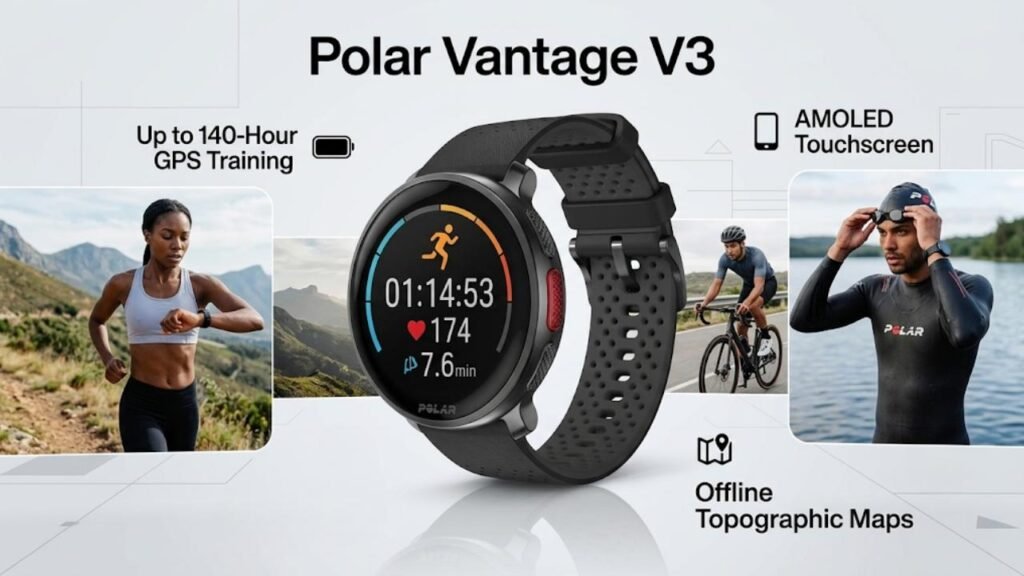
The Polar Vantage V3 is the most premium and technically capable smartwatch for running on this list — 140 hours of GPS training time, dual-frequency GPS with detailed downloadable topographic maps, a sharp AMOLED display with customizable dashboards, 150+ sports, Polar’s comprehensive training and recovery tools (Nightly Recharge, FitSpark, Training Load Pro), and an 8-day regular use battery. It’s built for athletes who run, cycle, and swim at a serious level.
Specifications:
- Display: AMOLED touchscreen (round), customizable dashboards
- Battery: 488mAh / 8 days regular use / Up to 140 hours training mode
- OS: Polar OS
- Health Tracking: Heart rate, SpO2, sleep, stress, Nightly Recharge recovery, HRV
- GPS: Built-in dual-frequency GPS + downloadable topographic maps
- Water Resistance: Water resistant
- Sports Modes: 150+
- Special Features: Detailed offline maps with topographic contouring, Training Load Pro, FitSpark daily workout guidance, Nightly Recharge recovery, Strava/MyFitnessPal/Nike+/TrainingPeaks integration
Real-World Performance:
The 140-hour GPS training battery is the most exceptional endurance specification on any smartwatch for running in this guide — covering ultramarathons, multi-day trail events, and extended adventure racing without a charge. Dual-frequency GPS with downloadable topographic maps provides the most detailed and accurate outdoor navigation available on a consumer running watch, with trail contouring data that enables confident off-grid exploration without cell signal.
Training Load Pro distinguishes the cardiovascular, muscular, and perceived training load of each session — giving runners a more complete picture of how different run types (easy base miles vs tempo intervals vs long slow distance) affect their overall training balance. FitSpark daily workout recommendations adapt to current recovery status, similar to Garmin’s suggested workouts but with Polar’s established science-backed approach.
Pros:
- 140-hour GPS training battery — unmatched endurance
- Dual-frequency GPS with topographic offline maps
- AMOLED display with customizable dashboards
- 150+ sports — full triathlon and multi-sport coverage
- Nightly Recharge recovery scoring
- Training Load Pro — cardiovascular/muscular load breakdown
- Strava, MyFitnessPal, Nike+, TrainingPeaks integration
- FitSpark daily workout guidance
Cons:
- Premium pricing — most expensive on this list
- Polar OS — proprietary, not Wear OS
- Polar Connect ecosystem — less universal than Garmin or Fitbit
- Heavier build vs lightweight running watches
- Mixed satisfaction reflected in limited review volume at this listing
10. iTech Active 3
Best For: Complete beginners, extreme budget buyers, 123 sport modes, basic running step tracking

Key Considerations:
The iTech Active 3 is the most accessible entry point into wearable running tracking on this list — 123 sport modes including running and cycling, heart rate and SpO2 monitoring, sleep tracking, and social media notifications at a clearance price. Basic running data (steps, calories, distance via connected GPS) is captured adequately for first-time fitness trackers.
Specifications:
- Display: 1.28 inches LCD
- Battery: Up to 144 hours (6 days)
- OS Compatibility: Android, iOS
- Health Tracking: Heart rate, SpO2, sleep, calories, steps
- GPS: No GPS (no connected GPS listed)
- Water Resistance: Water resistant
- Sports Modes: 123
- Special Features: Find device, hydration reminder, multi-language, flashlight, customizable watch faces
Real-World Performance:
For a complete beginner who wants to know approximately how many steps they run and maintain basic activity awareness, the iTech Active 3 covers the minimum viable tracking function. Heart rate monitoring provides zone awareness during easy runs, and the 123 sport mode count covers every common physical activity. The LCD display is functional for basic metric glancing in non-direct-sun conditions.
Charger reliability and connectivity stability are the most frequently cited concerns in buyer feedback — the 3.6-star rating reflects these recurring issues. For serious running performance tracking, this watch is not appropriate. For someone taking their first steps toward a running habit with minimal financial commitment, it provides basic activity awareness.
Pros:
- Ultra-affordable entry price
- 123 sport modes
- Heart rate and SpO2 monitoring
- Multi-language support
- Simple setup
- Hydration and hygiene reminders
Cons:
- 3.6-star rating — charger and connectivity reliability concerns
- No GPS — no route tracking
- Short battery — buyer reports daily recharging
- 1.28-inch LCD — small, low-contrast display
- Not appropriate for serious running performance tracking
11. OWNTECH Smart Watch
Best For: Budget runners wanting Bluetooth calling, 100+ sport modes, silicone and Milanese strap flexibility, IP68

Key Considerations:
The OWNTECH delivers 100+ sport modes including running, 1.91-inch full touch color display at 320×380 resolution, Bluetooth calling with built-in speaker and microphone, IP68 waterproofing, and both silicone and Milanese steel straps — providing flexible styling between workout and everyday wear — for clearance pricing. Connected GPS tracks run routes via phone.
Specifications:
- Display: 1.91 inches LCD color touch, 320×380 resolution
- Battery: 260mAh / 7-10 days use / 30 days standby / 2-hour charge
- OS Compatibility: iOS and Android
- Health Tracking: Heart rate, activity tracking (implied)
- GPS: Via smartphone (connected GPS)
- Water Resistance: IP68
- Sports Modes: 100+
- Special Features: Bluetooth calling, built-in speaker and microphone, silicone + Milanese steel straps included, DIY watch faces
Real-World Performance:
The dual strap inclusion — silicone for workouts and Milanese steel for everyday wear — adds lifestyle versatility that most budget smartwatch for running skip. The 1.91-inch display is large for a budget device, providing comfortable running metric readability at a glance. Bluetooth calling handles daily communication during and after runs without needing to reach for a phone.
IP68 waterproofing manages rain running and sweat without concern. For budget runners who want basic tracking with strap flexibility, it covers the essential function.
Pros:
- Silicone + Milanese steel straps both included
- 1.91-inch large display
- 100+ sport modes
- Bluetooth calling
- IP68 waterproof
- 7-10 day battery
- DIY watch face customization
Cons:
- Only 7 buyer reviews — limited reliability confidence
- Connected GPS only — phone required for route tracking
- LCD display — not AMOLED
- Clearance product — support longevity uncertain
- No GPS — significant limitation for race running
Key Comparisons for Runners
1. GPS Mode Battery Life
Smartwatch battery life is always quoted in smartwatch mode — not GPS mode. For runners, GPS mode endurance is the only number that matters. Here’s what to expect from each watch in this guide:
- Garmin Forerunner 165 — Up to 19 hours GPS mode. Covers ultramarathon distances.
- Garmin Forerunner 55 — Up to 20 hours GPS mode. Covers marathon and beyond.
- Garmin Vivoactive 4 — Up to 6 hours in GPS + music mode. Adequate for most daily runs.
- CMF Watch 3 Pro — 13 days smartwatch mode. GPS endurance not specified — verify before ultra use.
- Amazfit Active 2 — 10-day typical use. GPS active significantly reduces this.
- Polar Vantage V3 — Up to 140 hours training mode. The longest GPS endurance on this list.
- Yoever IDW20 / LIVIKEY / Budget options — Connected GPS only (via phone). Not true GPS watches.
2. Built-In GPS vs Connected GPS for Runners
This is the most important technical distinction for runners choosing a smartwatch for running.
- Built-in GPS (Garmin Forerunner 165, Forerunner 55, Vivoactive 4, CMF Watch 3 Pro, Amazfit Active 2, Polar Vantage V3) records your run route, distance, and pace independently without a phone. Run with just the watch — no phone required. Essential for races and trail runs.
- Connected GPS (Yoever, LIVIKEY, AEAC, iTech, OWNTECH) uses your phone’s GPS signal for route tracking. Phone must be carried during every run. No independent route recording. Adequate for casual joggers who always run with a phone, but not suitable for competitive runners or race use.
3. AMOLED vs LCD for Running Display Readability
Mid-run display glancing demands readable screens under direct sunlight. The difference between AMOLED and LCD is most visible outdoors:
- AMOLED (Garmin Forerunner 165, Amazfit Active 2, CMF Watch 3 Pro, Polar Vantage V3) — Deep blacks create higher contrast with white metric text. Readable in most outdoor lighting conditions. Better for runners who train in direct sunlight.
- LCD (Garmin Forerunner 55, Garmin Vivoactive 4, Yoever, iTech, OWNTECH) — Can wash out under bright sun but remains functional. Garmin’s transflective LCD on the Forerunner 55 performs better in sunlight than generic TFT alternatives.
4. Dual-Frequency GPS: Why It Matters for City and Trail Runners
Standard single-frequency GPS (L1) drifts in urban canyons, dense forest, and canyon terrain where satellite signals reflect off surfaces before reaching the watch. Dual-frequency GPS (L1+L5) uses two independent satellite signals simultaneously, dramatically reducing positional error.
- CMF Watch 3 Pro — L1+L5 dual-band GPS
- Polar Vantage V3 — Dual-frequency GPS with detailed topographic maps
For urban runners and trail runners, dual-frequency GPS provides meaningfully more accurate pace and distance data than single-frequency alternatives.
Conclusion
The best smartwatch for running ultimately comes down to one question: how seriously do you run? For dedicated runners who want accurate GPS, adaptive training guidance, and meaningful post-run analysis, the Garmin Forerunner 165 delivers the most complete running platform on this list — personalized workouts, HRV monitoring, AMOLED readability, and 19-hour GPS endurance cover everything from daily training to marathon race day.
For entry-level runners who want GPS fundamentals without the premium cost, the Garmin Forerunner 55 PacePro, 20-hour GPS mode, and free marathon training plans are hard to beat at the price. And for performance athletes who train across running, cycling, and triathlon, the Polar Vantage V3 140-hour GPS battery and dual-frequency positioning with topographic maps justify the investment.
Budget runners who carry their phone during every workout can extract genuine value from the CMF Watch 3 Pro dual-band GPS accuracy, or the Amazfit Active 2 free offline maps and 5-satellite positioning — both deliver real GPS running capability at significantly lower prices than the Garmin alternatives. Whatever level you run at, matching the watch’s feature depth to your actual training habits is the most practical buying decision you can make.