


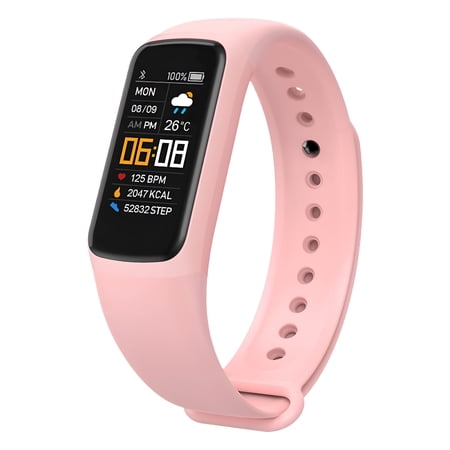
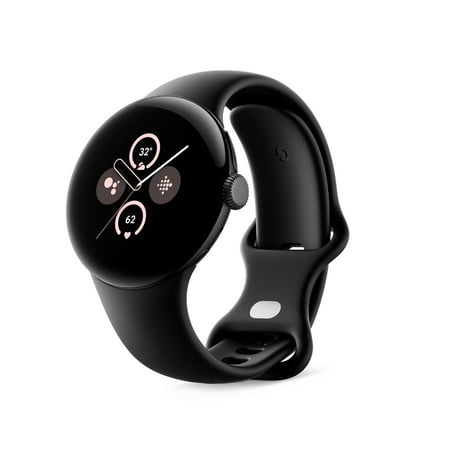
Heart rate monitoring is no longer a premium feature reserved for expensive fitness watches. The best smartwatch for heart rate monitoring today spans from sub-$20 fitness bands to sophisticated health platforms from Garmin, Fitbit, and Google — each offering continuous optical heart rate sensing, high and low heart rate alerts, and increasingly refined algorithms that turn raw data into actionable daily insights.
The challenge isn’t finding a smartwatch with heart rate monitoring — it’s finding one where the sensor is accurate enough to trust, the software makes the data meaningful, and the battery lasts long enough to capture consistent readings over time. This guide covers the full spectrum: budget-friendly trackers that nail the core heart rate fundamentals, mid-range picks with GPS and SpO2, premium fitness bands from WHOOP and Fitbit, and near-$200 smartwatches from Garmin, Samsung, and Google. Every recommendation is chosen for sensor reliability, software depth, and honest long-term wearability.

AT A GLANCE — Best Smartwatch for Heart Rate Monitoring
Best Overall: Garmin Vívoactive 5 — AMOLED, Body Battery, HRV, 11-day battery
Best Premium HR Band: WHOOP 5.0 — Continuous HRV, VO2 max, 14-day battery, no screen
Best Fitbit HR Watch: Fitbit Versa 4 — Daily Readiness Score, built-in GPS, 6-day battery
Best Google HR Watch: Google Pixel Watch 2 — ECG, AFib detection, Wear OS, Fitbit integration
Best Samsung HR Watch: Samsung Galaxy Watch FE — ECG, body composition, Wear OS
Best Amazfit HR Watch: Amazfit Active Max — 3000-nit AMOLED, 25-day battery, 170+ modes
Best Budget HR Band: Fitbit Inspire 3 — Irregular heart rhythm alerts, 10-day battery, 50m waterproof
Best Slim HR Tracker: Garmin vívosmart 5 — Body Battery, HRV, swim-safe, 7-day battery
Best Under $100 HR Watch: Amazfit Bip 5 — Built-in GPS, VO2 max, 10-day battery
Best Budget HR Watch Under $50: Samsung Galaxy Fit 3 — AMOLED, 14-day battery, 5ATM
Best Screenless HR Tracker: Google Fitbit Air — AI coaching, SpO2, 7-day battery, quick charge
How We Evaluated Smartwatch for Heart Rate Monitoring
Choosing the best smartwatch for heart rate monitoring requires evaluating the entire system — not just whether a watch has an optical sensor. Our framework assessed how watches perform across the full heart rate monitoring experience.
Our evaluation criteria:
- Sensor accuracy — Optical PPG sensor quality, sampling frequency, consistency during exercise vs rest
- Continuous monitoring — 24/7 heart rate tracking with configurable sampling rates
- Heart rate alerts — High and low heart rate notifications, irregular rhythm detection
- HRV monitoring — Heart rate variability tracking for recovery and readiness assessment
- Health data ecosystem — App quality, data visualization, trend analysis, third-party integration
- Battery life with HR active — Realistic endurance with continuous heart rate monitoring enabled
- Comfort for all-day wear — Weight, band materials, fit for overnight sleep tracking
- Display quality — Readability of heart rate data in all lighting conditions
- Software depth — Resting heart rate analysis, zone training, recovery metrics, coaching
Under $50 — Best Budget Smartwatch for Heart Rate Monitoring
1. Samsung Galaxy Fit 3
Best For: Fast charging priority, Samsung users, swim-safe heart rate tracking, gift buyers

Key Considerations:
The 40mm Galaxy Fit 3 Fast Charger Bundle delivers identical heart rate monitoring hardware to the standard model with the addition of a bundled fast charger — a practical value addition for buyers who prioritize minimizing charging downtime on their smartwatch for heart rate monitoring.
Specifications:
- Display: 1.6 inches AMOLED
- Battery: 208mAh / Up to 14 days
- OS: Android Wear
- Health Tracking: Heart rate (continuous), SpO2, sleep monitoring
- GPS: No built-in GPS
- Water Resistance: 5ATM + IP68
- Sports Modes: 101+ with auto-detection
- Special: Fast charger included in bundle
Real-World Performance:
The heart rate monitoring performance is identical to the standard Galaxy Fit 3 — reliable continuous optical sensing with solid sleep and workout data quality. The bundled fast charger is the differentiating practical benefit, reducing charging time meaningfully for buyers who wear their tracker 24/7 for continuous heart rate data capture.
Pros:
- Fast charger included
- AMOLED display
- 14-day battery
- 5ATM waterproof
- Continuous heart rate monitoring
- Snore detection
Cons:
- No built-in GPS
- International model — no US warranty
- Best within Samsung ecosystem

2. RUIMEN D1 Smart Watch
Best For: Buyers wanting calling + heart rate monitoring, stress tracking, mood monitoring, budget-conscious buyers

Key Considerations:
The RUIMEN D1 delivers a feature set that goes well beyond basic heart rate monitoring for its price — Bluetooth 5.4 calling, stress tracking, mood monitoring, guided breathing exercises, and 100+ sport modes alongside continuous heart rate and SpO2 sensing. The 1.85-inch HD display and IP68 waterproofing add practical daily durability.
Specifications:
- Display: 1.85 inches HD full-touch
- Battery: 300mAh / Up to 7 days
- OS Compatibility: iOS and Android
- Health Tracking: Heart rate (24/7), SpO2, sleep (REM/light), stress, mood monitoring
- GPS: No GPS
- Water Resistance: IP68
- Sports Modes: 100+
- Special Features: Bluetooth calling, voice assistant, guided breathing, stress and mood tracking, calculator, games, flashlight
Real-World Performance:
The stress and mood monitoring features alongside continuous heart rate tracking make the RUIMEN D1 one of the most wellness-complete budget smartwatch for heart rate monitoring on this list. The guided breathing exercises activate when stress readings exceed normal ranges — a practical real-time response feature. Bluetooth 5.4 provides stable connection for notification push and call routing throughout the day.
The 17,714 verified buyer reviews with a 4.1-star rating provide meaningful confidence for a budget brand — the volume of feedback suggests consistent performance rather than a small sample. Battery life of 7 days under typical use with continuous heart rate monitoring is solid for the feature density offered.
Pros:
- Stress and mood monitoring alongside heart rate
- Guided breathing triggered by elevated readings
- Bluetooth 5.4 — stable connection
- Bluetooth calling
- 100+ sport modes
- IP68 waterproof
Cons:
- No GPS
- 7-day battery — shorter than Samsung Galaxy Fit 3
- Cannot reply to messages from watch
- Lesser-known brand ecosystem
3. LIVIKEY Fitness Tracker
Best For: First-time health trackers, basic heart rate monitoring, seniors, extreme budget buyers

Key Considerations:
The LIVIKEY is the most affordable smartwatch for heart rate monitoring on this list — offering automatic continuous heart rate monitoring, sleep analysis with deep and light sleep stages, 9 sport modes, and IP68 waterproofing. For buyers taking their first step into heart rate tracking, it delivers the essential experience without complexity.
Specifications:
- Display: Rectangular (size not specified)
- Battery: 210mAh / Up to 5-7 days / 2-hour charge
- OS Compatibility: Android 4.0+ / iOS 8.0+ / Bluetooth 4.0+
- Health Tracking: Heart rate (automatic continuous), sleep (deep/light/awake), step counter, calories, distance
- GPS: No GPS
- Water Resistance: IP68
- Sports Modes: 9
- Special Features: SNS notifications (Facebook, Twitter, Gmail), alarm, sedentary alert, breathing guide, stopwatch
Real-World Performance:
Automatic heart rate monitoring runs continuously without requiring user activation — the watch samples and records heart rate data throughout the day and during sleep, syncing trend data to the companion app. The sleep analysis distinguishing deep sleep from light sleep and awake periods adds health context beyond a simple step counter. The companion app provides basic data visualization suitable for casual health awareness.
Note that the LIVIKEY cannot make or receive calls — it’s a notification display and health monitoring device only. The 9 sport modes cover common activities adequately, and the IP68 rating handles daily water exposure confidently. For buyers who want continuous heart rate data without spending more than $20, the LIVIKEY is a straightforward, honest choice.
Pros:
- Automatic continuous heart rate monitoring
- Sleep stage analysis (deep/light/awake)
- IP68 waterproof
- 5-7 day battery life
- Sedentary alert and breathing guide
Cons:
- Cannot make or receive calls
- Only 9 sport modes
- No GPS
- Basic app ecosystem
- Bluetooth 4.0 — older connectivity standard
4. 3Plus Callie Smart Watch
Best For: Women, round display preference, AMOLED quality, REM sleep tracking, Bluetooth calling

Key Considerations:
The 3Plus Callie is the most display-forward smartwatch for heart rate monitoring. A 1.43-inch round AMOLED screen delivers crisp heart rate data visibility at an uncommon display quality for this price point. REM sleep tracking, 100 workout modes, IP68 waterproofing, and Bluetooth calling round out a feature-complete daily companion.
Specifications:
- Display: 1.43 inches AMOLED (round)
- Battery: Up to 168 hours (7 days)
- OS Compatibility: Android, iOS
- Health Tracking: Heart rate (continuous), sleep (REM), activity tracking
- GPS: Connected GPS via smartphone
- Water Resistance: IP68
- Sports Modes: 100+
- Multiple strap options: Silicone, nylon, leather
Real-World Performance:
The round AMOLED display makes heart rate readings and health data significantly more visually appealing than rectangular TFT alternatives at the same price — health metrics feel like a premium watch experience. Continuous heart rate monitoring feeds daily trend data into the companion app, and REM sleep tracking provides more granular sleep health insights than basic deep/light stage alternatives. Bluetooth call quality receives consistent praise from verified buyers.
App reliability is the most commonly noted limitation — some users report occasional data sync inconsistencies. The hardware quality, particularly the AMOLED display and build materials, consistently exceeds buyer expectations at this price tier.
Pros:
- Round 1.43″ AMOLED — best display in under-$50 tier
- REM sleep tracking
- 100+ workout modes
- IP68 waterproof
- Bluetooth calling — praised for audio quality
- Multiple strap material options
- 7-day battery
Cons:
- App reliability inconsistencies reported
- Connected GPS only
- No blood pressure monitoring
- Companion app less established than Samsung or Garmin
5. 3Plus Vibe Lite Smart Watch
Best For: Maximum standby battery, basic heart rate tracking, goal setting, teen and adult casual users

Key Considerations:
The 3Plus Vibe Lite claims the longest standby battery figure on this list — up to 35 days — at the lowest price point of any smartwatch here. The 1.5-inch TFT touchscreen, IP68 waterproofing, continuous heart rate tracking with graph display, sleep monitoring, and GPS make it an interesting entry-level option for buyers prioritizing battery endurance over display quality.
Specifications:
- Display: 1.5 inches TFT LCD
- Battery: Up to 840 hours (35 days standby)
- OS Compatibility: iOS and Android
- Health Tracking: Heart rate (continuous with graph), sleep monitoring
- GPS: Yes
- Water Resistance: IP68
- Storage: 8GB internal
- Special Features: Goal setting, vibrating call alerts, SMS notifications
Real-World Performance:
The 35-day standby claim is a maximum figure — real-world battery life with continuous heart rate monitoring, GPS, and notification push active will be significantly lower. Heart rate tracking with graph display is functional for trend awareness, though accuracy consistency is less reliable than Samsung or Garmin alternatives.
For buyers who want the absolute longest battery life in smartwatch for heart rate monitoring and are comfortable with a basic sensor experience, the Vibe Lite covers the essential wellness tracking base.
Pros:
- 35-day standby battery claim
- Very affordable entry price
- GPS included
- IP68 waterproof
- 8GB internal storage
- Continuous heart rate with graph display
Cons:
- TFT LCD — not AMOLED
- Connection reliability inconsistencies
- Battery claim is standby only — active use significantly lower
- Basic sensor accuracy compared to premium brands
Under $100 — Best Mid-Range Smartwatch for Heart Rate Monitoring
1. Amazfit Bip 5
Best For: GPS tracking, Alexa users, VO2 Max measurement, cross-platform compatibility, long battery

Key Considerations:
The Amazfit Bip 5 is the most complete mid-range smartwatch for heart rate monitoring at this price — built-in GPS, Alexa built-in, VO2 Max measurement, 120+ sport modes, and a 10-day battery (30-day saver mode) with heart rate and SpO2 tracking active. The 1.9-inch display is large and clear for heart rate zone monitoring during workouts.
Specifications:
- Display: 1.9 inches, high-resolution, anti-fingerprint glass
- Battery: 300mAh / Up to 10 days typical / 30 days battery saver
- OS: Zepp OS
- Health Tracking: Heart rate (24/7), SpO2, sleep quality, stress indicators
- GPS: Built-in (4 satellite systems)
- Water Resistance: Water resistant
- Sports Modes: 120+ with auto-detection for 7 activities
- Special Features: Alexa built-in, VO2 Max, Strava/Apple Health/Google Fit sync
Real-World Performance:
The Bip 5 delivers reliable continuous heart rate monitoring with Amazfit’s well-established BioTracker optical sensor. VO2 Max assessment adds a meaningful fitness capacity metric that most smartwatch for heart rate monitoring skip — it measures cardiovascular fitness over time and adjusts workout intensity recommendations accordingly. Built-in GPS ensures heart rate zone data syncs accurately with outdoor route tracking without needing your phone.
The 30-day battery saver mode is a practical advantage for travel situations where charging is inconvenient. Strava and Google Fit integration keeps heart rate trend data accessible across multiple health platforms. Zepp OS is more limited than Wear OS for app depth, but the fitness ecosystem covers heart rate monitoring and sports tracking comprehensively.
Pros:
- Built-in GPS — heart rate tracked with route data
- VO2 Max measurement
- 10-day battery / 30-day saver mode
- Alexa built-in
- 120+ sport modes with auto-detection
- Strava, Google Fit, Apple Health sync
Cons:
- Zepp OS — more limited than Wear OS
- No ECG or HRV tracking
- Not AMOLED display
- Some Bluetooth disconnection reports

2. Xiaomi Redmi Watch 2 Lite
Best For: Multi-system GPS, standalone outdoor tracking, budget-conscious active users, SpO2 monitoring

Key Considerations:
The Xiaomi Redmi Watch 2 Lite stands out in the mid-range smartwatch for heart rate monitoring tier for one clear reason: multi-system standalone GPS (GPS, GLONASS, Galileo, and BDS) that operates independently without a connected phone. For runners, hikers, and cyclists who want accurate heart rate data mapped against precise GPS route tracking, this combination at the price is genuinely compelling.
Specifications:
- Display: 1.55 inches TFT LCD, 320×360 resolution
- Battery: 262mAh / Up to 10 days
- OS: Android 6.0
- Health Tracking: Heart rate (24-hour continuous), SpO2, sleep quality
- GPS: Built-in (GPS, GLONASS, Galileo, BDS) — standalone
- Water Resistance: 5ATM
- Sports Modes: 100+
- Sensor: Optical heart rate sensor + accelerometer
Real-World Performance:
The four-system standalone GPS provides fast location lock and reliable outdoor tracking independently of a phone — heart rate data records alongside accurate GPS route mapping for post-workout analysis. 24-hour continuous heart rate monitoring with SpO2 runs reliably, and the 10-day battery holds up well with these sensors active. The 5ATM water resistance covers open water swimming with continuous heart rate recording.
The TFT LCD display is functional but lacks the AMOLED vibrancy of some competitors — it’s readable but not visually impressive. The companion app is adequate for heart rate trend visualization without the analytical depth of Garmin Connect or Fitbit platform.
Pros:
- 4-system standalone GPS — phone-free route tracking
- 24-hour heart rate monitoring
- 5ATM waterproof — swim with HR tracking
- 100+ sport modes
- 10-day battery
- SpO2 monitoring
Cons:
- TFT LCD — not AMOLED
- No HRV or ECG
- Basic companion app ecosystem
- Limited smart notification features
3. Amazfit Bip 3 Pro
Best For: Women, long battery life, 4-GPS heart rate tracking, swimming, budget-active buyers

Key Considerations:
The Amazfit Bip 3 Pro delivers 14-day battery life alongside 4-satellite GPS (GPS, GLONASS, Galileo, QZSS), continuous heart rate and SpO2 monitoring, stress tracking, and 60+ sport modes in a lightweight pink design with a large 1.7-inch anti-fingerprint screen. For active women who want a dependable smartwatch for heart rate monitoring without daily charging, the Bip 3 Pro hits a strong value point.
Specifications:
- Display: 1.7 inches color, anti-fingerprint coating
- Battery: 246mAh / Up to 14 days
- OS: Amazfit OS
- Health Tracking: Heart rate, SpO2, sleep (REM/deep/light/naps), stress monitoring
- GPS: Built-in (GPS, GLONASS, Galileo, QZSS — 4 systems)
- Water Resistance: 5ATM
- Sports Modes: 60+
- Special Features: 52 watch faces, custom photo watch face, music control
Real-World Performance:
Continuous heart rate and SpO2 monitoring over 14 days without charging is a significant practical advantage for buyers who want uninterrupted health data capture. Sleep tracking covering REM, deep sleep, light sleep, and nap duration provides one of the most comprehensive sleep heart rate datasets in this price range. The 4-GPS system delivers accurate outdoor heart rate zone tracking with reliable route mapping.
The 5ATM waterproofing allows open water swimming with continuous heart rate recording — uncommon at this price tier. Stress monitoring adds a wellness dimension beyond pure fitness tracking. The companion app’s health data visualization is solid for daily trend tracking.
Pros:
- 14-day battery with continuous HR monitoring
- 4-GPS system for accurate outdoor tracking
- 5ATM swim-safe with HR recording
- REM sleep tracking with nap detection
- Stress monitoring
- 1.7-inch large display with anti-fingerprint coating
- Music control
Cons:
- 60+ sport modes — fewer than Bip 5
- No ECG or HRV
- Amazfit OS — limited smartwatch app depth
- Pink colorway primary — limited color options in current availability
4. Reebok Rush Smart Watch
Best For: Runners, sport mode variety, Strava and Google Fit users, Android and iOS cross-platform

Key Considerations:
The Reebok Rush brings sports credibility to the mid-range smartwatch for heart rate monitoring market — 80+ sport modes, Assisted GPS (AGPS) for route mapping, 24/7 heart rate and SpO2 monitoring, 10-day battery, and seamless Strava and Google Fit sync in a durable aluminum alloy case with IP68 protection.
Specifications:
- Display: 1.39 inches LCD, 360×360 resolution
- Battery: 300mAh / Up to 10 days (240 hours)
- OS Compatibility: Android 9.0+ / iOS 15.6+
- Health Tracking: Heart rate (24/7), SpO2, sleep quality, calories, steps
- GPS: Assisted GPS (AGPS)
- Water Resistance: IP68
- Sports Modes: 80+
- Special Features: Reebok Connect app, Strava sync, Google Fit sync, customizable display
Real-World Performance:
The Reebok Connect app handles heart rate analytics with clear zone training visualization and progress tracking over time — the Strava and Google Fit integration keeps heart rate data accessible across fitness platforms that active users already rely on. AGPS provides adequate outdoor route tracking for most workout scenarios, though it requires phone connection for initial positioning unlike fully standalone GPS alternatives.
The aluminum alloy bezel adds meaningful build quality at this price, and the 10-day battery claim holds up realistically under daily heart rate monitoring and sport tracking use. Some users report connection reliability and sync speed inconsistencies — worth noting for buyers who need seamless daily data transfer.
Pros:
- 24/7 heart rate and SpO2 monitoring
- Strava and Google Fit sync
- 80+ sport modes
- 10-day battery
- Aluminum alloy bezel — durable build
- IP68 waterproof
- 4.4-star rating from 33 buyers
Cons:
- Assisted GPS only — not standalone
- LCD display — not AMOLED
- Requires Android 9.0+ or iOS 15.6+
- Connection reliability inconsistencies reported
- Limited review volume
5. iTouch Sport 3 Smart Watch
Best For: Traditional round watch aesthetic, heart rate monitoring, body temperature tracking, hydration reminders

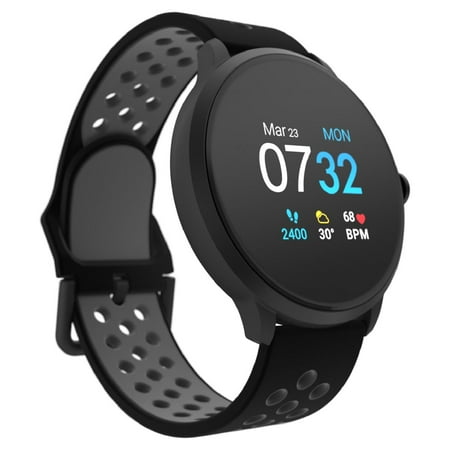
Key Considerations:
The iTouch Sport 3 delivers a 1.7-inch round touchscreen, continuous heart rate monitoring with elevated heart rate alerts, body temperature monitoring, and a hygiene assistant in a traditional round case design that stands apart from the rectangular majority on this list. Heart rate data triggers breathing exercise suggestions when elevated readings are detected.
Specifications:
- Display: 1.7 inches round full-touch color screen
- Battery: Up to 7 days
- OS Compatibility: Android, iOS
- Health Tracking: Heart rate (continuous), body temperature, sleep monitoring
- GPS: Not specified
- Water Resistance: Yes
- Case: Round silicone case
- Special Features: Hygiene assistant, hydration reminders, activity minute counter, power saving mode
Real-World Performance:
The round case design is the most traditional-looking option in the mid-range smartwatch for heart rate monitoring category — it reads as a conventional timepiece rather than a fitness tracker, which appeals to buyers who want health monitoring without the sport-tracker aesthetic. Heart rate elevated alerts with breathing exercise suggestions provide useful real-time wellness responses. Body temperature monitoring adds a health metric absent from most watches at this price tier.
Pros:
- Traditional round watch design
- Continuous heart rate with elevated alerts
- Body temperature monitoring
- Breathing exercise suggestions
- Accurate sleep tracking — buyer praised
- Hydration reminders
- 7-day battery
Cons:
- App setup can be confusing initially
- Body temperature monitoring is wellness-grade only
- GPS not clearly specified

Under $200 — Best Premium Smartwatch for Heart Rate Monitoring
1. Garmin Vívoactive 5
Best For: All-round health tracking, HRV monitoring, Body Battery, built-in GPS, Android and iPhone users

Key Considerations:
The Garmin Vívoactive 5 is the most complete smartwatch for heart rate monitoring in this guide. HRV status monitoring, Body Battery energy synthesis, personalized sleep coaching, wrist-based continuous heart rate with low and high alerts, and a morning report that summarizes overnight health data create a heart rate monitoring ecosystem that goes meaningfully deeper than any other watch at this price ceiling. An 11-day battery and AMOLED display complete the package.
Specifications:
- Display: 1.2 inches AMOLED (round)
- Battery: 400mAh / Up to 11 days smartwatch mode
- OS: Garmin OS
- Health Tracking: Heart rate (continuous + HRV), SpO2, Body Battery, stress, sleep coaching, HRV status, morning report, menstrual/pregnancy tracking
- GPS: Built-in
- Water Resistance: Swim-safe
- Storage: 4GB
- Sports Apps: 30+ including golf, HIIT, pool swim
- Special Features: Nap detection, wheelchair mode, music storage (Spotify/Amazon Music/Deezer)
Real-World Performance:
HRV status monitoring is the Vívoactive 5’s most differentiated heart rate feature — it tracks heart rate variability nightly and synthesizes trends into a weekly HRV status score that reflects long-term fitness adaptation and recovery capacity. Body Battery combines HRV data, stress readings, activity, sleep quality, and overnight recovery into a single actionable score that genuinely guides daily training decisions. The morning report delivers a concise overnight health summary the moment you wake up.
Garmin optical heart rate sensor is among the most consistently reliable in the consumer wearable category — continuous monitoring accuracy during both rest and moderate-intensity exercise is well-established across the Garmin ecosystem. The 11-day battery figure is realistic at 8-10 days with all health sensors continuously active, which remains excellent for a watch with this sensor depth.
Pros:
- HRV status — gold-standard heart rate variability tracking
- Body Battery energy monitoring
- Morning report with overnight health summary
- Built-in GPS
- 11-day battery life
- AMOLED display
- Sleep coaching with HRV insights
- Nap detection and logging
- Music storage (Spotify, Amazon Music, Deezer)
Cons:
- No ECG monitoring
- Some iPhone pairing inconsistencies
- 1.2-inch display — smaller than some competitors
- Battery reduces with GPS-heavy use
2. Fitbit Versa 4
Best For: Stress management, Active Zone Minutes, Daily Readiness Score, GPS training, cross-platform users

Key Considerations:
The Fitbit Versa 4 wraps continuous heart rate monitoring inside one of the most actionable health data ecosystems available — Daily Readiness Score, Active Zone Minutes, Daily Stress Management Score, and workout intensity mapping create a comprehensive picture of how your heart rate data translates into real fitness and wellness guidance. Built-in GPS, Alexa, and Google Wallet add practical lifestyle utility.
Specifications:
- Display: 1.58 inches (square)
- Battery: Up to 6 days
- OS Compatibility: Android OS 9+ / iOS 15+
- Health Tracking: Heart rate (24/7), SpO2, stress, sleep, menstrual health, Daily Readiness Score, Active Zone Minutes
- GPS: Built-in GPS + workout intensity map
- Water Resistance: 50 meters
- Sports Modes: 40+ with automatic exercise tracking
- Special Features: Alexa built-in, Google Wallet, Google Maps, 3-month Google Health Premium membership
Real-World Performance:
Active Zone Minutes is Fitbit’s most distinctive heart rate feature — it counts time spent in fat burn, cardio, and peak heart rate zones rather than simple steps, providing a more meaningful measure of cardiovascular workout effectiveness. Daily Readiness Score synthesizes resting heart rate, HRV trends, and sleep quality into a daily training recommendation. The workout intensity map plots heart rate zones against GPS route data post-exercise.
The Fitbit ecosystem is the most mature consumer health analytics platform available at this price — years of continuous development mean the heart rate trend visualization, zone training insights, and long-term health dashboard are more sophisticated than most proprietary OS alternatives. Six-day battery with built-in GPS and active heart rate monitoring is strong for this feature density.
Pros:
- Active Zone Minutes — heart rate zone tracking
- Daily Readiness Score
- Daily Stress Management Score
- Built-in GPS + workout intensity map
- 50-meter water resistance
- Alexa built-in + Google Wallet
- 3-month Google Health Premium included
- 6-day battery
Cons:
- No HRV status tracking (vs Garmin)
- No ECG monitoring
- Requires iOS 15+ or Android OS 9+
- Google Health Premium required for advanced analytics post-trial
3. Amazfit Active Max
Best For: 25-day battery, 3000-nit outdoor display, BioCharge energy monitoring, endurance athletes

Key Considerations:
The Amazfit Active Max brings the brightest AMOLED display on this entire list — 3000 nits — alongside a 25-day battery, BioCharge energy monitoring, continuous heart rate and SpO2 tracking, 170+ sport modes, 5-satellite GPS, 4GB offline map and music storage, and Zepp Coach personalized training plans. For buyers who prioritize heart rate monitoring endurance over charging frequency, it’s the strongest option here.
Specifications:
- Display: 1.5 inches AMOLED, 3000 nits (round)
- Battery: 200mAh / Up to 25 days
- OS: Zepp OS
- Health Tracking: Heart rate (24/7), SpO2, sleep, stress, BioCharge energy monitoring
- GPS: Built-in (5 satellite systems)
- Water Resistance: 5ATM
- Storage: 4GB (offline maps + music)
- Sports Modes: 170+ with Zepp Coach training plans
Real-World Performance:
BioCharge energy monitoring is Amazfit’s equivalent to Garmin’s Body Battery — it synthesizes daily workout load, stress readings, and heart rate recovery data into a single energy score that guides training intensity decisions. The 3000-nit AMOLED display makes heart rate zone data readable in direct sunlight conditions where most other smartwatch displays struggle. The 25-day battery claim reduces with regular GPS use, but even at 15 days of active training use it dramatically outperforms the 6-day Fitbit Versa 4 and Samsung alternatives.
Zepp Coach running plans cover 3K to full marathon distance preparation with heart rate zone targets — the training load analysis tracks aerobic and anaerobic performance balance over time. The 5-satellite GPS system provides fast position lock and accurate route tracking for heart rate zone correlation.
Pros:
- 25-day battery — best endurance on this list
- 3000-nit AMOLED — unmatched outdoor visibility
- BioCharge energy monitoring
- 5-satellite GPS
- 4GB offline maps and music storage
- 170+ sport modes
- 5ATM waterproof
- Zepp Coach personalized training plans
Cons:
- Zepp OS — proprietary, not Wear OS
- 25-day claim reduces significantly with daily GPS use
- No HRV status or ECG
- Zepp Flow message reply requires Android phone
4. Samsung Galaxy Watch FE
Best For: Android and Samsung users, ECG monitoring, body composition, Wear OS ecosystem

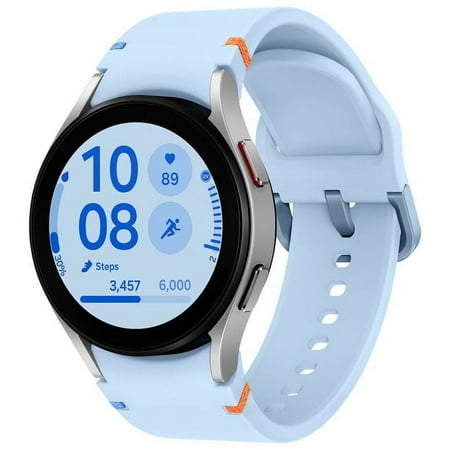
Key Considerations:
The Samsung Galaxy Watch FE brings ECG monitoring, body composition analysis, and Wear OS to the smartwatch for heart rate monitoring category. The combination of continuous optical heart rate monitoring with ECG cardiac screening and body composition tracking (body fat, muscle mass, water levels) creates a more clinically relevant health dataset than optical-only alternatives.
Specifications:
- Display: 40mm AMOLED
- Battery: Up to 40 hours
- OS: Wear OS powered by Samsung
- Health Tracking: ECG, heart rate (real-time), body composition, sleep coaching, SpO2
- GPS: Built-in
- Water Resistance: IP68
- Compatibility: Android OS only
- Special Features: Samsung Wallet, Samsung Pay, Galaxy AI sleep coaching, snore detection
Real-World Performance:
ECG monitoring adds a clinically meaningful dimension to heart rate monitoring — the ability to generate a single-lead ECG and screen for potential AFib (atrial fibrillation) is a health capability that goes beyond what optical PPG sensors alone can detect. Body composition measurements covering body fat percentage, skeletal muscle mass, and hydration levels provide health context that informs how heart rate trends relate to fitness composition changes over time.
Wear OS access to the Play Store enables Google Health app ecosystem integration — heart rate data flows into Google Fit and third-party health apps seamlessly. The 40-hour battery means charging approximately every 1.5 days, which is the primary practical limitation for continuous 24/7 heart rate data capture.
Pros:
- ECG monitoring — AFib screening capability
- Body composition analysis
- Wear OS — Google Play Store access
- Galaxy AI sleep coaching
- Built-in GPS
- Samsung Wallet and Samsung Pay
- AMOLED display
Cons:
- ~40-hour battery — frequent charging
- Android only — no iPhone support
- International version — region-limited setup reported
5. Carbinox Edge Smart Watch
Best For: Outdoor professionals, IP69K protection, dual-band GPS, AI voice texting, 25-day battery

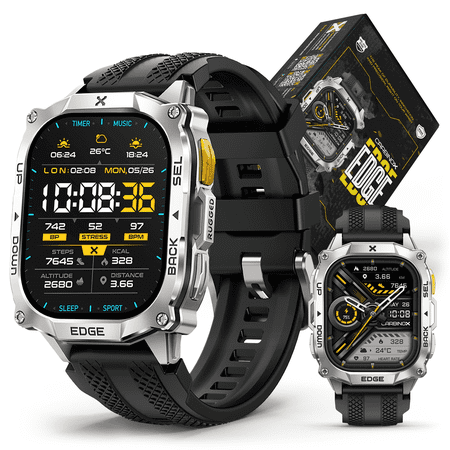
Key Considerations:
The Carbinox Edge is purpose-built for extreme environments where most smartwatch for heart rate monitoring wouldn’t survive. IP69K plus 5ATM protection, Gorilla glass, stainless steel casing, dual-band GNSS GPS with six satellite systems, 500mAh 25-day battery, and continuous heart rate, SpO2, sleep, and stress monitoring create the most durable heart rate monitoring package on this list.
Specifications:
- Display: 1.96 inches AMOLED
- Battery: 500mAh / Up to 25 days
- OS Compatibility: Android, iOS (Carbinox MAX app)
- Health Tracking: Heart rate, SpO2, sleep, stress, altimeter, barometer, compass
- GPS: Dual-band GNSS (6 satellite systems)
- Water Resistance: IP69K + 5ATM — highest on this list
- Sports Modes: 23 activities with training plans
- Special Features: Gorilla glass, stainless steel, AI voice texting (glove-compatible), Bluetooth calls
Real-World Performance:
IP69K protection means the Carbinox Edge withstands high-pressure water jets and steam cleaning that would destroy any other smartwatch for heart rate monitoring on this list. Continuous heart rate monitoring runs alongside altimeter and barometer data — useful for understanding how altitude and atmospheric conditions affect cardiac response during outdoor activities. Dual-band GNSS GPS provides fast lock and precise positioning in remote terrain where single-band systems struggle.
The AI voice texting system that functions while wearing work gloves is a thoughtful professional feature. 25-day battery endurance means heart rate data captures uninterrupted through extended field deployments. The 23 sport modes are fewer than most competitors, but the depth of professional sensor data (altimeter, barometer, compass) compensates for sport mode breadth.
Pros:
- IP69K + 5ATM — best waterproofing on this list
- 25-day battery with continuous HR monitoring
- Dual-band GNSS GPS (6 satellites)
- Gorilla glass + stainless steel
- AMOLED display
- Altimeter, barometer, compass
- AI voice texting — glove-compatible
Cons:
- 23 sport modes — fewer than competitors
- Carbinox MAX app — less established ecosystem
- Bulky professional build — not for casual or formal wear
Best Heart Rate Monitoring Fitness Smart Watch Bands
1. Fitbit Inspire 3
Best For: Slim wrist comfort, irregular heart rhythm notifications, stress management, 10-day battery, all-day wear

Key Considerations:
The Fitbit Inspire 3 is the most refined slim fitness band for continuous heart rate monitoring in this guide. Irregular heart rhythm notifications, daily Stress Management Score, Active Zone Minutes, 40+ exercise modes, and a 10-day battery in a 50-meter waterproof package make it the strongest lightweight heart rate monitoring band.
Specifications:
- Display: 0.76 inches color touchscreen
- Battery: Up to 10 days
- OS Compatibility: Android OS 11.0+ / iOS 16.4+
- Health Tracking: Heart rate (24/7), SpO2, stress, sleep, menstrual health, Daily Readiness Score
- GPS: Via smartphone
- Water Resistance: 50 meters
- Sports Modes: 40+ with automatic tracking
- Special Features: Irregular heart rhythm notifications, Active Zone Minutes, Daily Readiness Score, 3-month Google Health Premium membership
Real-World Performance:
Irregular heart rhythm notifications are the most clinically relevant heart rate feature on any band-style wearable in this guide — Fitbit’s algorithm monitors continuous heart rate data for patterns consistent with AFib and alerts you when potential irregularities are detected. Daily Readiness Score synthesizes resting heart rate trends, sleep quality, and HRV data into a single training guidance number.
The ultra-lightweight form factor makes it the most comfortable option for 24/7 heart rate monitoring in this guide — it’s genuinely easy to forget you’re wearing it during sleep, which is critical for capturing accurate overnight heart rate and recovery data. The small 0.76-inch display is the trade-off for the slim, non-intrusive form factor.
Pros:
- Irregular heart rhythm notifications — clinically meaningful
- Daily Readiness Score with heart rate basis
- Active Zone Minutes — heart rate zone activity tracking
- 10-day battery
- 50-meter water resistance — swim-safe
- Ultra-lightweight — comfortable for 24/7 wear
- 3-month Google Health Premium included
- Both small and large bands included
Cons:
- 0.76-inch display — very small
- Phone-dependent GPS
- Requires iOS 16.4+ or Android OS 11.0+
- Google Health Premium required for advanced analytics after trial

2. WHOOP 5.0 Smart Watch
Best For: Serious athletes, continuous HRV monitoring, recovery optimization, performance coaching, distraction-free tracking

Key Considerations:
The WHOOP 5.0 is the most performance-serious heart rate monitoring device on this entire list. No screen, no notifications — just continuous heart rate monitoring every second of every day, HRV tracking as the primary recovery metric, VO2 Max assessment, menstrual cycle insights, a real-time stress monitor, and 14+ day battery life. The annual membership model delivers continuously updated AI coaching based on your personal baseline data.
Specifications:
- Display: None — screenless design
- Battery: 14+ days
- OS Compatibility: Smartphones and tablets
- Health Tracking: Heart rate (every second), HRV (continuous), VO2 Max, sleep (all stages), strain, recovery, stress monitoring
- GPS: No GPS
- Water Resistance: Waterproof
- Sensor: Optical multi-LED + pulse sensor
- Special Features: HSA/FSA eligible, WHOOP Journal (300+ behavior tracking), personalized AI coaching, CoreKnit performance band, wireless PowerPack option
Real-World Performance:
WHOOP monitors heart rate every single second — not every few seconds like standard smartwatches. This sampling frequency enables HRV calculation of a quality approaching research-grade equipment, making the Recovery Score (which uses HRV as its primary input) genuinely reliable for adjusting daily training intensity. The Strain Score quantifies how hard your cardiovascular system worked each day based on continuous heart rate data, while Recovery Score measures overnight readiness.
The screenless design is WHOOP’s most divisive choice — and also its most deliberate health decision. Without a screen to check, phone, or interact with, WHOOP captures uninterrupted, undistracted heart rate data 24 hours a day including sleep. The annual membership model means ongoing cost is a factor, but HSA/FSA eligibility makes it accessible to health-expense account holders.
Pros:
- Heart rate monitored every second — highest frequency on list
- Continuous HRV tracking — gold-standard recovery metric
- VO2 Max assessment
- 14+ day battery
- 300+ daily behavior tracking via WHOOP Journal
- HSA/FSA eligible
- Real-time stress monitor
- Personalized AI coaching
Cons:
- Annual membership subscription required — ongoing cost
- No screen — cannot display heart rate on demand
- No GPS
- Not a traditional smartwatch — notifications not supported
- Premium pricing beyond the device cost
3. Google Fitbit Air
Best For: All-day comfort, AI-powered coaching, SpO2 monitoring, 7-day battery, style-versatile wear

Key Considerations:
The Google Fitbit Air is Fitbit’s most wearable heart rate monitoring device — a screenless, micro-adjustable band that transitions from workout band to sleep band to style bracelet without changing the sensor core. AI-powered coaching via Google Health, SpO2 monitoring, continuous heart rate tracking, 7-day battery with 5-minute fast charge, and 50-meter water resistance make it a compelling everyday health companion.
Specifications:
- Display: None — screenless design
- Battery: 7 days / 5-minute fast charge = 1 day of battery
- OS Compatibility: Android 11.0+ / iOS 16.4+
- Health Tracking: Heart rate (optical, 24/7), SpO2, skin temperature variation, sleep, stress
- GPS: Via smartphone
- Water Resistance: 50 meters
- Sensors: 3-axis accelerometer + gyroscope, optical heart rate, red/infrared SpO2
- Special Features: AI-powered coaching (Gemini-built), Google Health Premium (3-month trial), quick-release pebble design
Real-World Performance:
The 5-minute quick charge delivering a full day of heart rate monitoring use is a practically transformative feature — charging anxiety is essentially eliminated for daily use. The screenless form factor sits more comfortably than any watch on this list during overnight sleep, enabling uninterrupted heart rate and SpO2 monitoring through the full sleep cycle without display pressure or wrist discomfort.
Google’s Gemini-built AI coaching adapts heart rate insights and wellness recommendations to your specific patterns over time — it’s the most personalized coaching algorithm available on any band-style device in this guide. The 3.9-star rating from 112 buyers reflects its newer launch status rather than established performance concerns.
Pros:
- 5-minute fast charge — 1 day of battery from 5 minutes
- Screenless — most comfortable for 24/7 HR wear
- AI coaching built with Google Gemini
- SpO2 and skin temperature monitoring
- 50-meter water resistance
- Transitions between bracelet, workout, and sleep band
- 3-month Google Health Premium trial
Cons:
- No screen — heart rate not visible without phone
- Phone-dependent GPS
- Requires iOS 16.4+ or Android 11.0+
- Google Health Premium required for AI coaching after trial
4. Garmin vívosmart 5
Best For: Minimalists, HRV monitoring in a slim band, Body Battery, 7-day battery, swim-safe tracking

Key Considerations:
The Garmin vívosmart 5 is the only slim fitness band in this guide that delivers HRV status monitoring — typically a premium feature found on full Garmin GPS watches. Body Battery energy synthesis, swim-safe waterproofing, a 7-day battery, and Garmin’s trusted optical heart rate sensor combine in a lightweight band that prioritizes health data depth over display size.
Specifications:
- Display: 0.84 inches OLED touchscreen
- Battery: Up to 7 days
- OS Compatibility: Android and iOS
- Health Tracking: Heart rate (continuous + HRV), SpO2 (Pulse Ox), Body Battery, stress, sleep scoring, respiration, women’s health, hydration
- GPS: Connected GPS via smartphone
- Water Resistance: Swim-safe (5ATM equivalent)
- Interface: Touchscreen + physical button
- Special Features: Body Battery, HRV status, morning report, fitness age, low/high heart rate alerts
Real-World Performance:
HRV monitoring in a slim fitness band form factor is genuinely rare — the vívosmart 5 delivers the same HRV status tracking found on Garmin’s more expensive GPS watches, providing weekly heart rate variability trend scores that reflect long-term cardiovascular fitness and recovery quality. Body Battery synthesizes heart rate, HRV, stress, and sleep data into a real-time energy score that accurately reflects physiological readiness throughout the day.
Low and high heart rate alerts with user-configurable thresholds add a cardiac awareness layer that most slim bands don’t support at this price. The 7-day battery with all health sensors active is realistic, and the swim-safe waterproofing covers pool tracking with continuous heart rate recording during water workouts.
Pros:
- HRV status monitoring — rare in slim band form factor
- Body Battery energy monitoring
- Swim-safe heart rate tracking
- Low and high heart rate alerts
- Sleep scoring with detailed insights
- Physical button + touchscreen interface
- 7-day battery
- Garmin Connect mature ecosystem
Cons:
- 0.84-inch display — very small
- Phone-dependent GPS
- No standalone music storage
- Body Battery accuracy can vary with inconsistent sleep patterns
5. Google Pixel Watch 2
Best For: Android and Pixel phone users, ECG monitoring, AFib detection, fall detection, Fitbit health integration

Key Considerations:
The Google Pixel Watch 2 delivers ECG monitoring with AFib detection, irregular heart rhythm notifications, continuous heart rate tracking via Fitbit’s platform, stress management, fall detection, and Emergency SOS — all within a sleek round 1.2-inch design. For Android users who want the deepest Google ecosystem heart rate monitoring integration with clinically relevant ECG capability, the Pixel Watch 2 is the strongest option.
Specifications:
- Display: 1.2 inches round screen
- Battery: Up to 24 hours (always-on display)
- OS Compatibility: Android 9.0+ (requires Google Account)
- Health Tracking: Heart rate (24/7 via Fitbit), ECG with AFib detection, SpO2, stress, sleep, step tracking
- GPS: Built-in
- Water Resistance: Yes
- Storage: 32GB
- Special Features: Fall detection, Emergency SOS, Safety Check, Fitbit Daily Readiness Score, Google AI personalized help (Pixel devices)
Real-World Performance:
The ECG app enabling AFib screening from the wrist is the Pixel Watch 2’s most clinically meaningful feature for heart rate monitoring — the ability to generate a single-lead ECG and assess for potential atrial fibrillation provides cardiac awareness beyond what optical PPG sensors alone deliver. Fitbit integration brings Daily Readiness Score, Active Zone Minutes, and sleep heart rate analysis to the Wear OS platform.
The 24-hour battery is the most significant real-world limitation — continuous heart rate monitoring, always-on display, and GPS active use will require daily charging. For buyers who prioritize ECG capability and deep Android integration over battery endurance, the Pixel Watch 2 is a compelling heart rate monitoring platform. For buyers who need multi-day heart rate capture without charging interruptions, consider Garmin or Amazfit alternatives.
Pros:
- ECG with AFib detection
- Irregular heart rhythm notifications
- Fitbit Daily Readiness Score and Active Zone Minutes
- Fall detection and Emergency SOS
- Built-in GPS
- 32GB storage
- Google AI personalized health insights (Pixel devices)
- Safety Check feature
Cons:
- 24-hour battery — daily charging required
- Android only — no iPhone support
- Requires Google Account and internet access
- Daily charging disrupts continuous 24/7 HR monitoring
- Google AI full features require Pixel device pairing
6. GJX Watch Band
Best For: Women’s health monitoring, basic heart rate and blood pressure awareness, casual daily use

Key Considerations:
The GJX is the most basic entry in the premium tier of this guide — included as a budget option for buyers who want basic continuous heart rate monitoring, blood pressure awareness, and SpO2 tracking in a slim feminine design without the complexity of a full-featured health platform.
Specifications:
- Display: Touchscreen (specific size not detailed)
- OS Compatibility: Android and iOS
- Health Tracking: Heart rate, blood pressure, SpO2, step tracking
- Water Resistance: Water-resistant
- Connectivity: Bluetooth
- Special Features: Smart notifications, pedometer, message reminders
Real-World Performance:
With only one verified buyer review, meaningful performance assessment is not possible for the GJX. The listed features — continuous health monitoring, Bluetooth notification sync, and vital signs tracking — represent standard budget band functionality.
Pros:
- Basic heart rate and blood pressure monitoring
- Slim feminine design
- Bluetooth notification sync
- SpO2 monitoring listed
Cons:
- Unknown brand — software support uncertain
- Specifications not fully detailed
- Many better-established alternatives available at similar prices
Key Comparisons — Heart Rate Monitoring Technology Explained
Optical PPG vs ECG: Understanding the Difference
Every smartwatch for heart rate monitoring in this guide uses photoplethysmography (PPG) — green LED light that measures blood volume changes in the wrist to estimate heart rate. This is reliable for continuous monitoring, zone training, and wellness trend tracking.
ECG (electrocardiogram) monitoring — available on the Samsung Galaxy Watch FE and Google Pixel Watch 2 in this guide — uses electrical signals detected when your finger completes a circuit on the watch’s electrode to generate a cardiac waveform similar to a single-lead medical ECG. ECG can detect arrhythmia patterns like AFib that optical PPG sensors cannot reliably identify.
- Choose optical PPG for: Continuous heart rate monitoring, zone training, daily wellness tracking, sleep heart rate, long battery life.
- Choose ECG for: AFib screening, cardiac health awareness, clinically relevant rhythm assessment alongside continuous optical monitoring.
HRV Monitoring: Why It Matters More Than Resting Heart Rate
Heart rate variability (HRV) — the variation in time between consecutive heartbeats — is a more sensitive indicator of autonomic nervous system status, recovery readiness, and long-term fitness adaptation than resting heart rate alone.
- WHOOP 5.0 — Continuous HRV every second, primary Recovery Score input
- Garmin Vívoactive 5 — Nightly HRV status with weekly trend scoring
- Garmin vívosmart 5 — HRV status in a slim band form factor
- Google Pixel Watch 2 — HRV via Fitbit integration
Continuous vs On-Demand Heart Rate Monitoring
- Continuous 24/7 monitoring — Heart rate sampled every few seconds throughout the day and night. Essential for sleep heart rate tracking, accurate resting heart rate calculation, and stress response monitoring. Reduces battery life by 20-40% compared to on-demand.
- On-demand monitoring — Heart rate measured only when you manually initiate a reading or during logged workout sessions. Maximizes battery life but misses the trend data that makes health insights meaningful.
Every recommended smartwatch for heart rate monitoring in this guide supports continuous 24/7 monitoring. The WHOOP 5.0 samples every single second — the highest frequency on this list.
Battery Life with Continuous Heart Rate Monitoring Active
Realistic battery endurance with 24/7 heart rate monitoring continuously enabled:
- Amazfit Active Max / Carbinox Edge — ~18-22 days
- WHOOP 5.0 — 14+ days (always sampling)
- Samsung Galaxy Fit 3 — 10-12 days
- Fitbit Inspire 3 / Amazfit Bip 5 — 8-10 days
- Garmin Vívoactive 5 — 8-10 days
- Garmin vívosmart 5 / Google Fitbit Air — 5-7 days
- Fitbit Versa 4 — 5-6 days
- Samsung Galaxy Watch FE — 1.5 days
- Google Pixel Watch 2 — ~1 day
Complete Buying Guide — How to Choose the Best Smartwatch for Heart Rate Monitoring
Match Heart Rate Features to Your Actual Health Goals
A casual wellness-aware buyer needs continuous heart rate monitoring with high/low alerts and a well-designed app — the Samsung Galaxy Fit 3, Fitbit Inspire 3, or LIVIKEY cover this well. A performance athlete optimizing training load and recovery needs HRV monitoring and strain scoring — the WHOOP 5.0 or Garmin Vívoactive 5 are the only options that deliver this depth.
Someone managing cardiovascular health who wants cardiac rhythm screening needs ECG capability — the Samsung Galaxy Watch FE or Google Pixel Watch 2 are the practical choices.
Sensor Placement and Strap Fit Affect Accuracy
The most common cause of inaccurate heart rate readings on any smartwatch is poor fit. Optical PPG sensors require consistent contact with the skin. Wearing the watch too loosely — particularly during exercise when wrist movement increases — introduces motion artifacts that corrupt readings.
During workouts, wearing the watch one finger’s width above the wrist bone and snug (not tight) consistently improves accuracy across all optical sensors.
Software Ecosystem Is as Important as Hardware
Accurate heart rate data has limited value without software that makes it meaningful. Garmin Connect’s long-term trend analysis and coaching depth is unmatched for health-serious users. Fitbit’s ecosystem (now Google-backed) is the most comprehensive wellness analytics platform for everyday users.
WHOOP’s app transforms continuous heart rate data into Strain, Recovery, and Sleep scores that guide daily training decisions with clinical-quality insight. Samsung Health and Amazfit Zepp are adequate for daily tracking but offer less analytical depth than Garmin or Fitbit.
Heart Rate Monitoring During Sleep Is Non-Negotiable
The most valuable continuous heart rate data for health assessment comes from overnight monitoring — resting heart rate, HRV calculation, sleep stage correlation, and stress recovery patterns all depend on accurate overnight heart rate capture. For reliable sleep heart rate monitoring, choose a lightweight, comfortable watch (Fitbit Inspire 3, WHOOP 5.0, Garmin vívosmart 5, Google Fitbit Air) rather than a heavier smartwatch that you’ll take off before bed.

Conclusion
The best smartwatch for heart rate monitoring depends entirely on how you plan to use the data. For casual daily health awareness and sleep tracking, the Samsung Galaxy Fit 3 delivers excellent value with its AMOLED display and 14-day battery. For serious performance athletes who want the most rigorous heart rate monitoring available, the WHOOP 5.0 samples every second and builds its entire coaching platform around that data. For the majority of buyers who want continuous heart rate monitoring within a capable, comfortable smartwatch, the Garmin Vívoactive 5 balances sensor depth, HRV tracking, battery endurance, and software ecosystem quality better than any other option at its price.
What matters most is consistency — a smartwatch for heart rate monitoring is only as useful as the data it captures over weeks and months. Choose a watch you’ll actually wear every day, including during sleep, and let the trends tell the real story of your cardiovascular health.