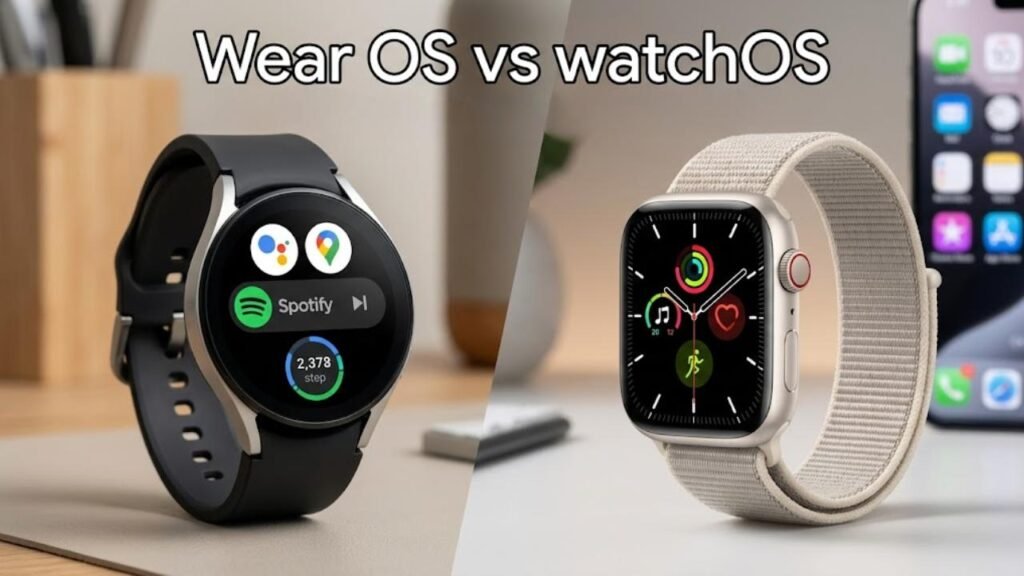
The wear os vs watchos debate is one of the most consequential decisions any smartwatch buyer faces — and it’s more nuanced than it looks. Choose the wrong platform and you’ll find features locked out, app experiences that feel incomplete, or an ecosystem that doesn’t talk to your phone the way you expect. Get it right and your watch becomes a seamless extension of your digital life.
Both platforms have matured significantly. Wear OS vs watchOS is no longer a contest where one side clearly dominates — it’s a platform choice that depends on your phone, your priorities, and how you use health and fitness features daily. Wear OS runs on Samsung Galaxy watches, Fossil, and other Android partners. watchOS runs exclusively on Apple Watch and works only with iPhone. The implications of that single fact ripple across every feature comparison in this guide.
This article breaks down wear os vs watchos head-to-head across every dimension that matters — health sensors, app ecosystems, battery life, performance, fitness tracking, and long-term value — then pairs each platform with its strongest current hardware options so you can make a confident, informed decision.
AT A GLANCE — Wear OS vs watchOS Quick Summary
Choose Wear OS if: You use an Android phone, want hardware choice, prefer Google’s app ecosystem, or use a Samsung Galaxy device.
Choose watchOS if: You use an iPhone, want Apple Health integration, value watchOS-exclusive features like ECG on iPhone, or prioritize seamless iOS connectivity.
- Best Wear OS Watch: Samsung Galaxy Watch 8
- Best Budget Wear OS Watch: Samsung Galaxy Watch 7
- Best watchOS Watch: Apple Watch Series 11
- Best Budget watchOS Watch: Apple Watch SE 3
- Best Premium watchOS Watch: Apple Watch Ultra (Renewed)
Wear OS vs watchOS: The Core Platform Difference
Before comparing features, the most important fact in the wear os vs watchos debate is this: platform compatibility is non-negotiable.
Wear OS requires Android. It works best with Android 6.0 or newer, and Samsung’s Galaxy watches specifically require Android devices to access full Galaxy AI features, ECG monitoring, blood pressure measurement, and Samsung Pay. iPhone users can pair some Wear OS watches for basic functions, but the experience is significantly degraded.
watchOS requires iPhone. Apple Watch does not function independently as a smartwatch on Android. This is a hard wall, not a soft limitation.
If you use an Android phone, wear os vs watchos is effectively decided for you — Wear OS is your platform. If you use an iPhone, watchOS delivers a significantly better experience than attempting to use Wear OS with iOS. The debate only truly applies to users who are flexible about their phone or considering switching ecosystems.

Wear OS vs watchOS: Feature-by-Feature Breakdown
Health and Fitness Sensors
Both platforms have converged significantly in health capability, but the implementation differs:
Wear OS (Samsung):
Samsung Galaxy Watch 7 and Watch 8 offer ECG monitoring, blood pressure measurement (Samsung Health Monitor app, Android only), sleep apnea detection (Galaxy AI), SpO2, heart rate, skin temperature, and body composition analysis via BIA. Galaxy AI synthesizes these into Energy Scores and personalized wellness insights. The Exynos W1000 3nm chip handles on-device health AI processing efficiently.
watchOS:
Apple Watch Series 11 adds hypertension notifications (detecting signs of chronic high blood pressure), ECG, irregular rhythm detection, sleep apnea notifications, blood oxygen, temperature sensing, and the Vitals app for overnight health metric overview. Series 11 also includes training load tracking, Heart Rate Zones, and Apple Intelligence-powered Workout Buddy.
Verdict: watchOS edges ahead on cardiac health features at the premium tier — hypertension notifications and the Vitals app represent meaningful advances. Wear OS (Samsung) matches on ECG and adds blood pressure measurement that watchOS doesn’t offer. For most users, both platforms deliver comprehensive health monitoring.
App Ecosystem
Wear OS:
Access to the Google Play Store on the watch means a broader third-party app library, including Strava, Spotify, Google Maps navigation directly on the wrist, Google Wallet (contactless payments), Google Assistant, YouTube Music, and thousands of fitness apps. Samsung Galaxy watches add Samsung Pay and Samsung-exclusive health apps. The Fossil Gen 6 also supports Alexa.
watchOS:
The App Store for Apple Watch is curated but deep in quality. Apple’s own apps — Fitness, Health, Mindfulness, Sleep, ECG, Crash Detection — are tightly integrated with iPhone and iCloud. Third-party support from Strava, Nike Run Club, and major fitness platforms is strong. watchOS apps typically feel more polished but the ecosystem is more closed than Wear OS.
Verdict: Wear OS offers more flexibility and Google ecosystem depth. watchOS delivers tighter integration with Apple services and generally more polished app experiences. Neither is objectively better — it depends which ecosystem you live in.
Battery Life
This is the most honest area of differentiation in wear os vs watchos:
Wear OS: Samsung Galaxy Watch 7 and Watch 8 deliver approximately 40 hours under typical use with Wear OS 5/6 active. Heavy GPS and health monitoring use reduces this. Wear OS is notoriously more power-hungry than proprietary OS alternatives.
watchOS: Apple Watch Series 11 offers 18 hours of normal use, with fast charging delivering 8 hours in 15 minutes. Apple Watch Ultra delivers 36 hours (60 hours in Low Power Mode). watchOS is similarly constrained by daily charging requirements.
Verdict: Neither platform wins on battery life. Both require daily or near-daily charging under typical use. Wear OS watches from non-Samsung brands can sometimes stretch to 2 days, but the platform inherently trades battery endurance for processing depth.
Performance and Processing
Wear OS: Samsung Galaxy Watch 7 and Watch 8 run the Exynos W1000 (3nm) — the most powerful smartwatch processor available. The penta-core architecture handles Galaxy AI, real-time health analysis, and app multitasking without meaningful lag. App loading and gesture response are genuinely smooth.
watchOS: Apple’s S-series chips continue to set the performance benchmark for smartwatch processing. The combination of tight hardware-software integration and Apple’s custom silicon delivers the fastest and most responsive app experiences in the wearable category.
Verdict: Both platforms offer excellent performance at the flagship tier. Apple’s chip integration may have a marginal edge in app fluidity, but Samsung’s Exynos W1000 has closed the gap meaningfully.
Customization
Wear OS: Thousands of watch faces through Google Play Store and Samsung’s Galaxy Store. Third-party faces from Facer and WatchMaker add effectively unlimited design options. Hardware variety is high — round cases (Samsung Galaxy, Fossil), square options, different sizes and materials.
watchOS: Hundreds of first-party watch faces with complications that integrate Apple apps. Third-party watch faces are limited — Apple tightly controls this. Band ecosystem is extensive, with hundreds of official and third-party options. Hardware is exclusively Apple’s rectangular and round design language.
Verdict: Wear OS offers more hardware variety and customization depth. watchOS offers tighter control and a more curated experience.
Voice Assistant
Wear OS: Google Assistant is the primary voice assistant on Wear OS watches. Samsung Galaxy watches also support Bixby. Fossil Gen 6 adds Alexa. Multiple assistant options give Wear OS more flexibility.
watchOS: Siri is exclusive to watchOS and works with offline processing on recent Apple Watch models. Siri handles Apple-specific queries (sending iMessages, controlling HomeKit devices, Apple Music) with the deepest integration.
Verdict: For Android users, Google Assistant on Wear OS is the stronger daily assistant. For iPhone users, Siri’s iOS integration on watchOS is unmatched.
Wear OS Watches — Best Picks
1. Samsung Galaxy Watch 7 (44mm) — Best Overall Wear OS Watch
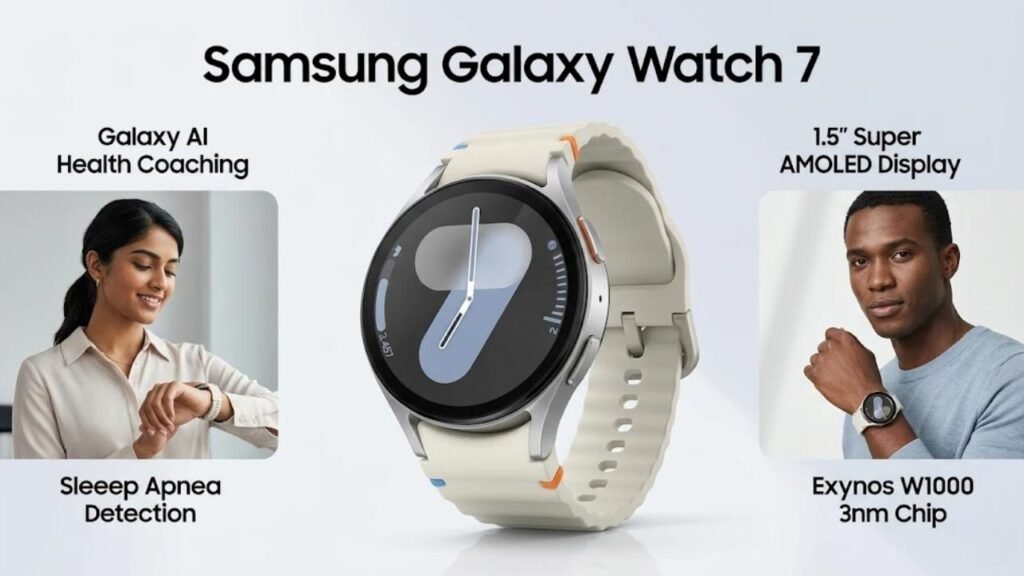
Best For: Android users wanting Galaxy AI health coaching, sleep apnea detection, and a 1.5-inch AMOLED display
Product Highlights:
The Galaxy Watch 7 is the most balanced Wear OS smartwatch available — combining Galaxy AI-powered health insights with the powerful Exynos W1000 3nm chip, a 1.5-inch Super AMOLED display at 480x480px resolution, 5ATM/IP68 water resistance, and MIL-STD-810H durability certification. Sleep apnea detection is a first for Galaxy Watch, and the improved heart rate sensor delivers more accurate exercise zone data than previous generations.
In the wear os vs watchos comparison, the Galaxy Watch 7 represents Wear OS at its most capable — ECG, sleep coaching, GPS, voice-to-text, Samsung Pay, and 32GB storage in a platform that runs Google apps alongside Samsung’s health ecosystem.
| Reasons to Buy | Reasons to Avoid |
|---|---|
| Galaxy AI health coaching and insights | Android only for full feature access |
| Sleep apnea detection | Near-daily charging required |
| 1.5″ Super AMOLED — vivid display | International model — no US warranty |
| Exynos W1000 3nm — fast performance | Best with Samsung ecosystem |
| 5ATM + MIL-STD-810H durability | Blood pressure requires periodic calibration |
| Samsung Pay and Google Pay | Wear OS drains battery faster than Garmin |
2. Samsung Galaxy Watch 8 (40mm) — Best Premium Wear OS Watch
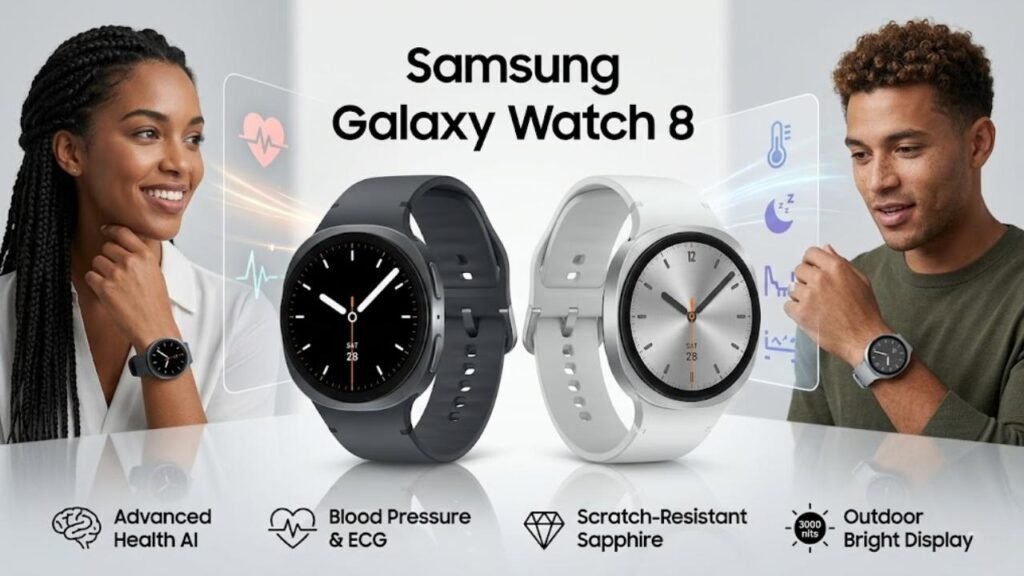
Best For: Android users wanting blood pressure monitoring, sapphire crystal protection, Wear OS 6, and the latest Galaxy AI health features
Product Highlights:
The Galaxy Watch 8 advances the Galaxy Watch platform with Wear OS 6, sapphire crystal glass protection, 3000-nit peak brightness AMOLED display, blood pressure monitoring (ECG certified), Antioxidant Index tracking, skin temperature sensing, and Advanced Sleep Coaching with Galaxy AI. The Exynos W1000 (3nm) chip and 32GB storage make it the most technically advanced Wear OS smartwatch on this list.
For buyers comparing wear os vs watchos at the premium health tier, the Galaxy Watch 8’s blood pressure monitor is a capability watchOS does not offer on any current Apple Watch — a meaningful clinical health advantage for users who want comprehensive cardiovascular monitoring from a single wrist device.
| Reasons to Buy | Reasons to Avoid |
|---|---|
| Blood pressure monitoring + ECG | Android only — no iPhone support |
| Sapphire crystal — scratch resistant | ~40h battery — requires daily charging |
| 3000-nit AMOLED — brightest on list | International model — no warranty |
| Antioxidant Index — unique health metric | Wear OS 6 ecosystem still maturing |
| Advanced Sleep Coaching with Galaxy AI | Best with Samsung Galaxy phone for full AI |
| Wear OS 6 + One UI Watch 8 | Higher price vs Galaxy Watch 7 |
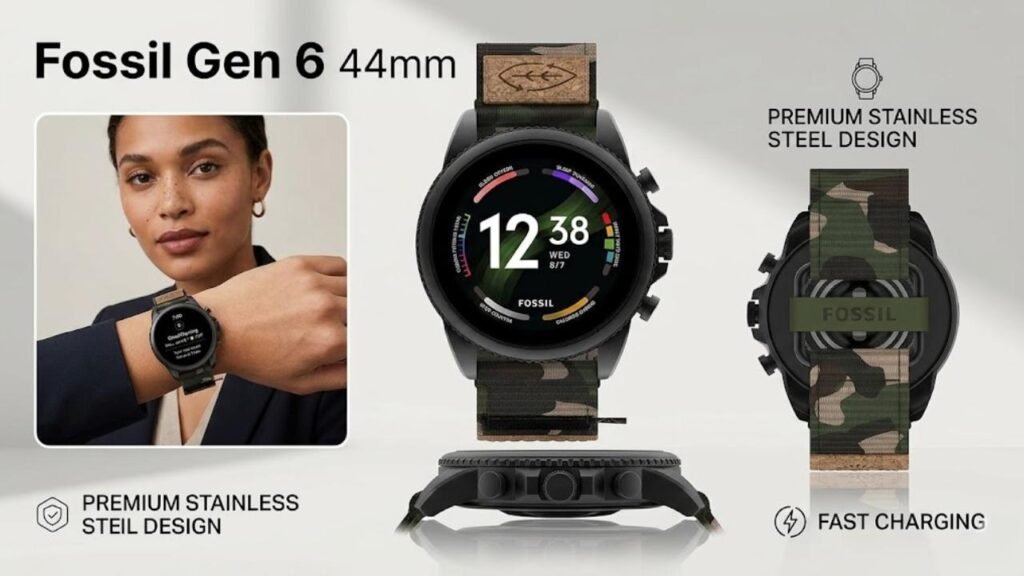
3. Fossil Gen 6 44mm — Best Style-Forward Wear OS Watch
Best For: Fashion-conscious Android users wanting Wear OS with Alexa, a premium stainless steel design, and swimproof durability
Product Highlights:
The Fossil Gen 6 occupies a unique position in the landscape — it’s the most style-focused Wear OS watch on this list, combining a traditional 44mm stainless steel watch case with Wear OS 2.6, Alexa built-in, Qualcomm Snapdragon Wear 4100+ chipset, swimproof durability, and the aesthetic of a premium fashion watch rather than a sport device. Thousands of watch faces, 8GB storage, built-in GPS, and fast charging (80% in 30 minutes) complete a compelling lifestyle package.
Fossil’s approach to Wear OS prioritizes daily wearability and style alongside health tracking — it’s the right choice for users who want their smartwatch to look like a traditional timepiece while running Google’s full app ecosystem. The Alexa integration is a differentiator versus Samsung’s Galaxy AI focus.
| Reasons to Buy | Reasons to Avoid |
|---|---|
| Alexa built-in — voice assistant flexibility | Wear OS 2.6 — older platform version |
| Premium stainless steel fashion design | Less advanced health sensors vs Samsung |
| 80% charge in 30 minutes | Shorter battery life than Samsung alternatives |
| Qualcomm 4100+ — 30% better performance vs prior gen | No ECG or blood pressure monitoring |
| Swimproof — pool and rain safe | 8GB storage — less than Samsung Galaxy watches |
| Thousands of watch faces + Connect IQ | No sleep apnea detection |
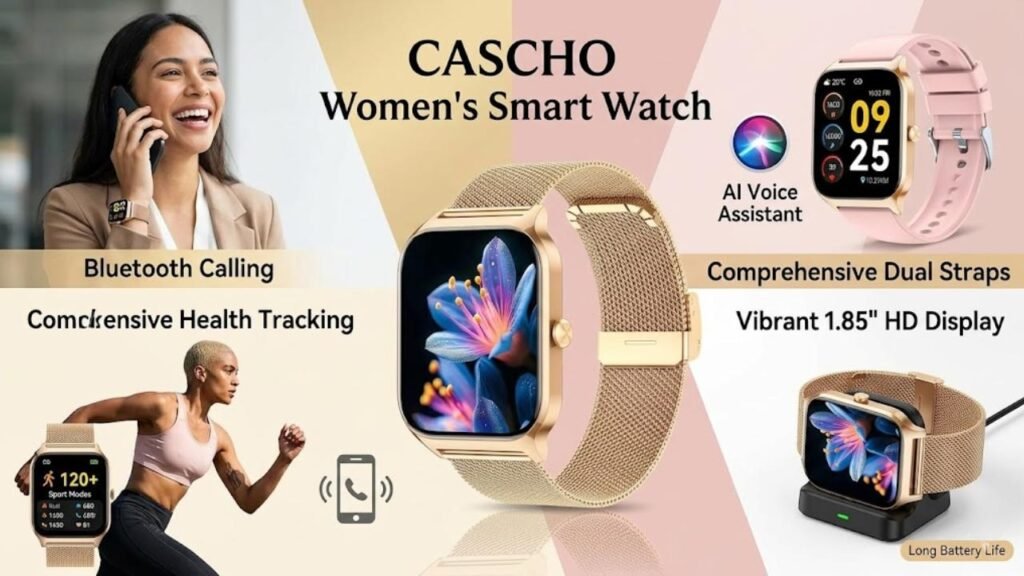
4. CASCHO Women’s Smart Watch — Best Budget Wear OS-Style Watch for Women
Best For: Women wanting a fashion-forward smartwatch with Bluetooth calling, AI voice assistant, 120+ sport modes, and dual band options
Product Highlights:
The CASCHO delivers a feature-rich experience for women at an accessible price — a 1.85-inch HD touchscreen, Bluetooth calling, AI voice assistant support (Siri/Google Assistant via phone), 450mAh battery for up to 12 days of regular use, 120+ sport modes, heart rate and sleep monitoring, menstrual cycle tracking, and dual strap options (metal and silicone). It runs a basic OS rather than full Wear OS, but occupies the Wear OS-adjacent smartwatch space for casual female users.
Note that while the listing references Wear OS 1.0, this reflects the companion app interface rather than full Wear OS implementation — buyers should set expectations accordingly for app ecosystem depth.
| Reasons to Buy | Reasons to Avoid |
|---|---|
| 450mAh battery — up to 12 days regular use | Not full Wear OS — limited app ecosystem |
| Metal + silicone dual straps included | Blood pressure monitoring not included |
| 200+ watch face styles including custom photo | Cannot reply to messages from watch |
| 120+ sport modes | No standalone GPS — phone-connected only |
| Menstrual cycle and stress tracking | Basic sensor accuracy vs premium alternatives |
| Wide compatibility — iOS 9.0+ / Android 7.0+ | “Wear OS 1.0” listing is misleading — not full Wear OS |
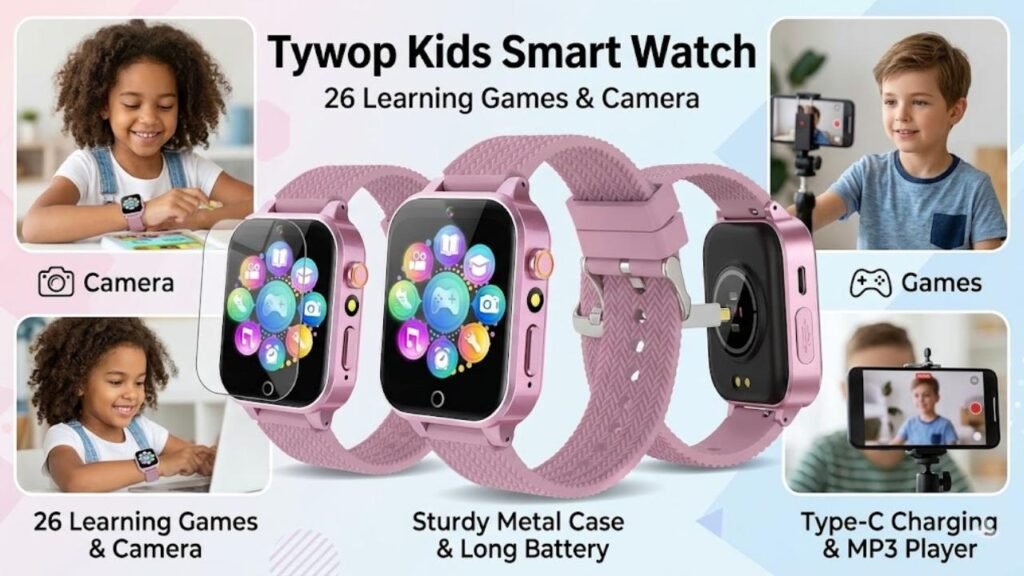
5. Tywop Kids Smart Watch — Best Educational Kids Watch in Wear OS-Style Category
Best For: Children ages 3-12 wanting educational games, camera, audiobooks, and entertainment features in a durable metal case
Product Highlights:
The Tywop Kids Smart Watch is positioned in the Wear OS-adjacent kids’ wearable category — a 1.5-inch HD IPS touchscreen, 500mAh battery (5-7 days standby), 26 puzzle learning games with parental controls, selfie camera (up to 3,000 photos), storybook reader, MP3 music player, video recording, and a sturdy metal case with two included glass screen protectors. USB Type-C charging adds modern convenience.
This device runs a basic proprietary OS rather than true Wear OS, but serves as the children’s alternative in the wearable comparison for families evaluating the smartwatch ecosystem for all age groups.
| Reasons to Buy | Reasons to Avoid |
|---|---|
| 26 puzzle games + parental control mode | Not full Wear OS — proprietary children’s OS |
| Sturdy metal case + 2 screen protectors | No GPS — offline device only |
| Selfie camera + 3,000 photo storage | USB charging rather than wireless |
| Storybook reader and MP3 player | Limited to ages 3-12 use case |
| 500mAh battery — 5-7 days standby | No health sensors beyond pedometer |
| Type-C charging — modern convenience | No Bluetooth calling |
watchOS Watches — Best Picks
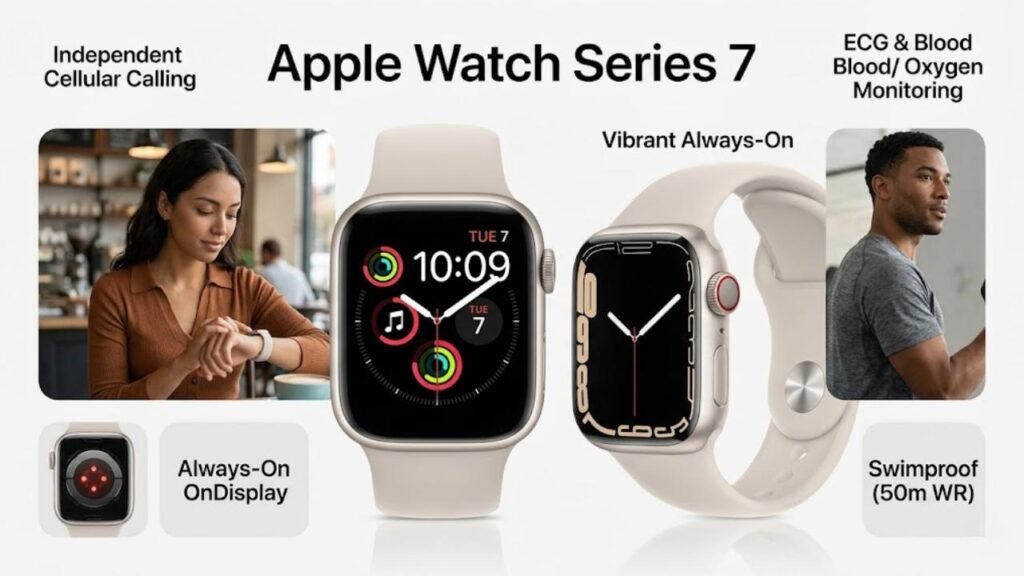
1. Apple Watch Series 7 (GPS + Cellular, Renewed) — Best Budget Entry into watchOS
Best For: iPhone users wanting a budget entry into watchOS with ECG, blood oxygen, always-on display, and cellular connectivity
Product Highlights:
The Apple Watch Series 7 renewed delivers watchOS with ECG monitoring, blood oxygen measurement, the largest Always-On Retina display at the time of release (nearly 20% more screen area than Series 6), crack-resistant front crystal, IP6X dust resistance, and swimproof design. GPS + Cellular enables independent calling, texting, and streaming without the iPhone nearby.
In the comparison at the budget tier, the renewed Series 7 provides access to the Apple Health ecosystem, Mindfulness app, Sleep app, and Activity rings framework at an accessible entry price. The ECG and blood oxygen capabilities remain clinically relevant health features that watchOS delivers uniquely for iPhone users.
| Reasons to Buy | Reasons to Avoid |
|---|---|
| ECG and blood oxygen monitoring | Renewed — battery health varies |
| Always-On Retina display | iPhone only — no Android support |
| Crack-resistant crystal + IP6X dust + swimproof | Older watchOS — some newer features unavailable |
| Cellular for phone-free use | Battery may not reach 18-hour claim |
| Apple Health, Activity rings, Mindfulness app | watchOS updates may phase out Series 7 over time |
| 32GB storage | No crash detection (added in Series 8) |
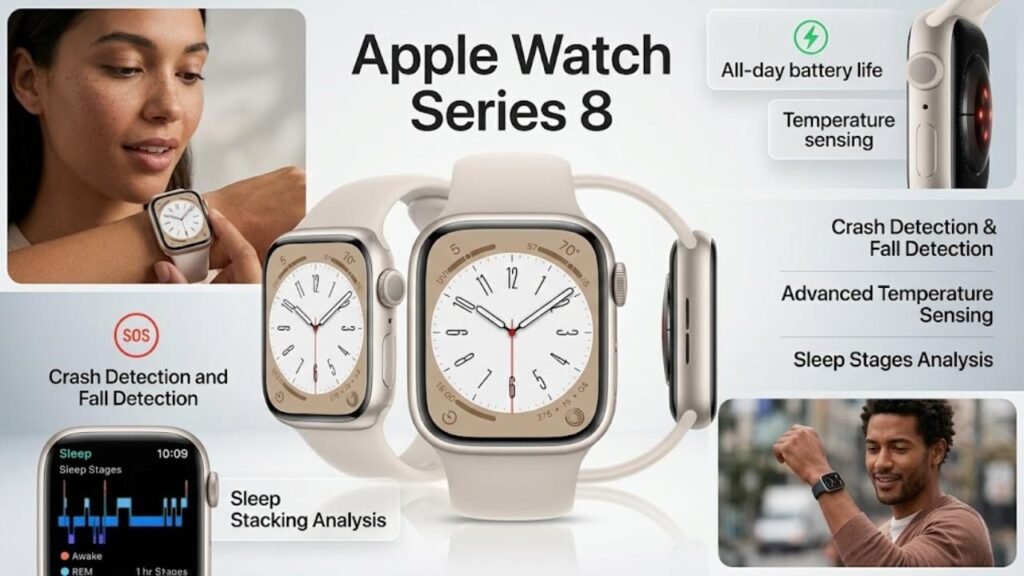
2. Apple Watch Series 8 (GPS, Renewed) — Best Mid-Range watchOS Watch
Best For: iPhone users wanting crash detection, sleep stage analysis, temperature sensing, and Always-On Retina display at renewed pricing
Product Highlights:
The Apple Watch Series 8 renewed introduced two features that remain significant in the wear os vs watchos health comparison — Crash Detection (automatically calling emergency services after a severe vehicle accident) and Temperature Sensing for women’s health cycle tracking and retrospective ovulation estimates. Sleep Stages tracking (REM, Core, Deep) represented Apple’s first detailed sleep architecture analysis, and the Always-On Retina display provides 2000-nit peak brightness for outdoor readability.
As a renewed unit, the Series 8 provides meaningful health advances over Series 7 at a reduced investment — appropriate for iPhone users who want advanced safety features and women’s health tracking without the full Series 11 price.
| Reasons to Buy | Reasons to Avoid |
|---|---|
| Crash Detection — unique safety feature | Renewed — battery health uncertain |
| Temperature sensing for women’s health | iPhone only |
| Sleep Stages — REM, Core, Deep analysis | 18-hour battery — daily charging required |
| Always-On Retina display | Some Series 11 features unavailable |
| Emergency SOS | watchOS update longevity uncertain for older models |
| Built-in GPS | No hypertension detection (Series 11 exclusive) |
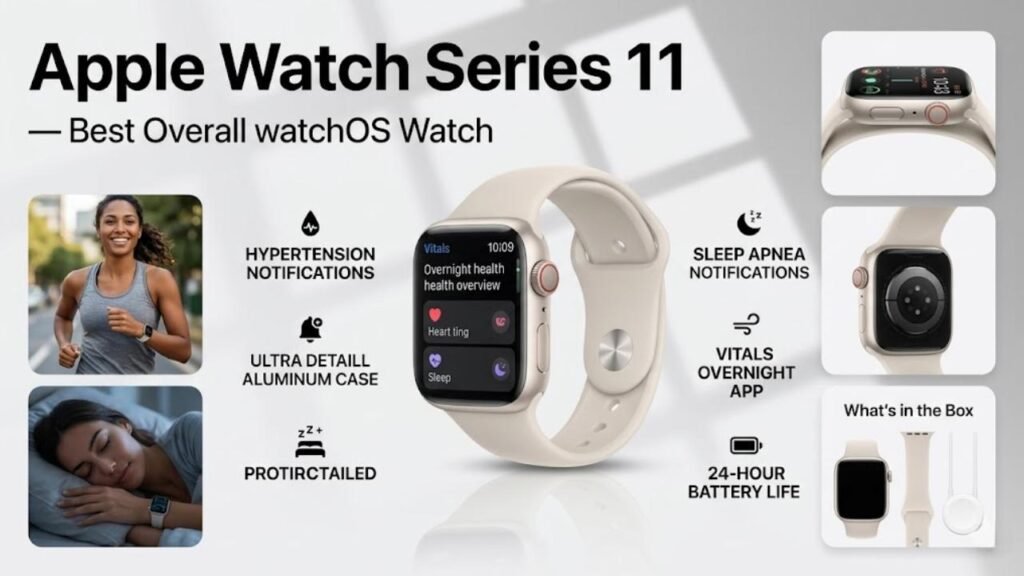
3. Apple Watch Series 11 — Best Overall watchOS Watch
Best For: iPhone users wanting the most advanced Apple Health features including hypertension notifications, sleep apnea detection, training load, and the latest watchOS platform
Product Highlights:
The Apple Watch Series 11 is the most health-advanced Apple Watch available — and represents watchOS at its most capable in the comparison. Hypertension notifications (detecting signs of chronic high blood pressure by analyzing how blood vessels respond to heartbeats), sleep apnea notifications, the Vitals app for overnight health tracking, ECG, irregular rhythm detection, temperature sensing, and Apple Intelligence-powered Workout Buddy make it the most medically relevant consumer wearable on this list.
Additional advances include a 2x more scratch-resistant superdurable glass display, 50-meter water resistance, up to 24-hour battery life, and a 15-minute fast charge delivering 8 hours of use. Training Load tracking, Heart Rate Zones, and Pacer complete a serious fitness tracking platform built on Apple’s integrated health ecosystem.
| Reasons to Buy | Reasons to Avoid |
|---|---|
| Hypertension notifications — unique Apple health feature | iPhone only — no Android support |
| Sleep apnea notifications | Premium pricing |
| Vitals app — overnight health overview | 24-hour battery — daily charging required |
| 2x more scratch-resistant superdurable glass | Full Apple Intelligence features require iPhone |
| Always-On Display | watchOS ecosystem lock-in |
| ECG, irregular rhythm, blood oxygen | No blood pressure cuff-equivalent measurement |
| Apple Intelligence Workout Buddy | Hypertension feature requires FDA clearance — check regional availability |
| 50m water resistance — swimproof |
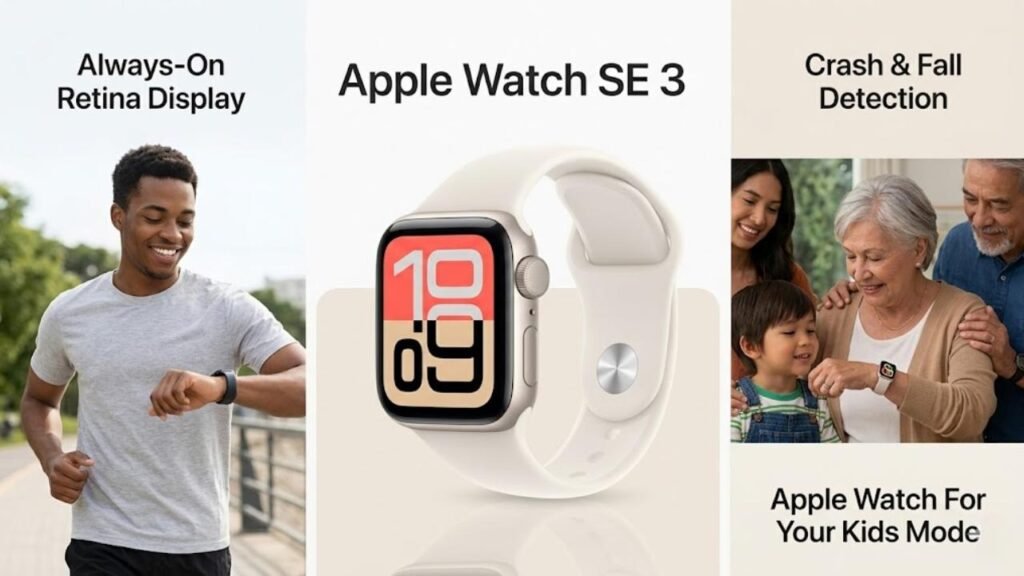
4. Apple Watch SE 3 — Best Budget watchOS Watch
Best For: iPhone users, families, budget buyers, and parents setting up Apple Watch for kids who want Always-On Display and sleep apnea detection at an accessible price
Product Highlights:
The Apple Watch SE 3 delivers the most compelling value proposition in the watchOS lineup — Always-On Display (a new addition over SE 2), sleep apnea notifications, temperature sensing, daily sleep score, 18-hour battery with 15-minute fast charge (up to 8 hours), crash detection, fall detection, and Apple Watch For Your Kids mode. For iPhone users who want the core watchOS health platform without the premium Series 11 investment, SE 3 delivers the essential feature set.
In the wear os vs watchos debate at the budget tier, the SE 3 is the answer for iPhone users — it brings Apple Health integration, Activity rings, Siri, Apple Pay, and now Always-On Display at the most accessible watchOS price point.
| Reasons to Buy | Reasons to Avoid |
|---|---|
| Always-On Display — new for SE generation | iPhone only |
| Sleep apnea notifications | No ECG or blood oxygen vs Series 11 |
| 15-minute charge = 8 hours battery | 18-hour battery — daily charging required |
| Temperature sensing for women’s health | Less comprehensive health vs Series 11 |
| Crash detection + fall detection | No hypertension notifications |
| Apple Watch For Your Kids mode | No Always-On Display on SE 2 — upgrade from SE 2 mainly |
| 4.8-star rating — exceptional user satisfaction |
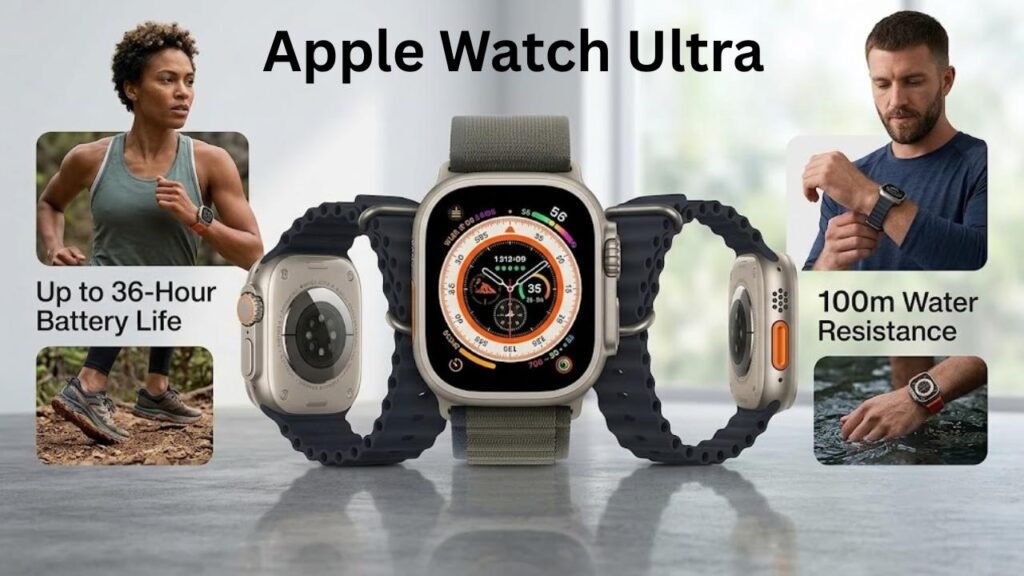
5. Apple Watch Ultra (Renewed) — Best Premium watchOS Watch for Athletes
Best For: Endurance athletes, outdoor adventurers, divers, and ultra-distance runners wanting 36-hour battery, dual-frequency GPS, 100m water resistance, and titanium construction
Product Highlights:
The Apple Watch Ultra renewed is in a category of its own in the premium tier. A 49mm corrosion-resistant titanium case, 1.92-inch Always-On Retina display (brightest Apple Watch ever), dual-frequency precision GPS (L1 and L5) for accurate distance and pace even in challenging terrain, 100m water resistance (EN13319 certified diving standard), 36-hour battery (60 hours in Low Power Mode), customizable Action button, and specialized band options (Ocean, Alpine Loop, Trail Loop) make it the most capable outdoor wearable available.
For runners specifically, the Heart Rate Zones, Running Form metrics, dual-frequency GPS, and endurance battery address every limitation that standard Apple Watch models face in serious athletic use.
| Reasons to Buy | Reasons to Avoid |
|---|---|
| 36-hour battery (60h Low Power Mode) — longest Apple Watch endurance | Premium pricing |
| Dual-frequency GPS — L1+L5 precision | Renewed — battery health varies |
| 100m water resistance — EN13319 diving standard | iPhone only |
| Titanium case — corrosion-resistant durability | 49mm — very large for small wrists |
| 1.92″ brightest Always-On Retina display | Overkill for casual fitness users |
| Customizable Action button | Heavy compared to standard Apple Watch models |
| Heart Rate Zones + Running Form metrics | |
| Compass Waypoints + Backtrack trail navigation |
Wear OS vs watchOS: Model Comparison Table
| Model | Platform | Display | Battery | GPS | Key Feature | Best For |
|---|---|---|---|---|---|---|
| Samsung Galaxy Watch 7 | Wear OS 5 | 1.5″ AMOLED | ~40h | Built-in | Galaxy AI, Sleep Apnea | Android users, AI health |
| Samsung Galaxy Watch 8 | Wear OS 6 | 1.34″ AMOLED | ~40h | Built-in | Blood Pressure, ECG, Sapphire | Premium Android health |
| Fossil Gen 6 44mm | Wear OS 2.6 | 44mm AMOLED | ~24h | Built-in | Alexa, Swimproof, Style | Fashion-conscious Android users |
| Apple Watch Series 7 (Renewed) | watchOS | 1.8″ AMOLED | ~18h | Built-in | ECG, Blood Oxygen, Swimproof | Budget iPhone users |
| Apple Watch Series 8 (Renewed) | watchOS | 41mm AMOLED | ~18h | Built-in | Crash Detection, Sleep Stages | iPhone users wanting safety features |
| Apple Watch Series 11 | watchOS | 42mm AMOLED | ~24h | Built-in | Hypertension, Sleep Apnea, AOD | iPhone users wanting latest health |
| Apple Watch SE 3 | watchOS | 40mm AMOLED | ~18h | Built-in | Always-On Display, Kids Mode | Budget iPhone users, families |
| Apple Watch Ultra (Renewed) | watchOS | 1.92″ AMOLED | ~36h | Dual-frequency | 100m waterproof, titanium, endurance | Athletes, outdoor adventurers |
Wear OS vs watchOS: Deeper Platform Analysis
Wear OS vs watchOS — Health Sensor Depth
The wear os vs watchos health comparison has tightened considerably. Both platforms offer ECG, heart rate, SpO2, sleep tracking, and stress monitoring at their flagship tiers. The meaningful differences:
Wear OS advantages: Blood pressure monitoring (Samsung Galaxy Watch 8), Antioxidant Index (Galaxy Watch 8), body composition analysis (BIA sensor), Google Health integration, cross-platform health data portability.
watchOS advantages: Hypertension notifications (Series 11), sleep apnea detection with FDA clearance, Crash Detection (Series 8+), temperature sensing for retrospective ovulation estimates, Apple Health’s comprehensive data framework, and the Vitals app overnight health overview.
Neither platform has a decisive advantage — the choice depends on which specific health features matter most to your personal health profile.

Wear OS vs watchOS — Software Update Longevity
Wear OS: Google releases annual Wear OS updates. Samsung adds One UI Watch layers that extend functionality and lifespan. The Exynos W1000 3nm chip in Galaxy Watch 7 and 8 provides hardware headroom for several future OS updates.
watchOS: Apple typically supports Apple Watch models for 4-5 years of software updates from release. Series 8 and newer should receive updates through the late 2020s. Older renewed models (Series 7) may have 1-3 years of update support remaining.
For long-term value: A new Wear OS watch with current hardware has equivalent or better update longevity than a renewed Apple Watch with an older chip.
Wear OS vs watchOS — Ecosystem Lock-In
This is the most honest consideration in the wear os vs watchos debate:
Wear OS lock-in is moderate. Health data stored in Samsung Health can be exported. Google Fit syncs with third-party platforms. Switching phones between Android manufacturers preserves most health data. Strava, MyFitnessPal, and Garmin Connect work across platforms.
watchOS lock-in is significant. Apple Health data lives in the Apple ecosystem. Moving to Android means losing continuous health trend data from Apple Watch. iCloud stores watch data that’s not easily portable. watchOS features like Crash Detection and ECG only function when paired with iPhone.
This is the strongest practical argument for Wear OS in the comparison — if you want health data portability and platform flexibility, Wear OS keeps more options open.
Wear OS vs watchOS — Third-Party Hardware Choice
Wear OS offers significant hardware variety: Samsung Galaxy Watch (round), Fossil (fashion-forward), and numerous other Android partners covering different case materials, sizes, aesthetics, and price points. Runners, fashion buyers, and budget shoppers all find purpose-built Wear OS options.
watchOS runs exclusively on Apple Watch. Hardware choice is limited to Apple’s own lineup — aluminum or titanium, rectangular display in multiple sizes. The band ecosystem is extensive, but the case design is Apple’s alone.
If hardware diversity matters — and for buyers who want a round watch face, or a specific aesthetic — Wear OS is the clear winner in this dimension of the comparison.
Who Should Choose Wear OS?
The answer in the wear os vs watchos debate is clear for these buyers:
- Use an Android phone (Samsung Galaxy, Pixel, OnePlus, etc.)
- Want blood pressure monitoring on your wrist
- Prefer Google Assistant, Google Maps navigation, or Google Wallet
- Want hardware variety (round watches, different materials, budget options)
- Value health data portability across platforms
- Already use Samsung’s Galaxy ecosystem for phone, tablet, or earbuds
- Want Alexa integration (Fossil Gen 6)
- Need broader third-party app flexibility through Google Play Store
Who Should Choose watchOS?
The wear os vs watchos decision points clearly toward watchOS for these users:
- Use an iPhone (the non-negotiable requirement)
- Want hypertension notifications or sleep apnea detection from Apple
- Value Apple Health’s comprehensive long-term data ecosystem
- Want Crash Detection or emergency safety features
- Prioritize ECG accuracy tied to Apple’s FDA-cleared implementation
- Train seriously with the Apple Watch Ultra’s dual-frequency GPS and 36-hour battery
- Already invest in the Apple Services ecosystem (Apple Fitness+, Apple Music, etc.)
- Prefer Apple’s curated, integrated software experience
Conclusion
The wear os vs watchos debate ultimately resolves to one decisive factor: which phone is in your pocket. If it’s an Android, Wear OS — particularly Samsung’s Galaxy Watch platform — delivers the most complete, health-capable, and ecosystem-integrated smartwatch experience available. If it’s an iPhone, watchOS on Apple Watch delivers the deepest health feature integration, the most polished iOS experience, and exclusive capabilities like hypertension notifications and crash detection that Wear OS doesn’t match.
Within each platform, the best options are clear. On Wear OS, the Samsung Galaxy Watch 8 leads with blood pressure monitoring, sapphire crystal protection, and Wear OS 6 running on the 3nm Exynos W1000 chip. On watchOS, the Apple Watch Series 11 pushes health monitoring further than any previous Apple Watch with hypertension notifications and the Vitals overnight health app. For budget buyers, the Galaxy Watch 7 and Apple Watch SE 3 deliver their platform’s core experience without premium pricing.
The choice isn’t about which platform is objectively better — it’s about which platform fits your phone, your health priorities, and your daily life. Make that call first, then find the watch within your chosen platform that matches your budget and feature needs.