
Introduction
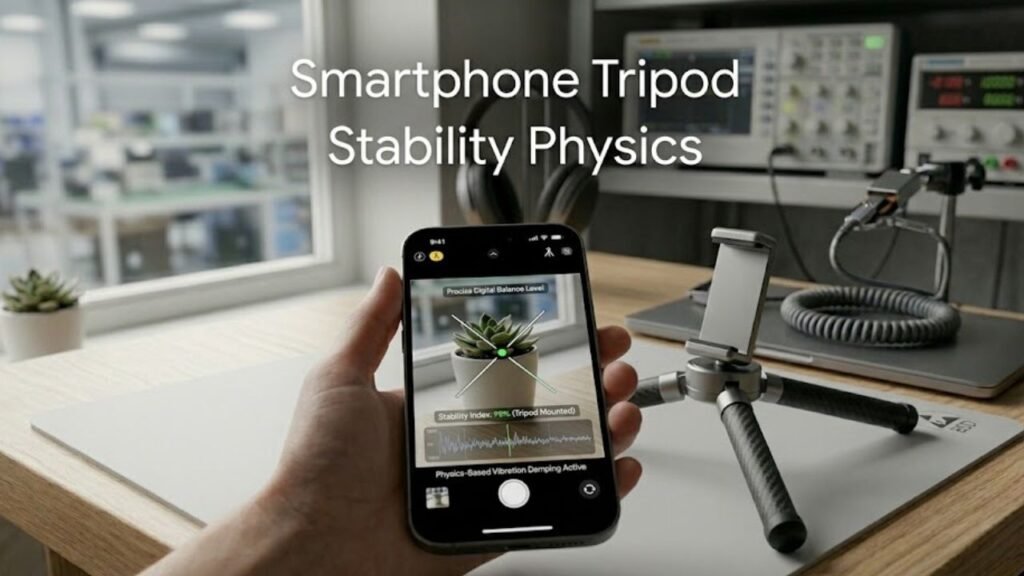
Smartphone Tripod Stability Physics is the foundation of achieving sharp photos, smooth videos, and professional-quality content using mobile devices. While tripods may seem simple, their stability depends on complex physical principles such as center of gravity, force distribution, and structural design.
Whether you are a content creator, photographer, or casual user, understanding the physics behind tripod stability helps you avoid shaky footage, accidental falls, and poor framing. This guide explores the science, design factors, and practical techniques that influence smartphone tripod stability.
What Is Tripod Stability?
Tripod stability refers to the ability of a tripod to remain steady and resist movement under various conditions.
Key Stability Factors
- Balance
- Weight distribution
- Structural rigidity
- External forces (wind, touch)
Why It Matters
Stable tripods ensure:
- Sharp images
- Smooth video recording
- Safe device placement
Core Principles of Smartphone Tripod Stability Physics
1. Center of Gravity
The center of gravity determines how weight is distributed across the tripod.
Key Insight
- Lower center of gravity = higher stability
- Higher center of gravity = increased risk of tipping
2. Base of Support
The area covered by tripod legs defines its stability.
Important Concept
A wider base increases resistance to tipping.
3. Torque and Rotational Forces
Torque occurs when force causes rotation around a pivot point.
Impact on Tripods
- Uneven weight creates torque
- Can lead to instability or tipping
4. Friction and Surface Interaction
Friction between tripod feet and the ground prevents slipping.
Tripod Stability Physics Table
| Factor | Effect on Stability | Key Insight |
|---|---|---|
| Center of Gravity | High impact | Lower is better |
| Base Width | High impact | Wider base = more stable |
| Weight Distribution | High impact | Even distribution improves balance |
| Material Rigidity | Medium impact | Strong materials reduce vibration |
| Surface Friction | Medium impact | Prevents slipping |
Center of Gravity in Smartphone Tripods
Understanding Balance
The smartphone adds weight above the tripod, shifting the center of gravity upward.
How to Optimize
- Keep the phone close to the tripod head
- Avoid extending the center column too high
Weight Distribution and Load Management
Even Distribution
Balanced weight across all three legs ensures maximum stability.
Uneven Distribution Risks
- Increased tipping probability
- Reduced structural integrity
Tripod Leg Design and Stability
Leg Angle
Wider leg angles improve stability by increasing the base.
Number of Leg Sections
- Fewer sections = stronger structure
- More sections = increased flexibility but reduced rigidity
Material Impact on Stability
Aluminum Tripods
- Lightweight
- Moderate stability
Carbon Fiber Tripods
- Strong and vibration-resistant
- Higher cost
Plastic Tripods
- Lightweight but less stable
- Suitable for casual use
Height vs Stability Trade-Off
Extended Height
- Raises center of gravity
- Reduces stability
Lower Height
- Improves balance
- Enhances stability
External Factors Affecting Stability
Wind Resistance
Wind can create force that destabilizes the tripod.
Surface Type
- Uneven surfaces reduce stability
- Soft ground may cause sinking
User Interaction
Touching the tripod can introduce vibrations.
Smartphone Mount and Its Role
Grip Strength
Secure mounts prevent device movement.
Alignment
Proper alignment ensures balanced weight distribution.
Advantages of Understanding Tripod Stability Physics
1. Improved Image Quality
Reduces blur and motion artifacts.
2. Enhanced Video Stability
Smooth and professional footage.
3. Device Safety
Prevents accidental drops.
4. Better Shooting Control
Allows precise framing and positioning.
Limitations of Tripod Stability
Environmental Constraints
External factors can still affect stability.
Design Limitations
Compact tripods may sacrifice stability for portability.
Practical Tips to Improve Tripod Stability
1. Lower the Tripod Height
Keep the center of gravity low.
2. Spread the Legs Wide
Increase the base of support.
3. Add Weight to the Base
Use a counterweight for extra stability.
4. Use Stable Surfaces
Avoid uneven or soft ground.
5. Minimize Movement
Avoid touching the tripod during recording.
Common Mistakes That Reduce Stability
Overextending the Tripod
Increases instability.
Ignoring Weight Limits
Can cause structural failure.
Using on Uneven Surfaces
Reduces balance and support.
Smartphone Tripod Stability in Real-World Use
Photography
Stable setups ensure sharp images.
Videography
Prevents shaky footage.
Live Streaming
Maintains consistent framing.
Future Trends in Tripod Design
Smart Stabilization Systems
Built-in sensors for automatic adjustments.
Advanced Materials
Stronger and lighter materials for better stability.
Compact Yet Stable Designs
Improved engineering for portability without compromise.
Common Myths About Tripod Stability
Myth 1: Heavier Tripods Are Always Better
Reality: Design and balance matter more.
Myth 2: All Tripods Are Stable
Reality: Stability varies by design and usage.
Myth 3: Height Equals Performance
Reality: Taller setups often reduce stability.
FAQs
1. What is Smartphone Tripod Stability Physics?
It refers to the physical principles that determine tripod stability.
2. Why is center of gravity important?
It affects balance and tipping resistance.
3. How can I make my tripod more stable?
Lower height, widen legs, and add weight.
4. Does material affect stability?
Yes, stronger materials improve rigidity.
5. Is a wider tripod base better?
Yes, it increases stability significantly.
Conclusion
Smartphone Tripod Stability Physics provides valuable insights into how physical principles influence the performance and reliability of tripods. From center of gravity and weight distribution to material design and environmental factors, every element plays a role in achieving stability.
By understanding these concepts and applying practical techniques, users can significantly improve their photography and videography results. Stability is not just about the tripod itself—it is about how it is used and optimized in real-world conditions.
As tripod technology continues to evolve, combining physics with innovative design will lead to more stable, portable, and efficient solutions for modern smartphone users.