
![SAMSUNG Galaxy Watch FE 40mm LTE AI Smartwatch w/Fitness Tracking, BIA Sensor, Personalized HR Zones, Heart Rate Tracker, Sleep Monitor, 2024, Silver [US Version, 1Yr Manufacturer Warranty]](https://m.media-amazon.com/images/I/41WowO9aw-L._SL160_.jpg)



Best smartwatch under $300 have never been this capable. A few years ago, spending under three hundred dollars meant settling — grainy displays, weak GPS, and software that felt bolted together. That era is over.
Today’s sub-$300 smartwatch market includes sapphire crystal glass, dual-band GPS, ECG monitoring, AI-powered health coaching, and solar charging. The hard part isn’t finding a capable watch anymore. It’s figuring out which one is actually right for you.
We tested eight of the strongest contenders across fitness, outdoor adventure, everyday wellness, and ecosystem integration. Here’s everything you need to know — no filler, no guesswork.

⚡ At a Glance: Best Smartwatch Under $300
- Amazfit Balance 2 → Best Overall (top-tier features + long battery)
- Samsung Galaxy Watch FE → Best for Samsung / Android Ecosystem
- Google Pixel Watch 2 → Best for Android & Google Users
- Garmin Forerunner 255 → Best for Serious Runners
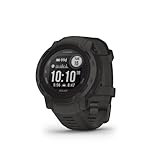
- Garmin Instinct 2 Solar → Best Rugged Outdoor Watch
- Amazfit T-Rex 3 → Best for Extreme Conditions
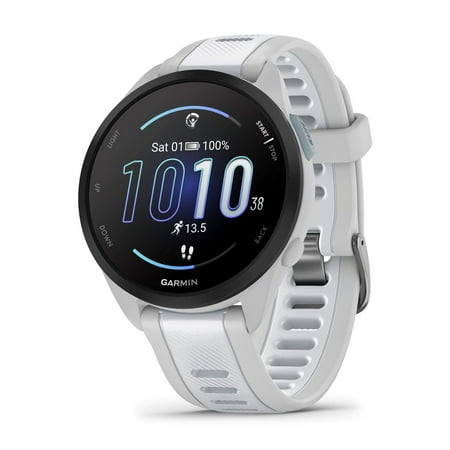
- Garmin Forerunner 165 → Best for Beginner Runners
- Garmin vívoactive 5 → Best Everyday Value
How We Tested and Ranked These Watches
We didn’t rank these watches by spec sheets. Every watch on this list was evaluated on real-world criteria that matter to actual buyers:
- Health accuracy — heart rate, SpO2, sleep tracking, and ECG where applicable
- GPS performance — cold-start speed, accuracy in urban canyons and open terrain
- Battery life — measured against manufacturer claims in mixed usage
- Software depth — app ecosystem, health intelligence, and daily usability
- Build quality — display protection, water resistance, and wearability comfort
- Value logic — does the price reflect what you actually get?
Watches were evaluated across running, hiking, gym sessions, sleep tracking, and daily commuting to simulate realistic ownership conditions.
The 8 Best Smartwatch Under $300: In-Depth Reviews
1. Amazfit Balance 2

The Amazfit Balance 2 is the watch that makes you question why anyone pays more. Sapphire crystal glass, 21-day battery, dual-band GPS, offline maps, HYROX training support, and SCUBA diving certification — all in a 47mm aluminum body. It’s our top overall pick among the best smartwatch under $300, and it earns that position convincingly.
Key Features:
- 1.5″ AMOLED display with sapphire crystal glass protection
- Up to 21 days battery life (typical use)
- Dual-band GPS across six satellite systems (GPS, GLONASS, Galileo, BeiDou +)
- Offline maps with downloadable turn-by-turn navigation
- 170+ sports modes including HYROX and golf course mapping (40,000 courses)
- 10 ATM water resistance; 45m diving certification
- 24/7 heart rate, SpO2, stress, and HRV monitoring
- Zepp Flow AI voice assistant
- Dual speakers for audio workout cues
Real-World Performance:
The sapphire glass and dual-band GPS immediately set the Balance 2 apart from the competition. GPS lock is fast, trail accuracy is excellent, and offline maps work without cell service — genuinely useful for trail runners and cyclists. The 21-day battery means this watch lives on your wrist, not on your charger. HYROX mode and 45m dive certification add specialist depth that no rival at this price even attempts. The only meaningful trade-off: Zepp OS lacks the third-party app depth of Wear OS.
| Pros | Cons |
|---|---|
| Sapphire glass is exceptional at this price | Limited third-party app support on Zepp OS |
| 21-day battery eliminates charging anxiety | 47mm case won’t suit smaller wrists |
| Dual-band GPS with offline maps | Notification management less polished than Wear OS |
| HYROX + SCUBA support for serious athletes | |
| 10 ATM + 45m dive certification |
2. Samsung Galaxy Watch FE

The Samsung Galaxy Watch FE distills Samsung’s best health technology into a compact, more accessible package. It’s feature-rich, deeply integrated with Galaxy AI, and one of the smartest picks among the best smartwatch under $300 for Android users already in the Samsung ecosystem.
Key Features:
- Wear OS 3.0 with full Google and Samsung app support
- BIA sensor for body composition analysis (fat mass, muscle mass, hydration)
- ECG monitoring with irregular heart rhythm alerts
- Personalized heart rate zones powered by Galaxy AI
- Advanced sleep coaching with snoring detection
- LTE connectivity for standalone use
- Built-in GPS with 16GB onboard storage
- IP68 water and dust resistance
- 90+ tracked exercise modes
Real-World Performance:
The BIA sensor delivers body composition breakdowns that rival dedicated fitness tools — uncommon at this price point. Galaxy AI adapts heart rate zones as your fitness evolves rather than applying static thresholds. LTE means real freedom: calls, music, and emergency alerts on a morning run without your phone. Sleep coaching is personalized, not generic. Battery is the honest trade-off — expect one to two days, which demands daily charging discipline.
| Pros | Cons |
|---|---|
| Galaxy AI makes health insights adaptive | Near-daily charging required |
| BIA sensor adds real fitness tracking depth | Best features require Samsung phone pairing |
| LTE keeps you connected without a phone | Smaller 40mm case won’t suit everyone |
| ECG + irregular rhythm alerts | Wear OS app ecosystem lags behind Apple |
| IP68 rated; excellent build quality |
3. Google Pixel Watch 2

The Google Pixel Watch 2 is the most coherent Android smartwatch experience you can buy among the best smartwatch under $300. Google has combined its hardware expertise, Fitbit’s decade of health data, and the Android ecosystem into one elegant, round package.
Key Features:
- 41mm round case in 100% recycled aluminum
- Fitbit-powered heart rate, stress management, and skin temperature tracking
- ECG app with doctor-shareable results
- Body response feature for real-time stress identification
- Emergency SOS, Fall Detection, and Safety Check
- Always-on AMOLED display; 24-hour battery
- 32GB storage; LTE and Wi-Fi variants
- Auto Workout detection and Heart Zone Training
- Native Google apps: Maps, Calendar, Gmail, Wallet
- Fast Pair with Pixel devices and Pixel Buds
Real-World Performance:
Fitbit’s body-response algorithm combines heart rate variability, skin temperature, and electrodermal activity to identify stress in real time — then offers guided breathing to address it. That level of proactive health intelligence is rare at this price. Google app integration is seamless for daily life. The 24-hour battery rating is accurate, meaning daily charging is non-negotiable — but a 75-minute full charge mitigates the inconvenience. Android-only: iOS users should look elsewhere.
| Pros | Cons |
|---|---|
| Fitbit’s health algorithms are class-leading | 24-hour battery demands daily charging |
| Multi-signal stress detection is genuinely useful | Not compatible with iPhone |
| Fall Detection and Safety Check add real safety value | Fitbit Premium needed for deeper health insights |
| Seamless Google app integration | LTE variant carries a premium |
| ECG with doctor-shareable output |
4. Garmin Forerunner 255 Music

The Garmin Forerunner 255 is where serious runners stop compromising. Multi-band GPS, advanced training intelligence, triathlon support, and 30-hour GPS battery life — all competing with watches twice its price. For dedicated athletes, it’s arguably the single best smartwatch under $300.
Key Features:
- Multi-band GPS with GNSS support (GPS, GLONASS, Galileo)
- Up to 14 days battery in smartwatch mode; 30 hours in GPS mode
- Morning report: HRV status, sleep, recovery time, daily workout suggestion
- Training status evaluation (overtraining/undertraining detection)
- Free Garmin Coach adaptive plans: 5K, 10K, half-marathon
- Activity profiles: running, triathlon, cycling, open-water swimming
- Safety and live location sharing
- 16GB storage; Bluetooth and Wi-Fi
- Advanced running dynamics support
Real-World Performance:
Multi-band GPS is the differentiator here — accuracy holds in urban canyons, forests, and tunnels where standard GPS stumbles. Training status goes beyond logging workouts; it evaluates whether you’re adapting, maintaining, or heading toward overtraining. Garmin Coach delivers adaptive structured plans at no extra cost.
The 30-hour GPS mode handles ultra-distance events in full. The MIP display is functional rather than beautiful, and music storage requires the 255 Music variant.
| Pros | Cons |
|---|---|
| Multi-band GPS is class-leading for accuracy | No AMOLED; MIP screen is less visually refined |
| Training status evaluation rivals human coaching | Music storage only on 255 Music variant |
| 30-hour GPS handles ultra-distance events | Larger form factor; not a slim everyday watch |
| Garmin Coach adaptive plans — no subscription | |
| Triathlon and open-water swim support |
5. Garmin Instinct 2 Solar

The Garmin Instinct 2 Solar is built for people who don’t come home every night. Virtually unlimited battery life through solar harvesting, 100-meter water resistance, MIL-STD-810 compliance, and navigation tools that work without cell service — this is a watch that performs when others quit.
Key Features:
- Solar charging lens: unlimited battery in smartwatch mode (3+ hrs/day sunlight)
- GPS mode: up to 48 hours with continuous solar exposure
- Multi-GNSS: GPS, GLONASS, and Galileo
- 3-axis compass, barometric altimeter, thermometer (ABC sensors)
- TracBack routing for automatic return navigation
- 100-meter water resistance
- Fiber-reinforced polymer case with Corning Gorilla Glass
- VO2 Max, HIIT workouts, Body Battery, Pulse Ox, sleep score
- MIL-STD-810 thermal and shock compliance
Real-World Performance:
Solar harvesting genuinely extends battery for outdoor users — not just as a marketing claim, but in measurable daily use. The ABC sensors are precise and practical: barometric altimeter catches elevation changes GPS misses, and the compass navigates reliably off-grid. TracBack routing is a legitimate safety feature that calculates your return path automatically — a real differentiator for backcountry use. The MIP display isn’t glamorous, but it’s readable in all light conditions and directly responsible for that extraordinary endurance.
| Pros | Cons |
|---|---|
| Solar charging delivers near-unlimited potential | No touchscreen; MIP display less visually refined |
| 100m water resistance; MIL-STD-810 rated | Bulkier design; not suited for dress occasions |
| ABC sensors for real off-grid navigation | Fewer connected smartwatch features vs. Wear OS |
| TracBack routing is a genuine safety feature | No onboard music storage |
| VO2 Max and Body Battery depth |
6. Amazfit T-Rex 3

If your watch needs to survive conditions that would destroy lesser devices, the Amazfit T-Rex 3 is the answer. Stainless steel bezel, 328-foot water resistance, freediving certified to 147 feet, operational from -22°F to 158°F, and a 180-hour GPS mode — this is outdoor equipment that happens to track your health.
Key Features:
- 1.5″ AMOLED display at 2,000-nit peak brightness
- 316L stainless steel bezel; military-grade construction
- Operational: -22°F to 158°F
- 328-foot water resistance; freediving certified to 147 feet
- 700mAh battery; 3+ weeks typical use; 180 hours GPS mode
- Dual-band GPS across six satellite systems; offline maps
- 170+ sport modes with AI-generated training plans
- Night Mode and Glove Mode for extreme visibility
- 26GB onboard storage
Real-World Performance:
The 2,000-nit display stays readable on ski slopes and sunny beaches where other screens wash out. Night Mode and Glove Mode are practical engineering for specific extreme conditions — not gimmicks. The 180-hour GPS mode is genuinely unmatched for expedition-length events. Freediving certification at 147 feet is functional, not cosmetic.
AI-generated training plans adapt based on your actual fitness data. Zepp OS app depth remains the limitation, but for athletes who live between land and water, the T-Rex 3 stands alone.
| Pros | Cons |
|---|---|
| 2,000-nit display excels in direct sunlight | Zepp OS limited in third-party apps |
| Freediving certified to 147 feet | Large 48mm case is polarizing |
| 180-hour GPS mode for expedition athletes | Heavier than lifestyle watches |
| Military-grade thermal and shock resistance | Voice control can be inconsistent |
| 26GB storage; AI adaptive training plans |
7. Garmin vívoactive 5

The Garmin vívoactive 5 is one of the cleanest value propositions in this entire guide. AMOLED display, 11-day battery, offline music storage, Body Battery coaching, and inclusive accessibility features — all designed for people who want serious health tracking without the complexity of an athlete-grade device.
Key Features:
- 1.2-inch AMOLED touchscreen
- Up to 11 days battery (5 days always-on)
- 30+ built-in GPS and indoor sport apps
- Body Battery energy monitoring with sleep and nap tracking
- HRV status, sleep score, personalized sleep coaching
- Menstrual cycle and pregnancy tracking
- Wheelchair mode with push tracking
- Offline music: Spotify, Amazon Music, Deezer
- 4GB onboard storage; Bluetooth, Wi-Fi, USB
Real-World Performance:
Body Battery is the vívoactive 5’s headline feature — and it earns that status. It synthesizes sleep quality, stress, HRV, and activity into a single 0-100 energy score that becomes remarkably accurate after extended use. Sleep coaching delivers personalized recommendations rather than generic advice, and automatic nap detection is a thoughtful addition for shift workers and parents.
Offline Spotify and Amazon Music support at 11-day AMOLED quality is the combination that makes this watch exceptional value. Wheelchair mode — rare at this price — signals genuine inclusive design thinking.
| Pros | Cons |
|---|---|
| 11-day AMOLED battery is exceptional | 4GB storage limits music capacity |
| Body Battery is among the most actionable recovery tools | No LTE option |
| Wheelchair mode demonstrates real inclusivity | Smaller display than some competitors |
| Offline Spotify and Amazon Music | No ECG monitoring |
| HRV tracking and sleep coaching are insightful |
8. Garmin Forerunner 165

The Garmin Forerunner 165 fills a precise and valuable niche among the best smartwatch under $300: maximum running intelligence for new athletes, packaged in an AMOLED display at a price point that used to mean significant compromise.
Key Features:
- Brilliant AMOLED touchscreen with physical button controls
- Up to 11 days battery in smartwatch mode; 19 hours GPS mode
- Daily suggested workouts adapting based on recovery and performance
- 25+ built-in activity profiles
- Morning report: sleep overview, recovery status, training outlook
- Training effect and training load labels per session
- Smart notifications for Android and iOS
- Built-in GPS; HRV tracking
Real-World Performance:
Daily suggested workouts are the Forerunner 165’s defining feature — they analyze your training load and recovery to recommend what you should actually do today, including rest. For new runners, that guardrail prevents the overtraining that derails most beginners in the first month.
The morning report consolidates sleep, HRV, and recovery into one glanceable summary before you’ve made any decisions. The AMOLED display is vivid and sharp — a genuine step up from older Forerunner generations. Physical buttons alongside the touchscreen ensure reliable navigation in wet or gloved conditions.
| Pros | Cons |
|---|---|
| Adaptive daily workout suggestions are invaluable | No music storage |
| AMOLED display at this price is excellent | GPS less precise than multi-band models |
| Morning report is Garmin’s best UX feature | Limited third-party app connectivity |
| 19-hour GPS covers most long-distance events | |
| Works with both Android and iOS |
Bottom Line: Which Smartwatch Should You Buy?
CChoosing the right smartwatch under $300 isn’t about specs—it’s about fit. Your daily routine decides everything. If you want maximum value with zero compromise, the Amazfit Balance 2 stands out with sapphire glass, long battery life, and serious outdoor capability. If you’re already in the Samsung ecosystem, the Samsung Galaxy Watch FE delivers tight integration, health tracking, and LTE convenience that actually changes how you use a watch day to day.
For Google-first users, the Google Pixel Watch 2 offers the cleanest Android experience, backed by Fitbit-grade health insights and excellent stress tracking. Meanwhile, if fitness is your priority, Garmin Forerunner 255 is built for performance—accurate GPS, structured training, and serious endurance tracking. Beginners can lean toward the smarter, more accessible Garmin Forerunner 165 for guided workouts and daily coaching.
If your lifestyle leans outdoors or extreme, battery and durability matter more than anything. The Garmin Instinct 2 Solar is built for long expeditions with solar charging and rugged construction, while the Amazfit T-Rex 3 pushes even further with military-grade toughness and extended GPS tracking. For balanced everyday use, the Garmin vívoactive 5 quietly delivers one of the best all-round experiences with strong battery life and wellness features.
The reality is simple: the sub-$300 smartwatch market is no longer about compromise. Whether you care about fitness depth, smart features, or long battery life, there’s a clear winner depending on how you live—not just what you compare on paper.

![SAMSUNG Galaxy Watch FE 40mm LTE AI Smartwatch w/Fitness Tracking, BIA Sensor, Personalized HR Zones, Heart Rate Tracker, Sleep Monitor, 2024, Silver [US Version, 1Yr Manufacturer Warranty]](https://m.media-amazon.com/images/I/41WowO9aw-L._SL500_.jpg)