
Introduction
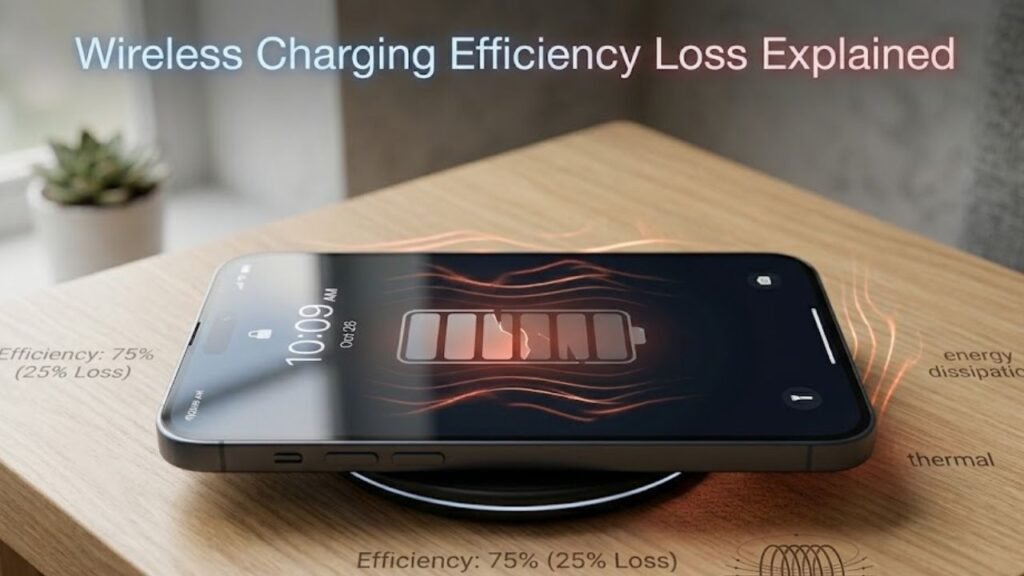
Wireless Charging Efficiency Loss Explained is essential for understanding why wireless charging often feels slower and less efficient compared to wired charging. While wireless charging offers unmatched convenience, it comes with inherent energy losses that impact performance, speed, and heat generation.
As more devices adopt wireless charging standards, users increasingly notice longer charging times and warmer devices. These issues are directly tied to efficiency loss during power transfer. In this detailed guide, we explore the science behind wireless charging inefficiencies, the factors contributing to energy loss, and practical ways to optimize charging performance.
What Is Wireless Charging Efficiency?
Wireless charging efficiency refers to how effectively power is transferred from the charging pad to the device.
Efficiency Definition
Efficiency is measured as:
- Output power (received by device)
- Divided by input power (supplied to charger)
Typical Efficiency Range
- Wired charging: 90–95%
- Wireless charging: 60–80%
How Wireless Charging Works
Wireless charging uses electromagnetic induction to transfer energy between two coils.
Basic Process
- Electrical current flows through the transmitter coil
- Magnetic field is generated
- Receiver coil captures the energy
- Power is converted to charge the battery
Each step introduces potential energy loss.
Wireless Charging Efficiency Loss Explained: Core Causes
1. Coil Misalignment
Improper alignment reduces magnetic coupling, leading to significant energy loss.
2. Distance Between Coils
Even small gaps between coils reduce efficiency.
3. Heat Generation
Energy lost during transfer converts into heat.
4. Material Limitations
Coil materials and design impact energy transfer efficiency.
Efficiency Loss Breakdown Table
| Factor | Impact on Efficiency | Description |
|---|---|---|
| Coil Misalignment | High | Reduces energy transfer |
| Distance Increase | High | Weakens magnetic field |
| Heat Generation | Medium | Converts energy into heat |
| Poor Coil Design | Medium | Limits performance |
| Interference | Low to Medium | Disrupts magnetic field |
Role of Electromagnetic Induction in Efficiency Loss
Energy Transfer Limitations
Magnetic fields are less efficient than direct electrical connections.
Coupling Coefficient
The strength of coupling between coils determines efficiency.
Energy Leakage
Some energy escapes as unused magnetic flux.
Heat Generation and Energy Loss
Why Heat Occurs
Resistance in coils and imperfect energy transfer generate heat.
Impact on Devices
- Reduced charging speed
- Potential battery degradation
- Increased surface temperature
Coil Alignment and Efficiency
Perfect Alignment
- Maximum efficiency
- Minimal energy loss
Partial Alignment
- Moderate efficiency
- Noticeable performance drop
Misalignment
- Significant energy loss
- Increased heat
Wireless Charging Standards and Efficiency
Qi Standard
The most widely used wireless charging standard defines efficiency benchmarks.
Qi2 and Magnetic Alignment
New standards improve efficiency through better alignment.
Wireless vs Wired Charging Efficiency
Wired Charging
- Direct electrical connection
- Minimal energy loss
Wireless Charging
- Indirect energy transfer
- Higher energy loss
Key Insight
Convenience comes at the cost of efficiency.
Impact of Cases and Accessories
Thick Phone Cases
Increase distance between coils, reducing efficiency.
Metal Objects
Interfere with magnetic fields.
Magnetic Cases
Can improve alignment but must be compatible.
Advantages of Wireless Charging Despite Efficiency Loss
1. Convenience
No cables required.
2. Reduced Wear and Tear
No physical connectors.
3. Universal Compatibility
Works across devices supporting the same standard.
Limitations of Wireless Charging Efficiency
Energy Waste
Lower efficiency leads to higher energy consumption.
Slower Charging Speeds
Compared to wired alternatives.
Heat Issues
Excess heat affects performance and battery health.
How Manufacturers Improve Efficiency
Better Coil Design
Optimized coil shapes improve energy transfer.
Magnetic Alignment Systems
Ensure proper positioning.
Advanced Materials
Improve conductivity and reduce losses.
Practical Tips to Reduce Efficiency Loss
1. Align Your Device Properly
Place your phone at the center of the charging pad.
2. Remove Thick Cases
Reduce distance between coils.
3. Use Certified Chargers
Ensure compatibility and performance.
4. Avoid Overheating
Charge in a cool environment.
5. Choose Magnetic Chargers
Improve alignment and efficiency.
Future of Wireless Charging Efficiency
Improved Standards
Qi2 and beyond will enhance efficiency.
Long-Distance Charging
Emerging technologies aim to reduce alignment dependency.
Higher Efficiency Materials
New materials will reduce energy loss.
Common Myths About Wireless Charging Efficiency
Myth 1: Wireless Charging Is Inefficient by Design
Reality: Efficiency is improving with new technologies.
Myth 2: Faster Chargers Solve Efficiency Issues
Reality: Efficiency depends on alignment and design.
Myth 3: Heat Means Faster Charging
Reality: Heat indicates energy loss, not efficiency.
FAQs
1. Why is wireless charging less efficient?
Because energy is transferred through magnetic fields instead of direct connections.
2. How much energy is lost?
Typically 20–40% compared to wired charging.
3. Does alignment affect efficiency?
Yes, proper alignment significantly improves performance.
4. Can wireless charging damage batteries?
Excess heat can affect battery health over time.
5. Is wireless charging improving?
Yes, new technologies are reducing efficiency loss.
Conclusion
Wireless Charging Efficiency Loss Explained highlights the trade-offs between convenience and performance in modern charging technology. While wireless charging offers unmatched ease of use, it inherently suffers from energy loss due to indirect power transfer.
Factors such as coil alignment, distance, heat generation, and material limitations all contribute to reduced efficiency. However, advancements like magnetic alignment, improved coil design, and new standards are steadily improving performance.
By understanding these factors and applying practical optimization tips, users can minimize efficiency loss and enjoy a better wireless charging experience. As technology continues to evolve, wireless charging is expected to become faster, more efficient, and more reliable than ever before.