
Introduction
USB-C Power Delivery Safety Standards are essential for ensuring that modern fast-charging devices operate safely, efficiently, and reliably. As USB-C Power Delivery (USB PD) enables higher power levels—up to 240W in the latest specifications—the importance of robust safety mechanisms has never been greater.
From smartphones and laptops to power banks and monitors, USB-C PD is now the universal charging standard. However, with increased power comes increased risk, including overheating, overvoltage, and device damage. This guide explores the safety protocols, certifications, and best practices that define USB-C Power Delivery safety standards.
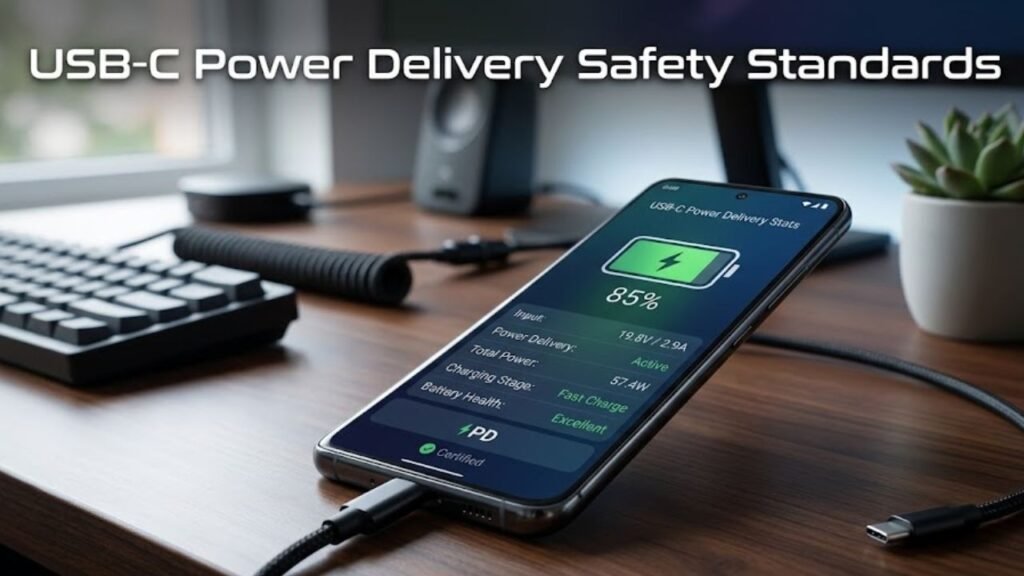
What Is USB-C Power Delivery (USB PD)?
USB Power Delivery is a fast-charging protocol that allows devices to negotiate voltage and current dynamically.
Key Features
- Supports up to 240W power (USB PD 3.1)
- Uses USB-C connectors
- Enables bidirectional charging
- Adjusts voltage and current in real time
Why Safety Standards Matter
Higher power levels require advanced safety systems to prevent electrical hazards and ensure device protection.
Core Safety Principles in USB-C Power Delivery
1. Intelligent Power Negotiation
Devices communicate before power transfer begins, ensuring safe voltage and current levels.
2. Dynamic Voltage Adjustment
Voltage is adjusted based on device requirements, reducing the risk of overvoltage.
3. Real-Time Monitoring
Continuous monitoring ensures safe operation throughout the charging process.
USB-C Power Delivery Voltage Safety Levels
Standard Voltage Profiles
- 5V (default safe level)
- 9V
- 15V
- 20V
- 28V, 36V, 48V (Extended Power Range)
Safety Mechanism
Devices start at 5V and only increase voltage after successful negotiation.
Built-in Protection Mechanisms
Overvoltage Protection (OVP)
Prevents excessive voltage from damaging devices.
Overcurrent Protection (OCP)
Limits current to safe levels.
Overtemperature Protection (OTP)
Shuts down charging if temperature exceeds safe limits.
Short Circuit Protection
Detects and prevents electrical faults.
USB-C Safety Features Table
| Safety Feature | Function | Importance Level |
|---|---|---|
| Overvoltage Protection | Prevents voltage spikes | Critical |
| Overcurrent Protection | Limits excessive current | Critical |
| Thermal Protection | Prevents overheating | High |
| Cable Identification | Ensures compatibility | High |
| Power Negotiation | Matches device requirements | Critical |
Role of E-Marker Chips in USB-C Cables
What Is an E-Marker Chip?
An electronically marked (e-marker) chip inside USB-C cables identifies cable capabilities.
Why It Matters
- Enables safe high-power transfer (up to 5A)
- Prevents incompatible power delivery
- Ensures proper communication between devices
USB-IF Certification and Compliance
What Is USB-IF?
USB Implementers Forum (USB-IF) defines standards for USB technologies.
Certification Benefits
- Ensures compliance with safety standards
- Guarantees interoperability
- Reduces risk of device damage
Certified vs Non-Certified Products
Certified products undergo rigorous testing, while uncertified ones may pose safety risks.
USB PD 3.0 vs USB PD 3.1 Safety Enhancements
USB PD 3.0
- Supports up to 100W
- Introduced Programmable Power Supply (PPS)
USB PD 3.1
- Supports up to 240W
- Introduces Extended Power Range (EPR)
- Enhanced safety requirements
Common Risks Without Proper Safety Standards
Overheating
Poor-quality chargers can generate excessive heat.
Device Damage
Incorrect voltage levels can harm internal components.
Cable Failure
Low-quality cables may melt or fail under high power.
Fire Hazards
Extreme cases can lead to electrical fires.
Importance of Cable Quality in Safety
High-Quality Cables
- Include e-marker chips
- Support high current safely
- Use durable materials
Low-Quality Cables
- Lack proper identification
- Risk overheating
- May fail under load
Advantages of USB-C Power Delivery Safety Standards
1. Enhanced Device Protection
Prevents damage from voltage and current fluctuations.
2. Improved Charging Efficiency
Optimizes power delivery without risk.
3. Universal Compatibility
Ensures safe operation across devices.
4. User Confidence
Certified products provide reliability.
Limitations and Challenges
Compatibility Confusion
Not all USB-C devices support the same standards.
Cost of Certified Products
Certified chargers and cables may cost more.
Market of Counterfeit Products
Fake certifications can mislead consumers.
How to Identify Safe USB-C Accessories
1. Look for USB-IF Certification
Check for official certification logos.
2. Verify Specifications
Ensure compatibility with your device.
3. Choose Reputable Brands
Trusted manufacturers follow safety standards.
4. Avoid Extremely Cheap Products
Low-cost accessories often compromise safety.
Practical Safety Tips for USB-C Power Delivery
1. Use Certified Chargers and Cables
Always prioritize safety-certified products.
2. Avoid Mixing Unknown Accessories
Incompatible combinations can cause issues.
3. Monitor Device Temperature
Stop charging if overheating occurs.
4. Replace Damaged Cables
Frayed or worn cables are unsafe.
5. Use Proper Power Ratings
Match charger output with device requirements.
Future of USB-C Power Delivery Safety Standards
Higher Power Levels
Future standards will support even higher wattage safely.
Smart Charging Systems
AI-based systems will optimize power delivery.
Improved Cable Technology
Advanced materials will enhance durability and safety.
Common Myths About USB-C Power Delivery Safety
Myth 1: All USB-C Chargers Are Safe
Reality: Only certified chargers meet safety standards.
Myth 2: Higher Wattage Means More Risk
Reality: Proper negotiation ensures safe operation.
Myth 3: Cheap Cables Work the Same
Reality: Low-quality cables can be dangerous.
FAQs
1. What are USB-C Power Delivery Safety Standards?
They are protocols and protections ensuring safe power transfer in USB-C devices.
2. Is USB-C Power Delivery safe?
Yes, when using certified chargers and cables.
3. What is an e-marker chip?
A chip in cables that ensures safe power delivery.
4. Can USB-C damage my device?
Only if using incompatible or low-quality accessories.
5. How do I ensure safe charging?
Use certified products and follow best practices.
Conclusion
USB-C Power Delivery Safety Standards form the backbone of safe and efficient modern charging systems. As power levels increase, these standards ensure that devices communicate intelligently, regulate voltage and current, and protect against potential hazards.
From e-marker chips to USB-IF certification and advanced protection mechanisms, every component plays a role in maintaining safety. While USB-C PD offers unmatched convenience and performance, users must remain vigilant when selecting accessories.
By understanding and following USB-C Power Delivery safety standards, you can enjoy fast charging without compromising device safety, performance, or longevity.