
Introduction
Smartphone Audio DAC Explained is essential for understanding how digital audio becomes the sound you hear through your headphones or speakers. Every smartphone processes audio digitally, but since human ears perceive analog sound waves, a Digital-to-Analog Converter (DAC) plays a critical role in bridging that gap.
While often overlooked, the quality of a smartphone’s DAC directly affects audio clarity, detail, and overall listening experience. Whether you are streaming music, gaming, or watching videos, the DAC determines how accurately sound is reproduced. This guide explores how smartphone DACs work, their impact on sound quality, and how to choose the best setup for your needs.
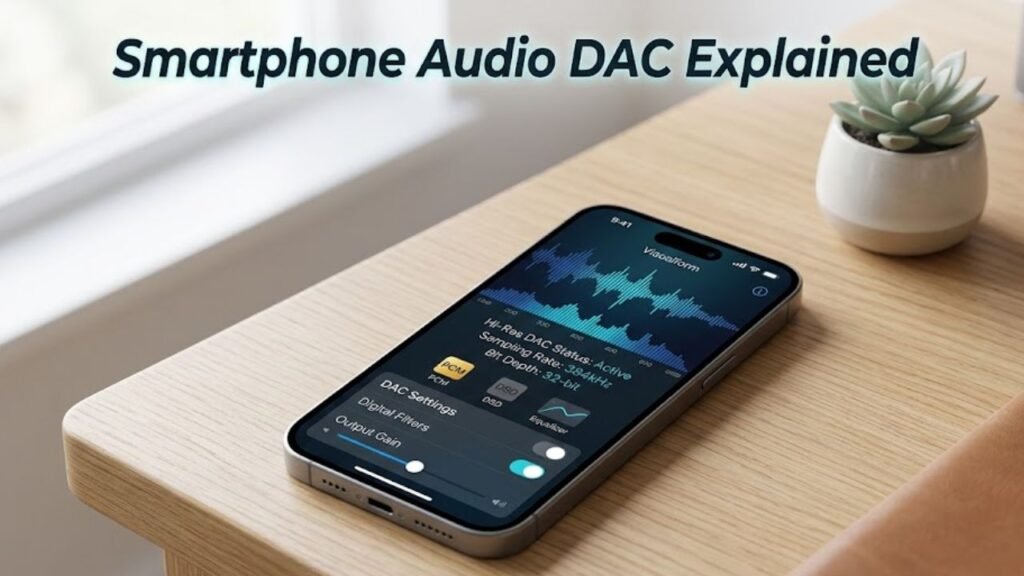
What Is a DAC in Smartphones?
A DAC (Digital-to-Analog Converter) is a component that converts digital audio signals into analog signals that can be played through speakers or headphones.
Why DACs Are Necessary
Digital files (MP3, FLAC, streaming audio) consist of binary data. This data must be converted into electrical signals to produce sound.
Core Function
- Converts digital signals into analog waveforms
- Enables audio playback
- Determines sound accuracy and quality
How Smartphone Audio DAC Works
Step-by-Step Process
- Audio file is processed digitally
- DAC converts binary data into analog signals
- Amplifier boosts the signal
- Sound is delivered to headphones or speakers
Signal Conversion Explained
The DAC reconstructs sound waves from digital samples, ensuring accurate reproduction of the original recording.
Types of DACs in Smartphones
Integrated DACs
- Built into the smartphone chipset
- Common in most devices
- Balanced performance and efficiency
Dedicated DACs
- Separate high-quality components
- Found in premium or audiophile phones
- Deliver superior sound quality
External DACs
- Connected via USB or audio port
- Used by professionals and enthusiasts
- Offer the highest audio fidelity
DAC Specifications That Matter
1. Bit Depth
- Determines dynamic range
- Common values: 16-bit, 24-bit
2. Sample Rate
- Measures how often audio is sampled per second
- Common rates: 44.1 kHz, 96 kHz, 192 kHz
3. Signal-to-Noise Ratio (SNR)
- Indicates clarity of sound
- Higher SNR = cleaner audio
4. Total Harmonic Distortion (THD)
- Measures distortion in audio output
- Lower values = better quality
DAC Specification Comparison Table
| Specification | Entry-Level DAC | High-End DAC |
|---|---|---|
| Bit Depth | 16-bit | 24-bit / 32-bit |
| Sample Rate | 44.1 kHz | 192 kHz+ |
| SNR | ~90 dB | 110 dB+ |
| THD | Higher | Very Low |
Impact of DAC on Sound Quality
1. Audio Clarity
A high-quality DAC produces clearer and more detailed sound.
2. Bass and Treble Accuracy
Improved frequency response enhances bass depth and treble sharpness.
3. Soundstage and Imaging
Better DACs create a wider and more immersive audio experience.
Smartphone DAC vs External DAC
Smartphone DAC
- Convenient and built-in
- Suitable for everyday use
External DAC
- Higher audio fidelity
- Ideal for audiophiles
- Requires additional hardware
DAC and Headphone Compatibility
Impedance Matching
High-impedance headphones require more power and better DACs.
Output Power
A good DAC ensures sufficient power for optimal headphone performance.
Wireless Audio and DAC Role
Bluetooth Audio
Wireless earbuds use internal DACs for audio processing.
Codec Influence
Audio codecs like AAC, aptX, and LDAC affect DAC performance in wireless setups.
Advantages of High-Quality DACs
1. Superior Sound Quality
Enhanced clarity and detail.
2. Better Dynamic Range
Improved contrast between quiet and loud sounds.
3. Reduced Distortion
Cleaner audio output.
4. Enhanced Listening Experience
More immersive sound reproduction.
Limitations of Smartphone DACs
Space Constraints
Limited space affects component quality.
Power Efficiency
Smartphones prioritize battery life over high-power audio output.
Cost Considerations
High-end DACs increase device cost.
Do You Really Need a Better DAC?
Casual Users
Integrated DACs are sufficient for streaming and everyday listening.
Audiophiles
Dedicated or external DACs provide noticeable improvements.
Gamers and Professionals
Better DACs enhance audio precision and immersion.
Practical Tips to Improve Audio Quality
1. Use High-Quality Audio Files
Choose FLAC or high-bitrate formats.
2. Invest in Good Headphones
DAC performance depends on output devices.
3. Consider External DACs
For enhanced sound quality.
4. Check Device Specifications
Look for DAC details before buying.
5. Optimize Audio Settings
Use equalizers and sound enhancements.
Common Myths About Smartphone Audio DAC
Myth 1: All DACs Sound the Same
Reality: Quality varies significantly.
Myth 2: Higher Bitrate Always Means Better Sound
Reality: DAC quality and headphones also matter.
Myth 3: Wireless Audio Doesn’t Use DACs
Reality: DACs are still used in wireless devices.
Future of Smartphone Audio DAC Technology
Integration with AI
AI-based audio processing will enhance sound quality.
Improved Wireless Audio
Better codecs will reduce quality loss.
Compact High-End DACs
Smaller yet more powerful DACs will become standard.
FAQs
1. What is a DAC in smartphones?
It converts digital audio signals into analog sound.
2. Does DAC affect sound quality?
Yes, it significantly impacts clarity and detail.
3. Are external DACs better?
Yes, they provide higher audio fidelity.
4. Do all smartphones have DACs?
Yes, every smartphone includes a DAC.
5. Is a high-end DAC worth it?
It depends on your listening preferences and equipment.
Conclusion
Smartphone Audio DAC Explained highlights the essential role DACs play in delivering high-quality audio experiences. While often hidden within the device, the DAC determines how accurately digital sound is translated into the music you hear.
From integrated solutions to high-end external DACs, the choice depends on your needs and expectations. For casual users, built-in DACs offer sufficient performance, while audiophiles can benefit greatly from advanced solutions.
As audio technology continues to evolve, DACs will remain at the heart of sound reproduction, ensuring richer, clearer, and more immersive listening experiences across all devices.