
Pixel AirDrop File Sharing Expands to More Devices
Google is widening support for Pixel AirDrop file sharing, bringing smoother cross-platform transfers between Android and iPhone users. The company has confirmed that more Pixel models — including the latest Pixel 9 series — will soon support direct file exchanges with Apple devices using built-in system tools.
For years, sending photos, videos, and documents between Android and iOS devices has been unnecessarily complicated. Now, Pixel AirDrop file sharing aims to remove that friction by enabling interoperability between Android’s Quick Share and Apple’s AirDrop — without third-party apps or cloud uploads.
The update is expected to roll out to the Pixel 9 lineup, including Pixel 9, Pixel 9 Pro, Pixel 9 Pro XL, and Pixel 9 Pro Fold, marking one of Google’s most significant cross-ecosystem compatibility moves to date.
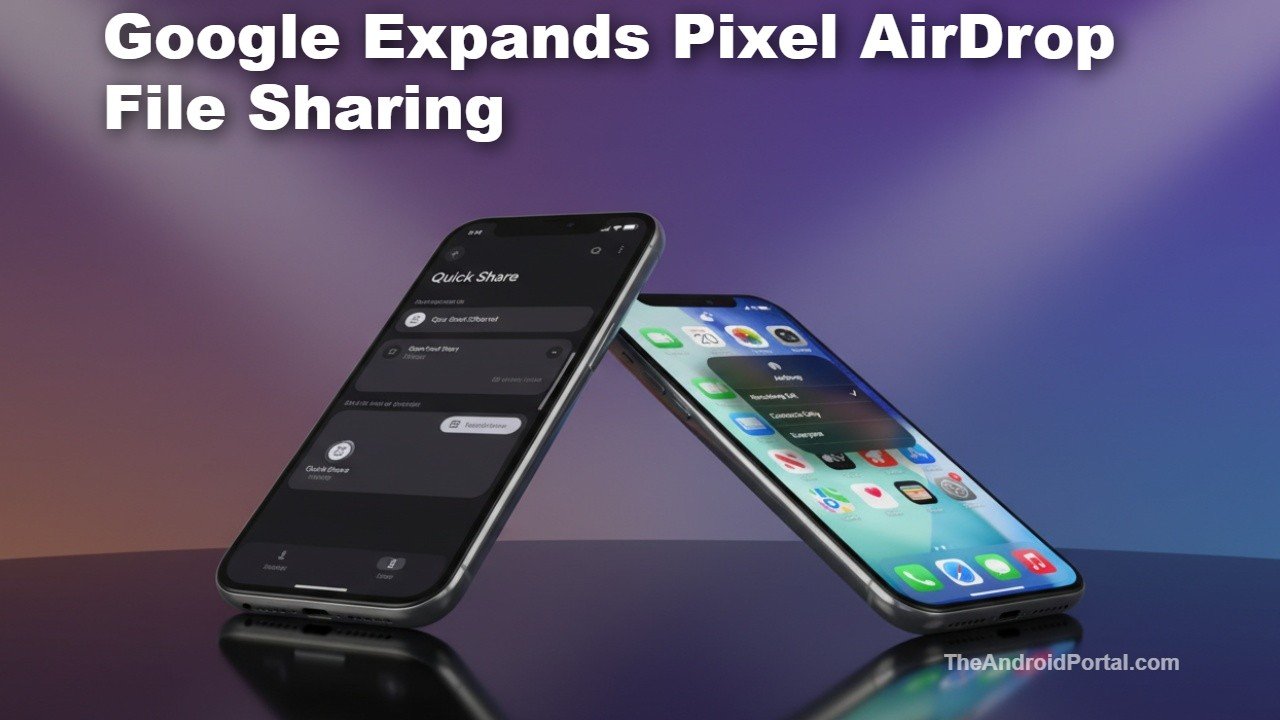
How Pixel AirDrop File Sharing Works Across Android and iPhone
At its core, Pixel AirDrop file sharing bridges Android’s Quick Share (formerly Nearby Share) with Apple’s AirDrop protocol behavior. While the two systems remain technically separate, they now recognize and surface transfer requests across platforms.
Sending files from Pixel to iPhone
If you’re using a Pixel device:
- Open Quick Share
- Select the file (photo, video, document, etc.)
- Choose the nearby iPhone device
On the iPhone side, users must temporarily enable “Everyone for 10 Minutes” in AirDrop settings. Once visible, the iPhone receives a standard AirDrop-style notification requesting approval.
Accepted files are saved exactly where users expect:
- Photos → Photos app
- Documents → Files app
This keeps the Pixel AirDrop file sharing experience consistent with native Apple transfers.
Receiving files from iPhone on Pixel
For Pixel users receiving files:
- Open Quick Share
- Enable Receive mode
- Accept the incoming transfer
Files are automatically stored in the appropriate folders within Android, preserving standard file organization.
The process mirrors AirDrop simplicity while maintaining Android’s file management structure.
Security Architecture Behind Pixel AirDrop File Sharing
Cross-platform file transfers raise security concerns, but Google says the system is designed with a multi-layered security model.
Pixel AirDrop file sharing relies on:
- Encrypted peer-to-peer connections
- Secure local communication channels
- Explicit user consent before transfers
- Temporary discoverability controls
Like AirDrop, devices must be manually set to discoverable, preventing unsolicited file delivery. Transfers do not require uploading data to external servers, reducing exposure risk.
Why This Matters for the US Smartphone Market
Android-iPhone interoperability is one of the most searched smartphone topics in the US. Queries like:
- “How to share files between Android and iPhone”
- “AirDrop alternative for Pixel”
- “Send photos from Pixel to iPhone”
consistently show high search intent.
Pixel AirDrop file sharing addresses a real user frustration — especially in households, workplaces, and classrooms where both ecosystems coexist. Instead of relying on email, messaging apps, or cloud storage, users can now perform fast, local wireless transfers.
This also strengthens Pixel’s competitive position against Apple by eliminating one of iOS’s ecosystem lock-in advantages.
What This Means for Pixel’s Ecosystem Strategy
This move reflects a broader shift in Google’s approach. Rather than isolating Android users, Google appears focused on reducing ecosystem friction — even when that benefits iPhone owners.
For Pixel specifically, this update:
- Enhances cross-platform compatibility
- Improves daily usability
- Reduces dependency on third-party apps
- Strengthens Pixel’s premium appeal
It also complements recent Android platform improvements in file management and connectivity. Users running the latest Android updates will benefit most from the refined Quick Share experience.
Broader Implications for Android and iOS Interoperability
While this doesn’t merge AirDrop and Quick Share into a single unified system, Pixel AirDrop file sharing represents meaningful progress in cross-platform cooperation.
If widely adopted across more Android OEMs, this could:
- Standardize wireless file transfers
- Reduce ecosystem barriers
- Improve Android-iOS coexistence
- Pressure Apple to expand compatibility further
Given growing regulatory attention around platform openness in the US and EU, cross-ecosystem compatibility may become a long-term competitive necessity rather than a feature advantage.