
Introduction
Magnetic Charging Alignment Technology is transforming how modern devices achieve efficient and reliable wireless charging. As wireless charging adoption grows across smartphones, earbuds, and wearables, one persistent challenge has been proper coil alignment. Poor alignment leads to slower charging, energy loss, and overheating.
Magnetic alignment technology solves this issue by using precisely positioned magnets to guide devices into the optimal charging position automatically. This innovation not only enhances efficiency but also improves user convenience and charging consistency. In this comprehensive guide, we explore how magnetic charging alignment works, its benefits, limitations, and future potential.
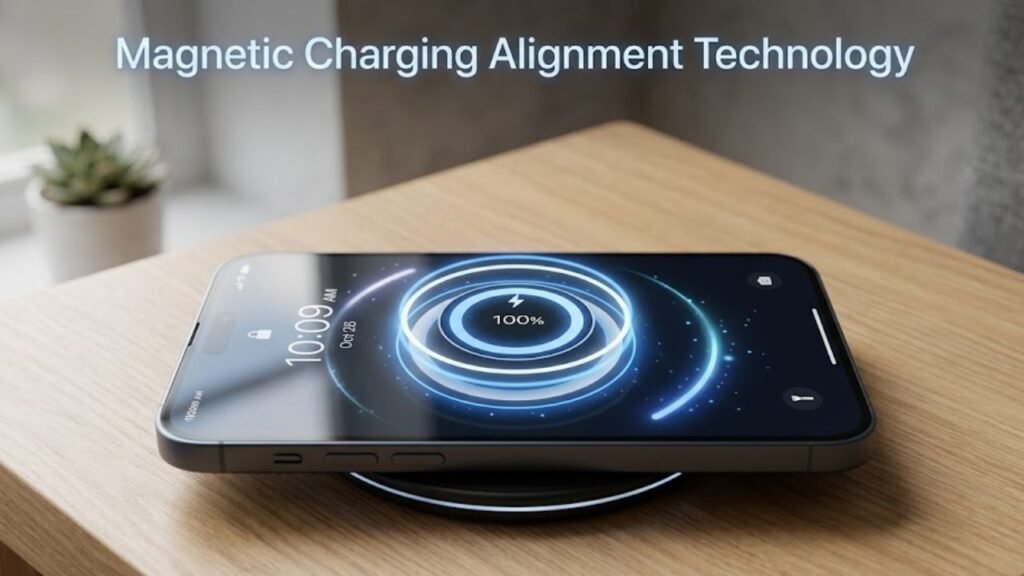
What Is Magnetic Charging Alignment Technology?
Magnetic Charging Alignment Technology refers to the use of built-in magnets in both the charger and device to ensure perfect positioning during wireless charging.
Core Concept
Magnets align the transmitter coil (charger) and receiver coil (device) automatically, maximizing energy transfer.
Key Components
- Magnetic ring or array
- Wireless charging coil
- Power management circuitry
Why Alignment Matters in Wireless Charging
Wireless charging relies on electromagnetic induction, which requires precise coil alignment.
Problems Without Alignment
- Reduced charging efficiency
- Slower charging speeds
- Increased heat generation
- Inconsistent charging connection
Role of Magnetic Alignment
Magnetic Charging Alignment Technology ensures optimal positioning every time, eliminating guesswork.
How Magnetic Charging Alignment Works
Step-by-Step Process
- Device is placed near the charger
- Magnets attract and align the device
- Coils are positioned correctly
- Charging begins at optimal efficiency
Magnetic Precision
Magnets are calibrated to ensure exact coil alignment, improving performance significantly.
Types of Magnetic Alignment Systems
Magnetic Ring Design
- Circular arrangement of magnets
- Common in smartphones
- Provides strong alignment
Multi-Magnet Arrays
- Multiple magnets for flexible positioning
- Used in advanced chargers
Hybrid Systems
- Combine magnetic alignment with multi-coil charging
Magnetic vs Non-Magnetic Wireless Charging
Comparison Table
| Feature | Magnetic Charging | Standard Wireless Charging |
|---|---|---|
| Alignment Accuracy | High | Low |
| Charging Efficiency | High | Moderate |
| User Convenience | Excellent | Average |
| Heat Generation | Low | Higher |
| Placement Sensitivity | Minimal | High |
Benefits of Magnetic Charging Alignment Technology
1. Perfect Coil Alignment
Ensures maximum energy transfer efficiency.
2. Faster Charging Speeds
Optimized positioning reduces power loss.
3. Reduced Heat Generation
Efficient energy transfer minimizes heat buildup.
4. Improved User Experience
No need to manually adjust device placement.
Impact on Charging Efficiency
Energy Transfer Optimization
Magnetic Charging Alignment Technology minimizes energy loss by ensuring proper alignment.
Consistent Performance
Devices charge at stable speeds without interruptions.
Applications of Magnetic Charging Alignment Technology
Smartphones
Magnetic alignment ensures consistent wireless charging.
Wireless Earbuds
Charging cases benefit from precise alignment.
Smartwatches
Small devices require accurate positioning.
Power Banks
Magnetic power banks offer portable wireless charging.
Magnetic Charging in Modern Ecosystems
Integrated Device Ecosystems
Magnetic charging supports seamless interaction between devices.
Accessory Compatibility
Supports wallets, stands, and mounts along with charging.
Advantages Over Traditional Wireless Charging
1. Reliability
Consistent charging without repositioning.
2. Efficiency
Better energy utilization.
3. Convenience
Simplified user interaction.
4. Versatility
Supports multiple accessories.
Limitations of Magnetic Charging Alignment Technology
Device Compatibility
Not all devices support magnetic alignment.
Cost Factors
Magnetic systems increase manufacturing costs.
Magnetic Interference
Strong magnets may affect certain components if poorly designed.
Design Considerations
Magnet Strength
Must be strong enough for alignment but safe for electronics.
Coil Placement
Precise positioning ensures optimal performance.
Material Quality
High-quality materials improve durability and efficiency.
Safety Aspects of Magnetic Charging
Thermal Management
Efficient alignment reduces overheating risks.
Electrical Safety
Maintains stable power delivery.
Device Protection
Prevents misalignment-related damage.
Practical Tips for Using Magnetic Charging
1. Use Compatible Accessories
Ensure your device supports magnetic alignment.
2. Avoid Thick Cases
Cases may interfere with magnetic connection.
3. Keep Surfaces Clean
Dust can affect alignment.
4. Use Certified Chargers
Ensure safety and performance.
5. Position Correctly
Allow magnets to snap into place naturally.
Future of Magnetic Charging Alignment Technology
Stronger Ecosystem Integration
More devices will adopt magnetic alignment.
Higher Charging Speeds
Improved efficiency will enable faster wireless charging.
Advanced Magnetic Designs
Better magnet arrangements will enhance flexibility.
Common Myths About Magnetic Charging
Myth 1: Magnets Damage Devices
Reality: Properly designed systems are safe.
Myth 2: Magnetic Charging Is Slower
Reality: It can be faster due to better alignment.
Myth 3: It Works with All Devices
Reality: Only compatible devices benefit fully.
FAQs
1. What is Magnetic Charging Alignment Technology?
It uses magnets to align devices for efficient wireless charging.
2. Does magnetic alignment improve charging speed?
Yes, by ensuring optimal coil positioning.
3. Is magnetic charging safe?
Yes, when using certified devices and chargers.
4. Can I use it with any phone?
Only devices designed for magnetic alignment support it fully.
5. Does it reduce heat?
Yes, improved efficiency lowers heat generation.
Conclusion
Magnetic Charging Alignment Technology represents a significant advancement in wireless charging, addressing one of its biggest challenges—coil alignment. By ensuring precise positioning, this technology enhances efficiency, reduces heat, and delivers a seamless user experience.
As more devices adopt magnetic alignment systems, wireless charging will become faster, more reliable, and easier to use. While limitations exist, the benefits far outweigh the drawbacks, making it a key innovation in modern charging technology.
Understanding Magnetic Charging Alignment Technology empowers users to make informed decisions and fully leverage the convenience and performance of next-generation wireless charging solutions.