
iPhone 17 China Sales Growth Defies Market Slump
The latest Counterpoint data reveals a surprising twist in the world’s largest smartphone market: iPhone 17 China sales growth is accelerating even as the broader market contracts sharply. While overall smartphone shipments in China reportedly fell by 23% year-over-year in January, Apple emerged as the only major brand to post growth — a development that could reshape competitive dynamics for Android OEMs in 2026.
For Android brands already battling slowing upgrade cycles and tighter consumer spending, Apple’s resurgence raises serious questions about positioning, pricing strategy, and premium brand loyalty.
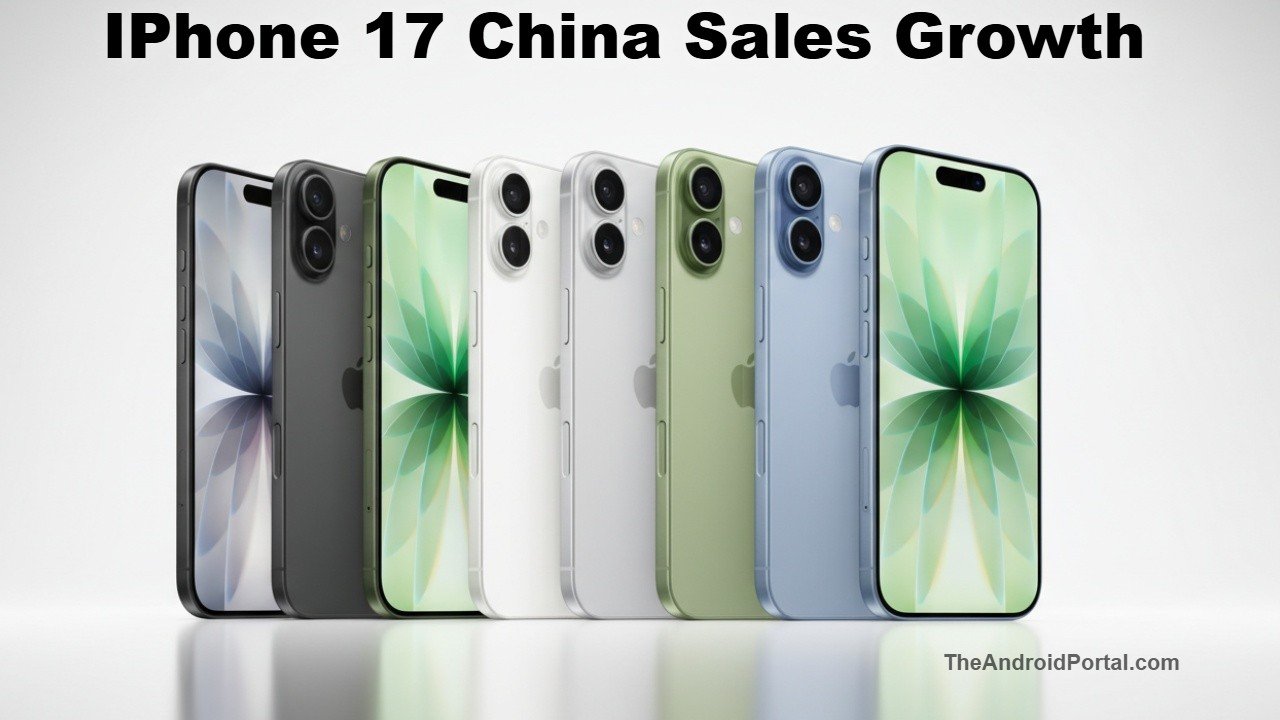
iPhone 17 China Sales Growth Bucks a 23% Market Decline
According to market research firm Counterpoint, Apple achieved roughly 8% year-over-year growth in January, lifting its market share to around 20% — effectively tying Huawei at the top. That milestone marks Apple’s strongest January performance in five years.
Several factors appear to be driving iPhone 17 China sales growth:
- The September launch momentum of the iPhone 17 lineup
- The base iPhone 17 model qualifying for government subsidies
- Strong brand retention in the premium segment
- Limited early discounting preserving perceived value
Notably, the broader Chinese smartphone market declined due to reduced state-backed subsidies and shifting Lunar New Year sales timing. While domestic brands like Xiaomi, Oppo, and Vivo reportedly faced double-digit declines, Apple benefited from policy alignment and brand stickiness.
The inclusion of the standard iPhone 17 under China’s subsidy framework significantly improved its value proposition, leading to a reported 9% month-over-month increase in January sales.
Why Android Brands Are Feeling the Pressure
The implications of sustained iPhone 17 China sales growth extend beyond Apple’s quarterly numbers. China remains one of the most competitive battlegrounds for Android manufacturers, particularly local players such as:
- Xiaomi
- Oppo
- Vivo
- Honor
- Huawei
Even Samsung, which has struggled in China for years, monitors these shifts closely because they influence global supply chains and component demand.
Apple’s ability to grow without aggressive discounting is particularly noteworthy. Android OEMs frequently rely on price cuts, flash sales, and bundled incentives to maintain volume. If Apple can maintain premium pricing power while expanding share, it reinforces a perception gap between iOS flagships and Android competitors.
For comparison, many Android flagships in China — including devices powered by Snapdragon 8 Gen 4 or Dimensity 9400 platforms — compete heavily on specifications such as:
- 200MP camera systems
- 120Hz LTPO AMOLED displays
- 100W+ fast charging
- AI-enhanced photography
Yet brand ecosystem loyalty and resale value continue to work in Apple’s favor.
The iPhone 17 Effect and Ecosystem Lock-In
Another key driver behind iPhone 17 China sales growth is ecosystem integration. Apple’s seamless cross-device experience — spanning iPhone, Mac, iPad, Apple Watch, and services — strengthens user retention.
In contrast, while Android brands have improved cross-device continuity (Samsung Galaxy ecosystem, Xiaomi HyperOS integration, and Google’s Pixel ecosystem), fragmentation remains a challenge.
Apple’s current momentum suggests that:
- Premium consumers are still willing to pay for perceived stability and long-term software support.
- Government-backed pricing advantages can quickly shift market share.
- Brand equity matters more than raw hardware specifications.
For Android-focused readers, this development doesn’t signal weakness — but it does highlight how crucial differentiation will be in 2026. AI features, on-device processing, extended software updates, and foldable innovation could be the next battleground.
What This Means for Samsung, Google, and Xiaomi
Samsung and Google may not dominate China directly, but global perception often mirrors Chinese trends. If Apple sustains iPhone 17 China sales growth, it could strengthen investor confidence and global brand positioning ahead of the iPhone 18 cycle.
Meanwhile:
- Xiaomi and Oppo must re-evaluate mid-range pricing strategy.
- Huawei continues rebuilding momentum amid chip supply constraints.
- Google’s Pixel lineup, while niche in China, benefits indirectly from broader Android innovation narratives.
As the smartphone market matures and replacement cycles lengthen, growth will increasingly hinge on ecosystem value, AI capabilities, and government policy alignment — not just hardware upgrades.
The real question now isn’t whether Apple can grow in China. It’s whether Android brands can counter that growth without sacrificing margins.