
iPhone 16 India Sales Shift Signals Smartphone Market Change
India’s smartphone market is undergoing a significant transformation, and the latest sales data confirms a trend that would have seemed unlikely just a few years ago. According to new industry estimates, the iPhone 16 India sales shift marks a clear move away from budget-first buying behaviour, with Apple’s base iPhone 16 emerging as the country’s best-selling smartphone model of 2025.
For decades, India has been defined as a price-sensitive market dominated by Android phones under ₹20,000. However, fresh data from Counterpoint Research suggests that Indian consumers are increasingly prioritising brand value, long-term reliability, and ecosystem benefits—factors that have helped Apple break into the mainstream.
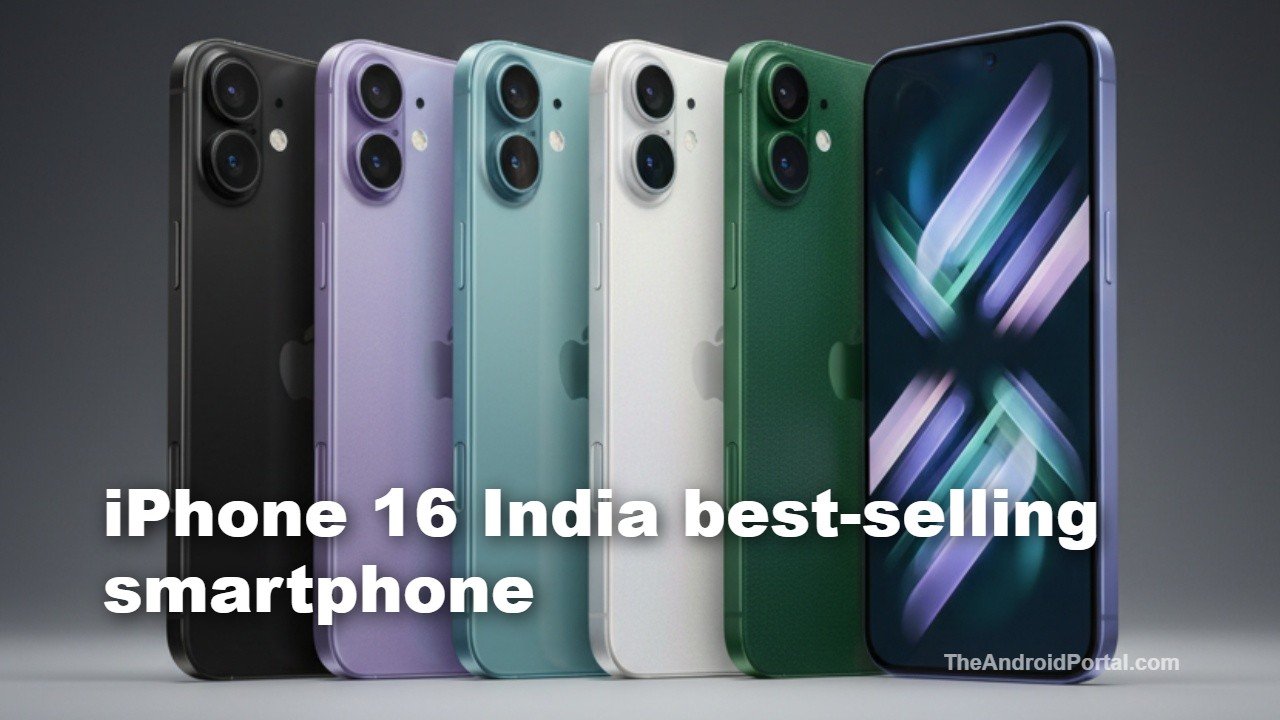
iPhone 16 India Sales Shift Signals a New Buying Reality
Counterpoint’s report reveals that India recorded approximately 154 million smartphone shipments in 2025. Out of this, the iPhone 16 base variant alone accounted for around 6.16 million units, giving it nearly 4 percent market share by volume—an unprecedented figure for a premium-priced iPhone in India.
Launched globally in September 2024, the iPhone 16 starts at roughly ₹71,000 in India. Despite this premium pricing, the device has outperformed every other smartphone model sold in the country over the past year. This iPhone 16 India sales shift highlights a fundamental change in consumer mindset, where affordability is no longer measured only by upfront cost.
EMIs and Financing Drive Premium Phone Adoption
One of the biggest drivers behind Apple’s success is the rapid adoption of flexible financing. Counterpoint notes that nearly 60 percent of premium smartphones in India are now purchased through EMI plans. Monthly instalments, combined with aggressive exchange offers and bank discounts, have made flagship phones accessible to a much broader audience.
Instead of viewing smartphones as one-time purchases, many buyers now see them as long-term investments spread across manageable payments. This shift has particularly benefited Apple, whose devices are perceived as durable and future-proof compared to many mid-range Android alternatives.
Key factors accelerating the trend include:
- Zero-cost EMI options across online and offline retailers
- Higher resale value of older iPhones
- Strong after-sales support and software longevity
Together, these elements have softened the psychological barrier of premium pricing.
What This Means for Android Brands in India
The rise of Apple does not mean Android is losing relevance—but it does signal rising pressure on Android manufacturers. Brands like Samsung, Xiaomi, Vivo, and OPPO still dominate overall volumes, especially in the sub-₹30,000 segment. However, the iPhone 16 India sales shift shows that aspirational buyers are increasingly willing to stretch budgets rather than settle for incremental upgrades.
For Android OEMs, this means:
- Mid-range phones must offer clearer differentiation
- Software updates and long-term support matter more than ever
- Ecosystem features are becoming a deciding factor
Samsung’s Galaxy S and FE lineups, Google’s Pixel series, and premium OnePlus models are likely to feel the most direct impact from Apple’s momentum.
Apple’s India Strategy Is Paying Off
Apple executives have been vocal about India’s growing importance. During the company’s latest earnings call, CEO Tim Cook confirmed that Apple recorded all-time quarterly revenue highs in India during the October–December period. He also reiterated plans to expand Apple’s physical retail presence, including opening another Apple Store in Mumbai.
Cook described India as not only the second-largest smartphone market globally, but also one of Apple’s fastest-growing regions. Local manufacturing under the “Make in India” initiative has further strengthened Apple’s position by improving supply chains and pricing stability.
Apple CFO Kevan Parekh added that global iPhone revenue reached $85.3 billion, driven largely by strong demand for newer models. While the iPhone 17 family contributed significantly worldwide, India stood out as a rare market where premium growth accelerated faster than expected.
A Long-Term Shift, Not a One-Off Spike
Industry analysts believe this is not a temporary spike driven by promotions or hype. Instead, the success of the iPhone 16 reflects a deeper, long-term evolution in Indian consumer behaviour. As incomes rise, digital payments mature, and financing becomes frictionless, the gap between “budget” and “premium” continues to narrow.
For Android brands, the message is clear: competing on price alone may no longer be enough. And for Apple, the iPhone 16 India sales shift could be just the beginning of a much larger presence in the world’s most competitive smartphone market.