
A global smartphone shipment slowdown is reshaping the pecking order at the top of the mobile industry, and Samsung is feeling the impact despite launching new flagship hardware. Fresh shipment estimates from industry watchers suggest the overall market contracted during the first quarter, with Samsung’s unit volumes slipping year over year and its lead position challenged by Apple’s momentum.
For Android fans, this is not just a scoreboard update. When the market softens, phone makers typically respond in predictable ways: they push premium models harder, trim entry-level lineups, lean into trade-ins and financing, and adjust pricing to protect margins. The result is that buyers may see fewer truly “cheap” phones, more storage tiers priced as upgrades, and a heavier marketing focus on Ultra-style devices that can carry profit even if total shipments fall.
Counterpoint Research data cited in recent reporting indicates Samsung’s smartphone shipments fell by around 6% year over year in the quarter, nudging its market share down by roughly a point. The same dataset shows Apple taking the top spot for the period, helped by strong iPhone demand and the company’s unusually effective retail and trade-in engine. Meanwhile, several Android brands in the top five also saw weakness, highlighting that this is a market-wide demand story, not a Samsung-only stumble.
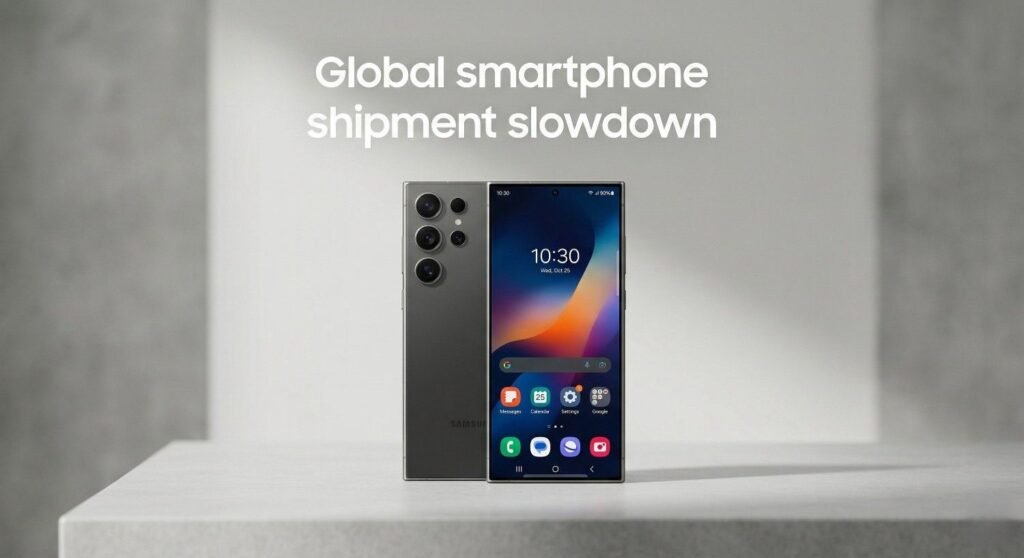
What’s driving the global smartphone shipment slowdown
The smartphone industry has been searching for a durable growth engine for a while. Replacement cycles have lengthened, flagship improvements are more incremental than revolutionary, and midrange phones have become “good enough” for many people. But this quarter’s softness has an additional pressure point: component economics.
Analysts point to rising costs in key parts of the smartphone bill of materials—particularly memory—at a time when the broader supply chain is increasingly optimized for AI infrastructure. When suppliers prioritize higher-margin shipments to data centers, consumer electronics companies can face tighter supply or higher prices, which then compress margins for phone makers. The easiest lever for OEMs is to pass some of those costs on to consumers, but higher prices also suppress demand, especially in the mass-market segment.
That combination—weak demand plus cost pressure—is the classic recipe for a shipment decline.
What it means
When the market shrinks, brands have to choose between:
- selling fewer phones at higher prices, or
- cutting prices and taking slimmer margins.
Most choose a mix, but premium devices usually get priority because they generate more profit per unit.
Samsung’s Q1 problem: mass-market weakness and timing
Samsung reported shipment dip is notable because it arrived in a quarter where the company still had significant flagship visibility. However, two dynamics appear to have worked against it.
1) Weaker demand where Samsung sells the most volume
Samsung dominates across price tiers, but the heaviest shipment volumes typically come from its mainstream and budget Galaxy lines. When consumers delay upgrades, the midrange and entry-level segments tend to soften first. That is where price sensitivity is highest and where buyers are most likely to hang onto a phone for an extra year.
2) Flagship timing matters more than it used to
Even a short delay in a major Galaxy launch window can push meaningful volume into the next quarter. That does not necessarily indicate poor demand; it can be a calendar effect that shifts shipments rather than destroying them. But in a competitive market, timing still affects who “wins” a quarter.
Samsung can sell a lot of Galaxy Ultra units and still lose share if the broader funnel—midrange upgrades, carrier promotions, and retail replenishment—does not stay strong.
Apple takes the top spot: why it keeps working
Apple leading a quarter is not shocking, but it is still strategically important because it shows what is working in a weak market.
Apple benefits from three advantages that become even more powerful during slowdowns:
- Trade-in strength: iPhone buyers are trained to swap devices on a schedule, often with high residual values that reduce upgrade friction.
- Ecosystem lock-in: services, accessories, and cross-device features keep users from switching even when upgrades feel incremental.
- Retail execution: Apple and its partners are extremely good at packaging financing, carrier deals, and storage upgrades as a “reasonable” monthly payment.
In a soft market, that machine can turn hesitation into purchases.
For Android brands, this is a reminder that hardware alone does not win quarters. Distribution, promotions, and upgrade programs matter just as much.
Xiaomi, OPPO, and vivo: the rest of the top five isn’t immune
The same Counterpoint snapshot puts Xiaomi in third with a meaningful share but a sharper year-over-year decline than its peers. OPPO and vivo round out the top five. The key takeaway is not the exact ranking; it is that shipment pressure is widespread. Even brands known for aggressive pricing and strong emerging-market presence are exposed when consumers pull back and component costs rise.
A slowdown that hits both premium and value-focused OEMs suggests broad caution among buyers, not just a “bad product cycle” for one company.
How Samsung is likely to respond next
If you watch Samsung’s behavior during past market dips, you can almost predict the playbook.
Expect more emphasis on premium configurations
When costs rise, Samsung often simplifies entry-level options and pushes buyers toward higher storage tiers. That can make base models feel less attractive and upgrade tiers feel “necessary,” which improves average selling prices.
Production adjustments can signal confidence
Reports suggest Samsung has increased production of its newest flagships heading into the next month. That is a meaningful indicator: companies do not raise production unless they see demand or expect stronger channel orders. If those units sell through, Samsung could rebound in the following quarter even if the broader market remains soft.
Promotions will intensify
In the US and other mature markets, Samsung often competes with Apple using:
- aggressive trade-in values
- bundle deals (watch, earbuds, tablet credits)
- carrier financing incentives
- limited-time storage upgrades
These offers do not always show up as “price cuts,” but they function as discounts.
What this means for Android buyers
A market slowdown sounds abstract, but it can directly affect what you pay and what phones get launched.
You may see higher starting prices
If memory and other components stay expensive, “base model” pricing can creep upward. Brands will justify this with more RAM, more storage, or “premium positioning,” but the real driver is protecting margins.
Budget options may get trimmed
When demand weakens, OEMs reduce SKU complexity. That can mean fewer models in the low end, fewer regional variants, and fewer truly cheap devices in carrier stores.
Longer software support becomes a selling point
If people upgrade less often, update policy becomes more valuable. Samsung has already been leaning hard into longer OS and security support promises, and a slowdown reinforces that strategy.
The bigger picture: the smartphone industry is maturing
The global smartphone shipment slowdown is another sign that the market is behaving like a mature category. Growth now comes from:
- replacement cycles
- premium upsells
- ecosystem services
- regional expansion
- and occasional form-factor shifts (foldables, new battery tech, on-device AI)
That does not mean innovation is dead. It means companies have to work harder to convince people they need a new phone this year instead of next year.
For Samsung, the immediate challenge is balancing profitability with volume. If it leans too far into premium pricing, it risks weakening its mass-market base. If it chases volume with discounts, it risks margin compression in a costlier component environment.
Either way, the next quarter will be a key signal: does demand stabilize with new flagship availability and promotions, or does the market continue to contract, forcing deeper changes to lineups and pricing?