
Introduction
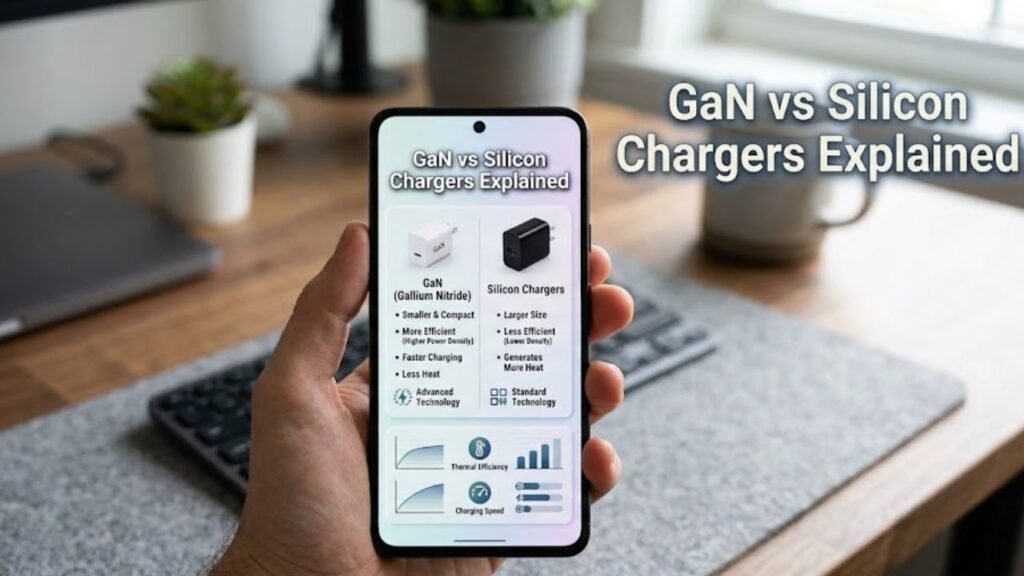
GaN vs Silicon Chargers Explained is a crucial topic for anyone looking to understand the next generation of fast charging technology. As smartphones, laptops, and accessories demand higher power levels, traditional silicon-based chargers are being challenged by newer, more efficient Gallium Nitride (GaN) technology.
While both charger types perform the same basic function—converting AC power into usable DC power—the materials used inside them significantly affect efficiency, size, heat generation, and performance. This guide provides a detailed comparison of GaN and silicon chargers, helping you make an informed decision based on real-world needs.
What Are Silicon Chargers?
Silicon chargers are the traditional power adapters used in most electronic devices for decades.
Key Characteristics of Silicon Chargers
- Use silicon-based semiconductors
- Proven and widely adopted technology
- Larger size due to heat limitations
- Lower switching efficiency
How Silicon Chargers Work
Silicon transistors regulate voltage and current by switching electrical signals. However, they generate more heat, requiring larger components for heat dissipation.
What Are GaN Chargers?
GaN (Gallium Nitride) chargers use advanced semiconductor materials that offer higher efficiency and faster switching speeds.
Key Characteristics of GaN Chargers
- Higher energy efficiency
- Smaller and more compact design
- Reduced heat generation
- Supports high-power output
How GaN Chargers Work
GaN transistors switch electricity more efficiently than silicon, allowing higher frequencies and reduced energy loss.
GaN vs Silicon Chargers Explained: Core Differences
Comparison Table
| Feature | Silicon Chargers | GaN Chargers |
|---|---|---|
| Material | Silicon | Gallium Nitride |
| Efficiency | Moderate | High |
| Heat Generation | Higher | Lower |
| Size | Larger | Compact |
| Charging Speed | Standard | Faster |
| Power Output | Limited | High (up to 240W+) |
| Cost | Lower | Higher |
Efficiency and Energy Conversion
Silicon Charger Efficiency
Silicon-based chargers lose more energy as heat during conversion, reducing overall efficiency.
GaN Charger Efficiency
GaN chargers minimize energy loss, allowing more power to reach the device.
Real-World Impact
- Faster charging
- Lower electricity consumption
- Improved performance
Size and Portability
Silicon Chargers
- Bulkier due to heat management requirements
- Larger internal components
GaN Chargers
- Smaller and lighter
- Ideal for travel and portability
Key Insight
GaN technology enables compact chargers without compromising power output.
Heat Generation and Thermal Performance
Silicon Chargers
- Generate more heat
- Require heat sinks and ventilation
GaN Chargers
- Produce less heat
- Maintain cooler operation
Why It Matters
Lower heat improves safety and extends charger lifespan.
Charging Speed and Power Output
Silicon Chargers
- Limited by material efficiency
- Suitable for standard charging
GaN Chargers
- Support high-speed charging
- Compatible with USB Power Delivery and fast charging protocols
Durability and Reliability
Silicon Chargers
- Well-tested and reliable
- Long-standing technology
GaN Chargers
- Durable due to lower heat stress
- Increasing reliability with newer designs
Cost Comparison
Silicon Chargers
- Affordable
- Widely available
GaN Chargers
- Higher initial cost
- Better long-term value due to efficiency
Advantages of GaN Chargers
1. Higher Efficiency
More power reaches the device with less waste.
2. Compact Design
Smaller size without sacrificing performance.
3. Faster Charging
Supports modern fast-charging standards.
4. Lower Heat Output
Improves safety and longevity.
Advantages of Silicon Chargers
1. Lower Cost
Budget-friendly option.
2. Proven Technology
Reliable and widely used.
3. Broad Compatibility
Works with most devices.
Limitations of GaN Chargers
Higher Price
More expensive than traditional chargers.
Availability
Not as widely available in all markets.
Limitations of Silicon Chargers
Lower Efficiency
More energy lost as heat.
Larger Size
Bulkier design.
Limited Power Output
Less suitable for high-power devices.
Use Cases: Which One Should You Choose?
Choose GaN Chargers If You Need:
- Fast charging for multiple devices
- Compact travel-friendly chargers
- High power output for laptops
Choose Silicon Chargers If You Need:
- Budget-friendly options
- Basic charging needs
- Reliable everyday use
GaN Chargers and USB Power Delivery
Compatibility
GaN chargers are optimized for USB PD and PPS technologies.
Multi-Port Charging
Many GaN chargers support multiple devices simultaneously.
Practical Buying Tips
1. Check Power Requirements
Match charger wattage with your device.
2. Look for Certifications
Ensure safety and reliability.
3. Consider Portability
Choose compact GaN chargers for travel.
4. Evaluate Multi-Port Options
Useful for charging multiple devices.
5. Balance Cost and Performance
Invest in GaN for long-term benefits.
Future of GaN vs Silicon Chargers
GaN Technology Growth
Expected to become the standard for fast charging.
Higher Power Capabilities
Support for 240W and beyond.
Improved Efficiency
Continued advancements in semiconductor materials.
Common Myths About GaN vs Silicon Chargers
Myth 1: GaN Chargers Are Unsafe
Reality: They are safe when certified.
Myth 2: Silicon Chargers Are Obsolete
Reality: They are still widely used.
Myth 3: GaN Always Charges Faster
Reality: Speed depends on device compatibility.
FAQs
1. What is the difference between GaN and silicon chargers?
GaN chargers are more efficient, compact, and generate less heat than silicon chargers.
2. Are GaN chargers worth it?
Yes, especially for fast charging and portability.
3. Do GaN chargers work with all devices?
Yes, they are compatible with most USB-powered devices.
4. Are GaN chargers safer?
They are safer due to lower heat generation when properly certified.
5. Which charger is better for laptops?
GaN chargers are ideal for high-power devices like laptops.
Conclusion
GaN vs Silicon Chargers Explained highlights the evolution of charging technology from traditional silicon-based systems to advanced GaN solutions. While silicon chargers remain reliable and affordable, GaN chargers offer superior efficiency, compact design, and faster charging capabilities.
For users seeking modern, high-performance charging solutions, GaN chargers provide clear advantages. However, silicon chargers still serve as a practical choice for basic needs and budget-conscious users.
Ultimately, the right choice depends on your priorities—whether it’s cost, performance, portability, or future-proof technology. Understanding these differences ensures you make an informed investment in your charging ecosystem.