
The Android smartphone crisis is no longer a speculative headline—it’s quickly becoming a defining narrative for the global mobile industry. From rising component costs to declining shipment forecasts and shifting user loyalty, Android OEMs are facing a convergence of challenges that could reshape the ecosystem.
At the same time, one brand appears to be resisting the downward trend: Google and its Pixel lineup. As competitors struggle with pricing pressure and differentiation, Pixel devices are quietly gaining traction—especially in the premium segment.
So what exactly is driving the Android smartphone crisis, and why is Pixel emerging as a potential solution?
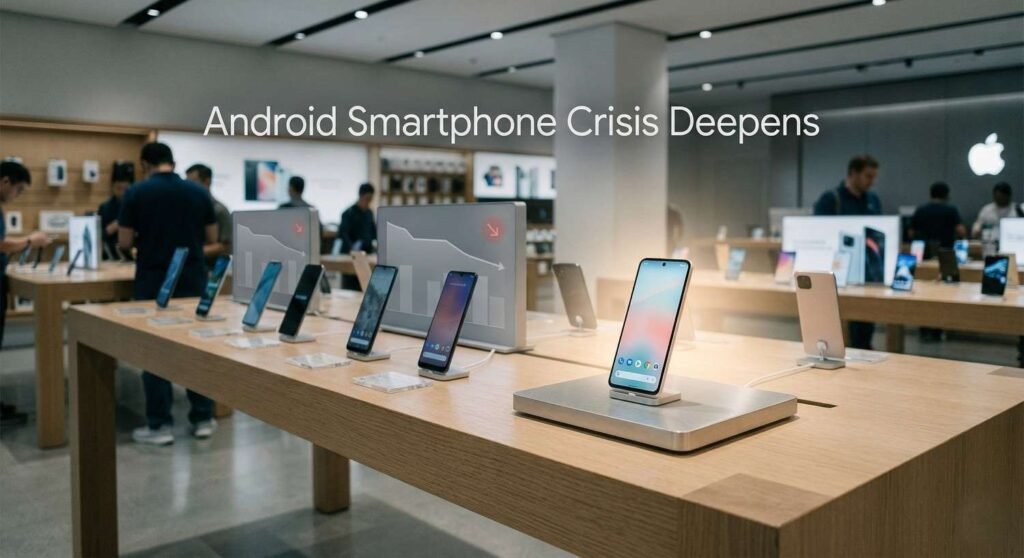
Android Smartphone Crisis Explained: What’s Going Wrong?
The current Android smartphone crisis stems from a mix of supply-side disruptions and demand-side fatigue. At the center of the issue is a sharp increase in memory and storage costs, driven largely by global demand for AI infrastructure.
Key factors fueling the crisis:
- RAM and storage price inflation affecting production costs
- Global silicon shortages impacting supply chains
- Weak consumer demand due to higher retail prices
- Slower upgrade cycles among smartphone users
These pressures are hitting Android manufacturers particularly hard because many rely heavily on competitive pricing to maintain market share.
Recent projections suggest that Android shipments could decline by as much as 15%, signaling a significant contraction in the ecosystem.
Apple Gains Ground While Android Struggles
As the Android smartphone crisis intensifies, Apple appears to be navigating the market more effectively.
Analyst reports indicate that Apple is expected to gain global market share, even as overall smartphone shipments decline. One key reason is the company’s ability to maintain pricing stability while delivering consistent performance upgrades.
Platform switching trends reveal a shift:
- Increased migration from Android to iPhone
- Declining retention rates for several Android brands
- Higher perceived value in Apple’s ecosystem
For example, switching rates to iPhone have nearly doubled year-over-year, highlighting a growing imbalance between the two platforms.
Samsung and Other Android OEMs Feel the Pressure
The Android smartphone crisis is not affecting all brands equally, but even industry leaders like Samsung are feeling the strain.
Reports suggest that Samsung has implemented internal cost-control measures and could face:
- Potential price increases for future devices
- Organizational restructuring within its mobile division
- Increased reliance on premium models to sustain margins
Other Android brands, including regional players, are seeing even steeper declines in user retention and shipment volumes.
This widening gap between top-tier and mid-tier manufacturers is one of the most concerning aspects of the current situation.
Where Google Pixel Stands Amid the Crisis
Amid the broader Android smartphone crisis, Pixel devices are emerging as a rare bright spot.
The Pixel 9 and Pixel 10 series have performed strongly in key markets like the United States, helping Google expand its presence in the premium segment. Notably, the Google Pixel 10 Pro XL has played a major role in this growth.
Why Pixel is gaining momentum:
- Clean, optimized Android experience
- Deep integration of AI features like Gemini
- Strong camera performance
- Competitive pricing in the premium category
While overall adoption growth has slightly slowed compared to previous years, Pixel continues to outperform many Android competitors.
Premium Market Is Becoming the New Battleground
One of the most important insights from the Android smartphone crisis is the shift toward premium devices.
As mid-range margins shrink, manufacturers are increasingly focusing on high-end smartphones where profitability is stronger.
Key trends in the premium segment:
- Rising average selling prices (ASP)
- Increased emphasis on AI and software features
- Stronger brand differentiation
Google’s Pixel strategy aligns well with this shift, positioning its devices as premium experiences rather than budget alternatives.
Pricing Strategy Could Decide the Future
Pricing is emerging as a critical factor in the Android smartphone crisis.
Some brands have already increased prices to offset rising costs, but this approach carries risks:
- Reduced consumer demand
- Higher competition from Apple
- Increased platform switching
Google, on the other hand, has managed to keep Pixel pricing relatively competitive—an advantage that could drive further adoption.
The Role of AI in Reshaping Android
AI is becoming a central theme in the Android smartphone crisis, influencing both costs and consumer expectations.
While AI features add value, they also:
- Increase hardware requirements (more RAM, better chips)
- Raise production costs
- Complicate software optimization
Pixel devices, powered by Google’s AI ecosystem, are better positioned to deliver these features efficiently—giving them an edge over competitors.
Is This a Temporary Slowdown or a Long-Term Shift?
The big question surrounding the Android smartphone crisis is whether it represents a short-term disruption or a structural change.
Arguments for a temporary phase:
- Supply chain issues may stabilize
- Component prices could normalize
- Consumer demand may recover
Arguments for a long-term shift:
- Market saturation in key regions
- Slower innovation cycles
- Increasing dominance of ecosystem-driven platforms
If the latter proves true, Android OEMs may need to rethink their strategies entirely.
What This Means for Consumers
For consumers, the Android smartphone crisis brings both challenges and opportunities.
Potential downsides:
- Higher smartphone prices
- Fewer budget-friendly options
- Slower hardware upgrades
Potential benefits:
- Better software optimization
- More focus on premium features
- Improved long-term device support
In this evolving landscape, choosing the right device becomes more important than ever.
Pixel vs iPhone: The New Reality?
As the Android smartphone crisis unfolds, the competition between Pixel and iPhone is becoming more relevant.
While Apple continues to dominate globally, Pixel is carving out a niche as the “pure Android” alternative with strong AI capabilities.
For many users, the decision now comes down to:
- Ecosystem preference (iOS vs Android)
- AI features and integration
- Pricing and value
Final Thoughts: Can Pixel Save Android?
The Android smartphone crisis highlights a turning point for the entire ecosystem. While challenges remain significant, they also create opportunities for innovation and differentiation.
Google’s Pixel strategy—focused on AI, software integration, and competitive pricing—positions it as a potential stabilizing force within Android.
However, the broader recovery of the ecosystem will depend on:
- Cost management across the supply chain
- Clear differentiation among OEMs
- Continued innovation in both hardware and software
For now, one thing is clear: the Android market is evolving rapidly, and Pixel is at the center of that transformation.