
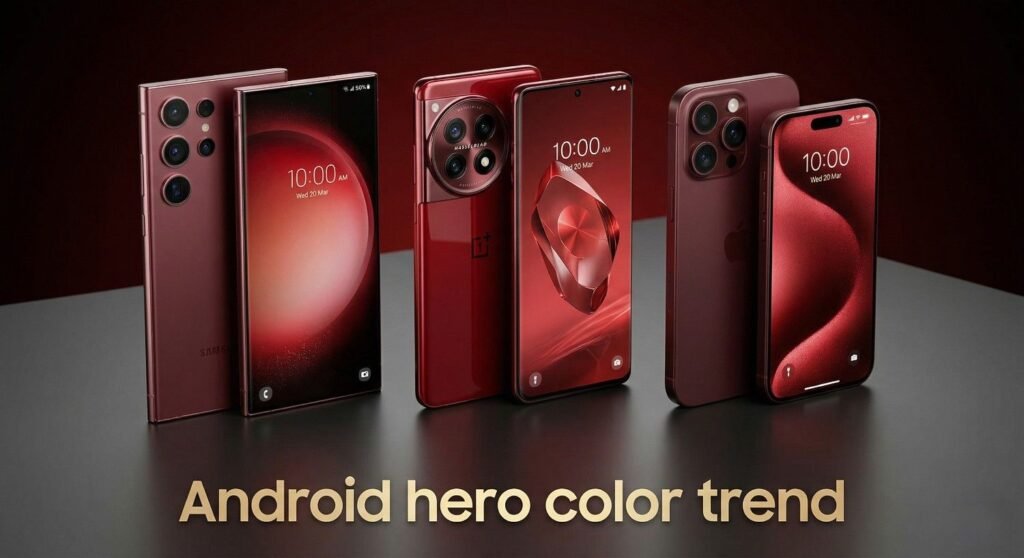
A new leak suggests phone makers are preparing a bold shift in flagship styling, and it points to a familiar pattern: Apple sets a high-visibility design cue, and the rest of the industry responds. According to tipster chatter shared on Chinese social media, several next-generation Android prototypes are reportedly being tested in a deep red finish—one that may align with a standout shade Apple is expected to push in a future Pro iPhone lineup. If the leak holds, we could be watching the next wave of the Android hero color trend take shape in real time.
“Hero color” is industry shorthand for the single finish a brand wants you to notice first—the color used in marketing photos, store displays, keynote slides, and influencer unboxings. It is not just a paint job. It is a sales tactic, a product identity marker, and increasingly a way to differentiate phones that look nearly identical from the front.
We have seen this play out repeatedly: the moment a loud or premium-looking color dominates iPhone marketing, Android brands that have leaned on safe blacks and silvers begin experimenting with their own high-impact finishes. In the past, it was blues and greens. More recently, it has been bolder warm tones. Now, if the rumor mill is right, deep red may be next.
What the leak claims: deep red prototypes across multiple Android flagships
The latest claim comes from well-known tipster Digital Chat Station, who says they have spotted multiple upcoming Android flagship prototypes in a rich, dark red colorway. The leaker implies this shade is closely related to a “hero” finish Apple may introduce for a future iPhone Pro model.
Two things are worth noting here:
- The leak is not tied to one specific Android brand or one confirmed device name. It is more of a trend signal: multiple companies testing similar color directions at the same time.
- Apple is known to prototype several finishes before committing to the final lineup. Even if red is being tested, it is not guaranteed to ship.
Still, tipsters often see patterns in the supply chain before the public does. When multiple manufacturers sample similar pigments and coatings, it can point to what accessory makers, marketing teams, and component suppliers think will sell.
Why “hero colors” matter more than you think
It is easy to dismiss color as cosmetic, but in the flagship market, cosmetics are strategy.
Most premium phones now share a similar silhouette:
- A big display with thin bezels
- Flat or slightly curved frames
- A camera island that dominates the back
- Glass-and-metal construction
When design convergence hits that hard, brands look for other ways to create identity. A hero color becomes a shortcut: you can recognize the phone instantly in a photo, even when the hardware is familiar.
The business reasons brands love hero colors
Hero colors do three jobs at once:
- Marketing differentiation: One color dominates ads, retail posters, and launch event imagery.
- Social media fuel: Distinct finishes photograph well and drive unboxing clicks.
- Premium signaling: Dark, rich hues (like deep red) can read as luxury if the finish is done right.
Apple has historically been very good at turning a single finish into a “must-have” vibe. When that color sells, rivals take note.
The Apple effect: when iPhone colors become industry trends
Apple does not just pick colors; it creates a narrative around them. Even when the color is not revolutionary, the packaging, wallpapers, camera promo shots, and keynote visuals make it feel like an event—part of Apple’s broader brand strategy.
We saw this recently when a bright, warm-toned Pro finish gained traction and quickly spilled into the broader ecosystem. Android brands began shipping similar-looking shades, and accessory companies rushed to produce matching cases, skins, and wallpapers. That’s not coincidence—it is competitive response.
If Apple moves toward a deeper, more premium red for a Pro model, Android makers may follow for three reasons:
- It is a safe bet for demand. If consumers respond to the “new” iPhone look, competitors can offer a similar vibe without copying the hardware.
- It stands out in a sea of neutrals. Many Android flagships still ship in conservative colors.
- It pairs well with premium materials. Deep red looks expensive on matte glass, brushed metal, and color-matched camera rings.
Why deep red could be the perfect flagship color (and why it’s hard to execute)
A deep red finish has a clear advantage: it can be bold without being playful. That is exactly what many flagship buyers want—something distinctive that still feels adult and premium.
But red is also one of the most difficult colors to get right at scale. The final look depends on:
- The glass coating and how it diffuses light
- The matte vs glossy texture
- The metal frame color match
- Fingerprint visibility and smudge resistance
- How the shade shifts under indoor vs outdoor lighting
A “deep red” can easily turn into maroon, burgundy, brown, or even purple depending on the finish and lighting. If brands want to ride the Android hero color trend successfully, they will need tighter control over materials and consistency.
Expect brand-specific naming and slight variations
Even if multiple companies chase “deep red,” the retail experience will likely be very different:
- One brand may go for a wine-like matte finish
- Another may choose a glossy crimson
- Another may tint the frame for a two-tone look
The trend is not necessarily about everyone shipping the exact same shade. It is about shifting away from safe palettes and giving the flagship lineup a clear signature finish.
What it could mean for upcoming Android flagships
If deep red becomes the next hero color, expect it to show up first in the places where it makes the most marketing sense:
- Ultra-tier models: the most expensive phones need stronger identity.
- Camera-centric flagships: a bold color helps emphasize “this is the Pro camera phone.”
- Limited editions: brands may test demand with small runs before committing to mass production.
We may also see manufacturers pair red with other “premium cues,” such as:
- Polished camera rings
- Color-matched frames
- New wallpapers designed specifically to complement the finish
- More aggressive use of matte textures to reduce fingerprints
And if the trend gains traction, it usually does not stop at phones. Expect matching:
- Smartwatch bands
- Earbud cases
- Tablet accessories
- Official cases and skins
The counterpoint: why some Android brands may resist copying Apple
Not every manufacturer benefits from following Apple aesthetic decisions. Some brands build identity through bold hardware shapes, gaming design language, or camera module uniqueness rather than color.
There is also the risk of trend fatigue. If every premium phone suddenly ships with a “hero red,” it stops being special. The brands that win are the ones that make the finish feel intentional, not reactive.
A better play for Android companies might be:
- Use deep red as a limited hero option
- Keep classic neutrals for broader appeal
- Offer regional exclusives to create scarcity
What buyers should watch for: signs the hero color is real
Leaks come and go, so here is what to look for if you want confirmation that the Android hero color trend is actually moving toward red:
- Multiple reliable leakers describing the same shade independently
- Case and skin makers teasing “deep red” accessories early
- Supply chain chatter around new coatings or pigments
- Official teaser posters that avoid showing the full phone but highlight the color tone
- Retail listing leaks mentioning a red variant by name
When those signals stack up, the trend is usually locked in.
Bottom line
If the latest leak is accurate, deep red may be the next premium “it” finish—first as a high-visibility iPhone hero color, and then as a broader Android response. For shoppers, this is mostly good news. Flagships have become extremely similar in shape and layout, and a distinctive color option is one of the few ways to make a phone feel personal again without changing the hardware.
Just do not be surprised if red becomes the new neutral in the premium tier. When a hero color sells, the industry rarely leaves it alone.