
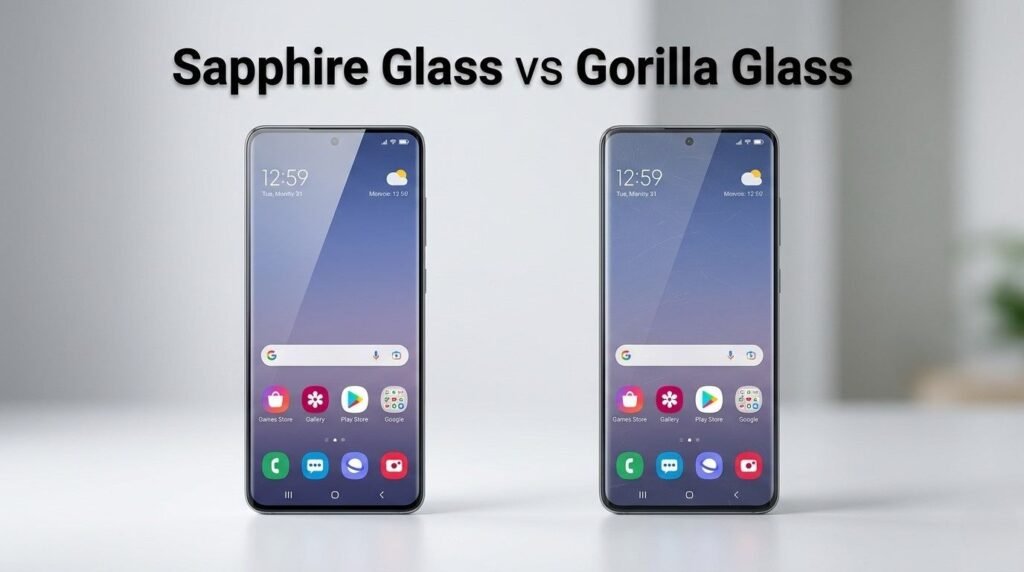
Sapphire Glass vs Gorilla Glass is one of the most debated comparisons in smartphone durability. As Android smartphones continue to evolve with larger displays, slimmer bodies, and advanced features, the choice of display protection material plays a critical role in device longevity.
Modern smartphone manufacturers depend on advanced materials to protect displays from scratches, drops, and everyday wear. Two of the most prominent options are sapphire crystal and chemically strengthened glass developed by companies like Corning.
Brands such as Samsung, Xiaomi, and OnePlus rely heavily on reinforced glass technologies to maintain a balance between durability and usability.
When Android users browse apps, update system settings, or download tools from the Google Play Store, the display is the most frequently touched component. Therefore, understanding the differences between Sapphire Glass vs Gorilla Glass helps users make better decisions when choosing a smartphone.
This in-depth guide explores the science, advantages, limitations, and real-world performance differences between these two display protection technologies.
What Is Sapphire Glass?
Sapphire glass, often referred to as sapphire crystal, is a synthetic material made from crystallized aluminum oxide.
Unlike conventional glass, sapphire is grown in controlled environments to form an extremely hard crystal.
Key characteristics of sapphire glass
- extremely high hardness
- exceptional scratch resistance
- strong optical clarity
- high temperature resistance
Because of these properties, sapphire is commonly used in luxury watches, camera lenses, and aerospace equipment.
What Is Gorilla Glass?
Gorilla Glass is a chemically strengthened glass designed specifically for smartphones and mobile devices.
Developed by Corning, Gorilla Glass uses an ion-exchange process that improves strength while maintaining thinness.
Features of Gorilla Glass
- lightweight construction
- improved drop resistance
- thin and flexible design
- excellent touch sensitivity
Many Android smartphones manufactured by Samsung Electronics and Xiaomi use Gorilla Glass technology.
This YouTube video below explains how Corning Gorilla Glass works on modern smartphones. It highlights the chemical strengthening process and how this durable glass helps protect phone screens from scratches and everyday damage. 📱✨

Sapphire Glass vs Gorilla Glass: Key Differences
The comparison between Sapphire Glass vs Gorilla Glass involves several important factors including durability, weight, cost, and performance.
Core differences overview
| Feature | Sapphire Glass | Gorilla Glass |
|---|---|---|
| Hardness | extremely high | high |
| Scratch resistance | excellent | very good |
| Drop resistance | moderate | strong |
| Weight | heavier | lighter |
| Cost | expensive | affordable |
While sapphire excels in scratch resistance, Gorilla Glass generally performs better during drops.
Hardness and Scratch Resistance
Hardness is one of the biggest differences in Sapphire Glass vs Gorilla Glass.
Mohs hardness scale comparison
| Material | Hardness |
|---|---|
| Sapphire | 9 |
| Gorilla Glass | 6–7 |
Because sapphire ranks near the top of the Mohs hardness scale, it is extremely difficult to scratch.
Common objects like keys or coins usually cannot damage sapphire surfaces.
However, Gorilla Glass still provides excellent scratch resistance for everyday use.
Drop Resistance and Impact Durability
When comparing Sapphire Glass vs Gorilla Glass, drop resistance becomes a crucial factor.
Sapphire is extremely hard but also more brittle.
Gorilla Glass, on the other hand, is engineered to absorb impact forces.
Impact resistance comparison
| Factor | Sapphire Glass | Gorilla Glass |
|---|---|---|
| Flexibility | low | higher |
| Crack resistance | moderate | strong |
| Drop durability | weaker | stronger |
This is why Gorilla Glass remains the preferred choice for smartphone displays.
Thickness and Weight Considerations
Smartphone manufacturers must maintain a balance between strength and device weight.
Material density comparison
| Property | Sapphire | Gorilla Glass |
|---|---|---|
| Density | higher | lower |
| Thickness requirement | thicker | thinner |
| Weight impact | heavier | lighter |
Because sapphire is denser, it can increase the weight of smartphones.
This makes Gorilla Glass more practical for modern Android devices.
Cost and Manufacturing Complexity
One major difference in Sapphire Glass vs Gorilla Glass is production cost.
Manufacturing challenges of sapphire
- high energy consumption
- complex crystal growth process
- expensive cutting and polishing
Gorilla Glass manufacturing is more scalable and cost-effective, making it ideal for mass-produced smartphones.
Optical Clarity and Display Quality
Both materials provide excellent optical clarity, but there are subtle differences.
Light transmission comparison
| Feature | Sapphire | Gorilla Glass |
|---|---|---|
| transparency | high | very high |
| glare resistance | moderate | optimized coatings |
| display brightness | slightly reduced | optimized |
Smartphone manufacturers optimize Gorilla Glass with anti-reflective coatings for better display visibility.
Smartphone Use Cases
Because of their different strengths, sapphire and Gorilla Glass are used in different smartphone components.
Typical usage
| Component | Preferred Material |
|---|---|
| smartphone display | Gorilla Glass |
| camera lens cover | sapphire |
| fingerprint sensor | sapphire |
Many Android devices from Samsung Electronics use sapphire to protect camera modules.
Impact on Android User Experience
The material protecting a smartphone display directly affects the user experience.
Key areas impacted
- touch responsiveness
- display clarity
- durability during daily use
- long-term scratch resistance
Android users interacting with apps from the Google Play Store benefit from durable display surfaces that maintain clarity and responsiveness.
Why Smartphone Manufacturers Prefer Gorilla Glass
Despite sapphire’s hardness, most smartphone manufacturers choose Gorilla Glass.
Reasons Gorilla Glass dominates smartphones
- better drop resistance
- lighter weight
- lower production cost
- improved flexibility
These advantages make Gorilla Glass the most practical solution for smartphone displays.
Emerging Alternatives to Gorilla Glass
While Sapphire Glass vs Gorilla Glass remains a major debate, new technologies are emerging.
Future display protection technologies
- ceramic shield glass
- nano-ceramic composites
- reinforced aluminosilicate glass
- hybrid sapphire coatings
Companies such as Corning continue to develop new glass technologies that combine scratch resistance with improved durability.
Tips to Protect Smartphone Displays
Regardless of the material used, protecting your smartphone display is essential.
Practical protection tips
- install tempered glass screen protectors
- use shock-resistant phone cases
- avoid placing phones with metal objects
- keep devices away from extreme temperatures
These practices help extend the lifespan of smartphone displays.
FAQ: Sapphire Glass vs Gorilla Glass
Which is stronger, sapphire glass or Gorilla Glass?
Sapphire glass is harder and more scratch resistant, but Gorilla Glass is better at absorbing impacts from drops.
Why aren’t smartphone screens made entirely of sapphire?
Sapphire is more expensive, heavier, and more brittle, which makes it less suitable for large smartphone displays.
Do Android phones use sapphire glass?
Yes, many Android smartphones use sapphire for camera lens protection and fingerprint sensor covers.
Is Gorilla Glass scratch-proof?
No glass is completely scratch-proof, but Gorilla Glass offers excellent resistance to everyday scratches.
Should I use a screen protector with Gorilla Glass?
Yes. Screen protectors add an extra layer of protection against scratches and minor impacts.
Conclusion
The debate between Sapphire Glass vs Gorilla Glass highlights the trade-offs smartphone manufacturers must consider when designing durable devices.
Sapphire offers exceptional scratch resistance and hardness, making it ideal for protecting small components like camera lenses. Gorilla Glass, however, provides superior drop resistance, lighter weight, and better cost efficiency—qualities that make it the dominant choice for smartphone displays.
For Android users, understanding these materials helps explain why modern smartphones are designed the way they are. As display technologies continue evolving, future innovations may combine the strengths of both materials, creating displays that are both extremely scratch resistant and highly impact resistant.