
Samsung AR Glasses and Wide-Fold Phone Launch Planned for 2026
Samsung is quietly laying the groundwork for what could be one of the biggest shifts in the Android ecosystem in years. During its Q4 CY2025 earnings call, the company hinted at launching Samsung AR glasses in 2026, alongside a brand-new wide-fold smartphone form factor. While Samsung stopped short of naming products, the signals were strong enough to confirm that augmented reality and next-generation foldables are now core to its long-term mobile strategy.
This move positions Samsung at the center of Android’s next evolution — one that blends XR, AI wearables, and experimental hardware into a unified ecosystem.
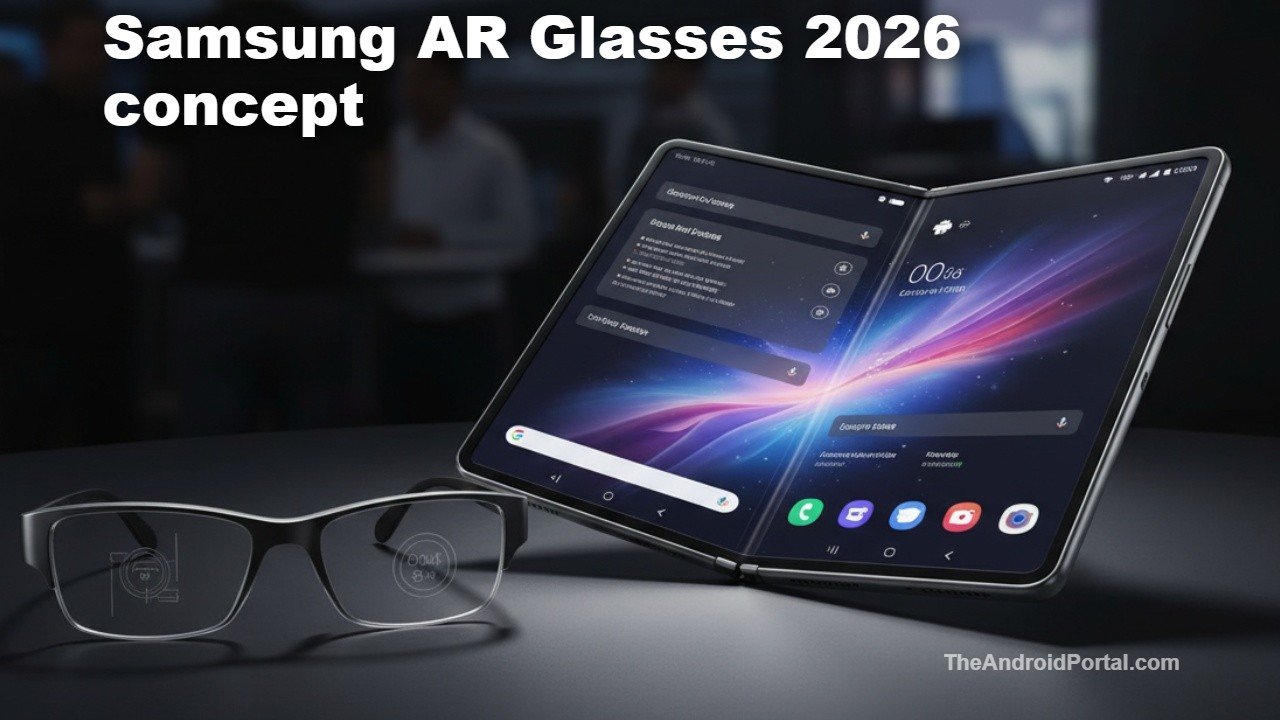
Samsung AR Glasses 2026: What We Know So Far
Samsung first teased its smart glasses ambitions in late 2025, around the same time it revealed the Galaxy XR headset. The upcoming Samsung AR glasses 2026 are expected to arrive as a lighter, more consumer-friendly wearable, rather than a bulky headset.
Early reports suggest Samsung’s first-generation glasses could resemble Meta’s Ray-Ban smart glasses, focusing on audio, AI assistance, and camera-based features rather than full visual overlays. However, there’s a twist.
With Google confirming Android XR–powered smart glasses for 2026, industry watchers believe Samsung may leapfrog competitors by introducing a display-enabled AR experience sooner than expected.
Key expectations include:
- Android XR platform integration
- Gemini-powered contextual AI features
- Built-in microphones, speakers, and cameras
- Deep Samsung ecosystem compatibility (Galaxy phones, Buds, Watch)
If Samsung delivers display-based AR glasses at launch, it would instantly differentiate its product from Meta’s AI-first approach and place Android ahead in the smart glasses race.
Why Samsung’s AR Push Matters for Android
Unlike Apple closed ecosystem strategy, Samsung’s AR glasses are likely to be deeply tied into Android XR, allowing developers to build cross-device experiences. This could open the door for:
- Navigation overlays synced with Google Maps
- Live translation via Gemini AI
- Smart notifications without pulling out a phone
- Hands-free content capture
For Android users, this represents a major leap toward ambient computing — where technology fades into the background instead of demanding attention.
Samsung’s Wide-Fold Smartphone: A New Foldable Category
Alongside AR glasses, Samsung confirmed it is expanding its foldable lineup beyond traditional book-style designs. Executives referenced continued innovation following the Tri-Fold launch in late 2025, with new foldable products planned for the second half of 2026.
One of those devices is widely believed to be a wide-fold smartphone — a design that prioritizes horizontal space over height.
Leaks suggest Samsung’s wide-fold could feature:
- A 4:3 aspect ratio when unfolded
- Tablet-like multitasking capabilities
- Enhanced split-screen productivity
- A form factor closer to an iPad mini
This would mark a significant departure from the tall, narrow displays used in current Galaxy Z Fold models and directly counter Apple’s rumored foldable iPhone.
Samsung vs Apple: The Foldable Showdown Begins
Apple is expected to enter the foldable market soon, but Samsung’s early move with a wide-fold design gives it a crucial advantage. By experimenting first, Samsung can refine hardware, software optimization, and app behavior well before Apple ships its first foldable iPhone.
More importantly, Samsung’s control over Android foldable standards means its wide-fold phone could influence how developers design apps for large-screen Android devices going forward.
Bigger Picture: Samsung’s XR + AI Wearable Strategy
Samsung has repeatedly stated that multiple XR and AI wearables are currently in development. AR glasses and wide-fold phones are not isolated experiments — they are part of a broader shift toward post-smartphone computing.
With Galaxy AI, Gemini integration, and Android XR converging, Samsung appears to be positioning itself as Android’s primary innovation engine for the rest of the decade.
If executed well, Samsung AR glasses 2026 could become the Android equivalent of AirPods — a mainstream wearable that changes how users interact with their devices every day.