
Introduction
Ceramic shield technology explained begins with understanding how modern smartphones have evolved to become more durable without sacrificing design or clarity. As devices grow more advanced and expensive, protecting their displays has become a top priority for both manufacturers and users.
Ceramic shield technology represents a breakthrough in glass engineering, combining the toughness of ceramic crystals with the transparency of glass. This innovation significantly improves drop performance and resistance to damage, making it one of the most advanced protective solutions available today.
In this detailed guide, we will explore how ceramic shield technology works, its benefits, limitations, and how it compares to traditional smartphone glass.
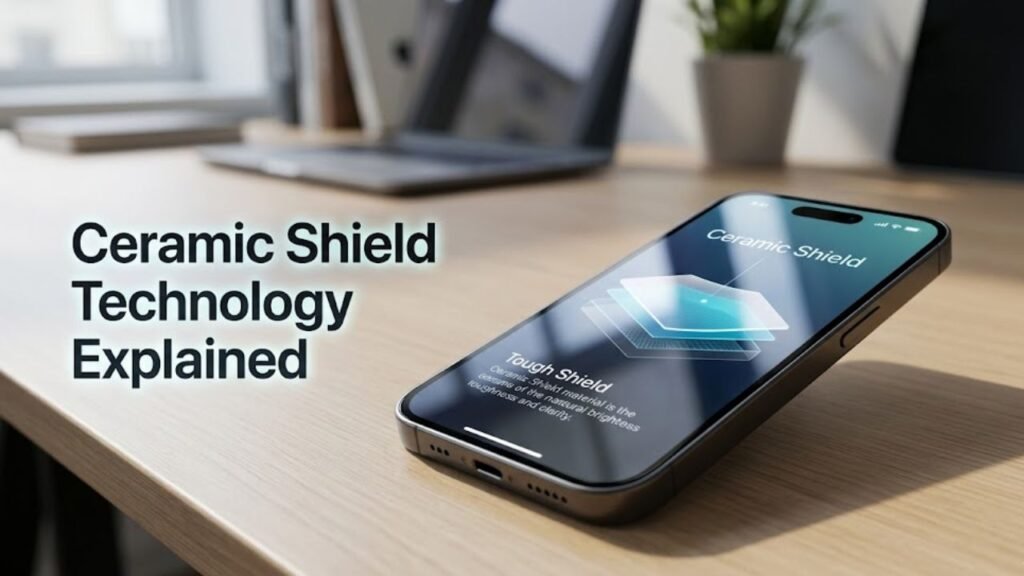
What Is Ceramic Shield Technology?
Ceramic shield technology is a specialized glass material infused with nano-ceramic crystals to enhance strength and durability. Unlike conventional glass, this hybrid material offers improved resistance to drops and impacts.
The integration of ceramic crystals into the glass matrix creates a stronger structure while maintaining optical clarity and touch responsiveness.
Key Features
- Enhanced drop resistance
- Improved durability and toughness
- Maintains high transparency
- Resistant to everyday wear and tear
- Optimized for modern touchscreen devices
How Ceramic Shield Technology Works
Ceramic shield technology explained at a technical level involves embedding ceramic particles into glass during the manufacturing process.
Nano-Ceramic Crystal Infusion
Tiny ceramic crystals are uniformly distributed within the glass, strengthening its internal structure.
Heat Treatment Process
The material undergoes high-temperature processing to fuse the ceramic and glass components.
Strength Enhancement Mechanism
The ceramic crystals help prevent crack propagation by disrupting fracture pathways.
Structure of Ceramic Shield Glass
The structure of ceramic shield technology is engineered for both strength and performance.
Layer Composition
- Outer protective ceramic-infused glass layer
- Reinforced internal structure
- Touch sensor layer
- Display panel beneath
Each layer contributes to durability, responsiveness, and visual clarity.
Benefits of Ceramic Shield Technology
Ceramic shield technology explained through its advantages highlights why it stands out in the market.
1. Superior Drop Protection
The material significantly reduces the likelihood of screen breakage during accidental drops.
2. Increased Toughness
Ceramic crystals enhance resistance to external stress.
3. Long-Term Durability
Maintains structural integrity over extended use.
4. High Optical Clarity
Does not compromise display quality or brightness.
5. Lightweight Design
Provides strength without adding bulk.
6. Enhanced User Confidence
Users can handle devices with reduced fear of damage.
Ceramic Shield vs Traditional Glass
Comparison Table
| Feature | Ceramic Shield Technology | Traditional Glass |
|---|---|---|
| Drop Resistance | Very high | Moderate |
| Durability | Enhanced | Standard |
| Scratch Resistance | Moderate | Moderate |
| Weight | Lightweight | Lightweight |
| Technology | Ceramic-infused | Pure glass |
Key Insight
Ceramic shield technology excels in drop protection, making it ideal for users concerned about accidental damage.
Ceramic Shield vs Gorilla Glass
Key Differences
- Ceramic shield focuses on drop performance
- Gorilla Glass emphasizes scratch resistance and flexibility
- Ceramic shield uses embedded crystals
- Gorilla Glass relies on chemical strengthening
Both technologies are advanced, but they serve slightly different priorities.
Limitations of Ceramic Shield Technology
Despite its advantages, ceramic shield technology has certain limitations.
Scratch Resistance
It is not significantly more scratch-resistant than other premium glass types.
Cost
Advanced manufacturing increases production costs.
Not Completely Shatterproof
While stronger, it can still break under extreme impact.
Applications of Ceramic Shield Technology
Ceramic shield technology is primarily used in high-end consumer electronics.
Smartphones
Provides enhanced screen protection for premium devices.
Wearable Devices
Used in smartwatches for improved durability.
Future Applications
Potential use in tablets, laptops, and automotive displays.
Factors That Affect Ceramic Shield Performance
Several factors influence how well ceramic shield technology performs.
Impact Angle
The angle of a drop can affect damage severity.
Surface Type
Hard surfaces increase the risk of breakage.
Device Design
Frame structure plays a role in shock absorption.
Practical Tips to Protect Ceramic Shield Displays
To maximize the benefits of ceramic shield technology, follow these expert tips:
- Use a high-quality protective case
- Avoid dropping the device on hard surfaces
- Apply a screen protector for scratch prevention
- Keep the screen clean to maintain clarity
- Handle your device carefully in daily use
Future Innovations in Ceramic Shield Technology
The future of ceramic shield technology looks promising with ongoing advancements.
Improved Scratch Resistance
New formulations may enhance surface hardness.
Advanced Nano-Engineering
Better integration of ceramic particles for increased strength.
Wider Adoption
Expansion into more device categories and industries.
FAQs About Ceramic Shield Technology Explained
What is ceramic shield technology?
It is a glass material infused with ceramic crystals to improve strength and durability.
Is ceramic shield better than Gorilla Glass?
It offers better drop protection, while Gorilla Glass may provide better scratch resistance.
Can ceramic shield prevent all damage?
No, it reduces risk but does not make the screen unbreakable.
Does ceramic shield affect display quality?
No, it maintains high optical clarity and touch responsiveness.
Is a screen protector still necessary?
Yes, especially for preventing scratches.
Conclusion
Ceramic shield technology explained in depth highlights a major advancement in smartphone durability. By combining ceramic strength with glass clarity, it offers a powerful solution for protecting modern devices against everyday damage.
While it is not entirely immune to scratches or extreme impacts, its superior drop resistance makes it a standout innovation in display technology. As manufacturers continue to refine materials and processes, ceramic shield technology is expected to become even more effective and widely adopted.
For users seeking a balance between durability, performance, and design, ceramic shield technology represents a smart and forward-looking investment in device protection.